

13 Best Flowers To Start Planting In Pots In May
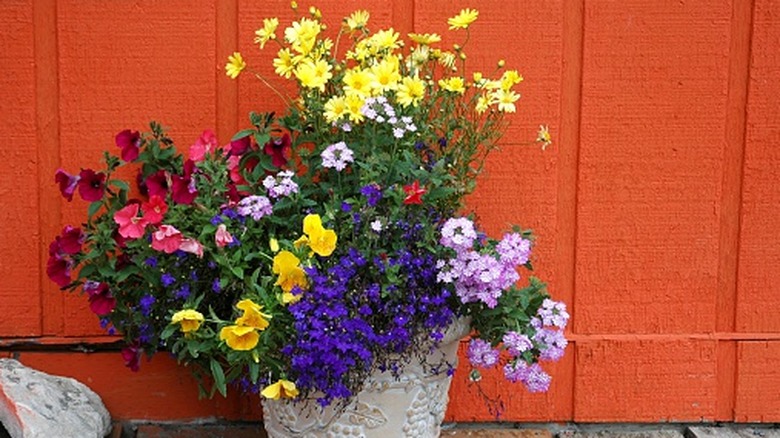
April showers bring May flowers, and May is the month when garden shops start to overflow with blooming annuals and perennials. In my work as a professional gardener, choosing flowers for containers is such an enjoyable task, and it lets me use my creativity and knowledge of horticulture and design. Some clients love low-maintenance simplicity, while others love complex arrangements. From my experience, these are the 13 best flowers to plant in pots in May for a glorious season of color and beauty, from tuberous begonias to snapdragons.
When designing containers, you can choose between perennials and annuals at garden stores, or start plants from seed. Perennials can be planted in your garden at the end of the season if you like. Most people choose annuals because they provide the longest season of color. You can plant seeds in containers, too, but you have to make sure they're cold-hardy, or wait to sow them until after the last frost date has passed (usually by early May). You can also start seeds indoors and transplant seedlings once the weather turns warmer.
Once May arrives, local plant shops tend to have a large selection of annuals and perennials to choose from. Also, don't skip the big box stores, which sometimes offer good specials, or markdowns on plants that need some TLC (like gentle deadheading or transplanting to better soil). Some annuals need plentiful sun, while others may wilt a bit during summer's hottest days. Summer annuals need daily watering; I find that watering container flowers in the morning is the best way to keep them fresh and hydrated all day.
Tuberous begonia
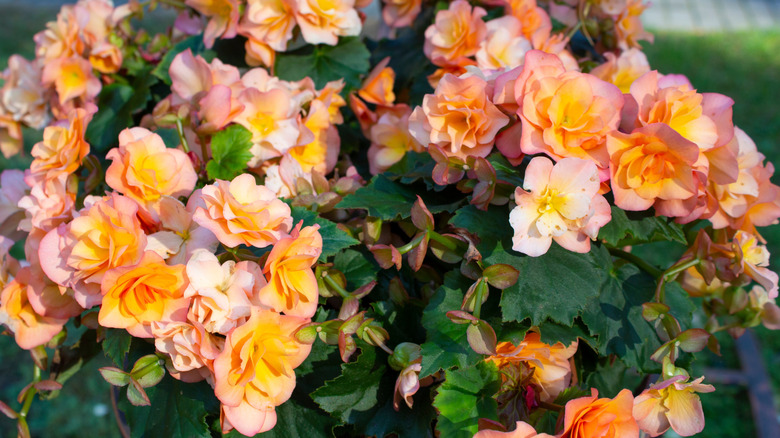
Tuberous begonias make lovely container flowers, with layers of colorful, velvety petals and textured leaves. They look great in hanging baskets also: Some begonia varieties have a pendulous growth habit that lets flowers spill over the sides. Plant tubers directly in spring after temperatures are consistently above 50 degrees Fahrenheit, or start indoors eight weeks before transplanting. You can also purchase begonias that are already budding. You can lift the tubers and store them for winter if desired. Deadhead spent blooms frequently, and you'll have gorgeous flowers all summer long.
Nasturtium
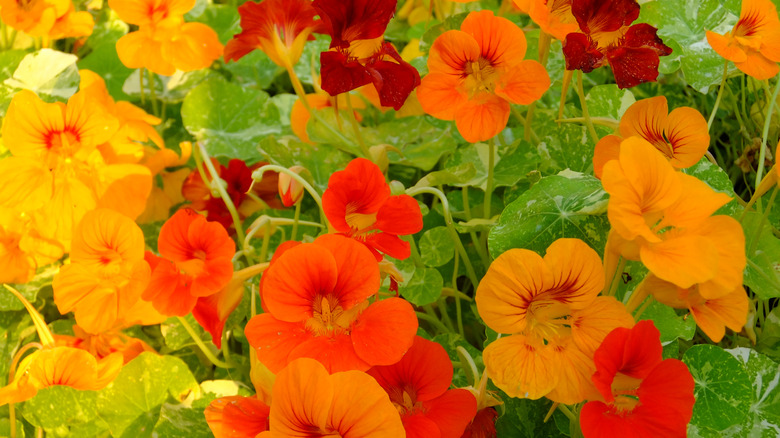
Nasturtiums (Tropaeolum majus) are delightful in containers, including window boxes and hanging baskets. The big blooms are edible (try them in salads!) and the leaves have attractive pale spots. These warm weather annuals love sun, and they do best in lean soil with no fertilizers. Plant the seeds directly in containers after the last frost date has passed, or start them indoors in February and transplant once daytime temps go above 60 degrees Fahrenheit. Water regularly until the flower buds form, then as needed. Renee's Garden has a great selection of nasturtium seeds in a rainbow of colors.
Cosmos
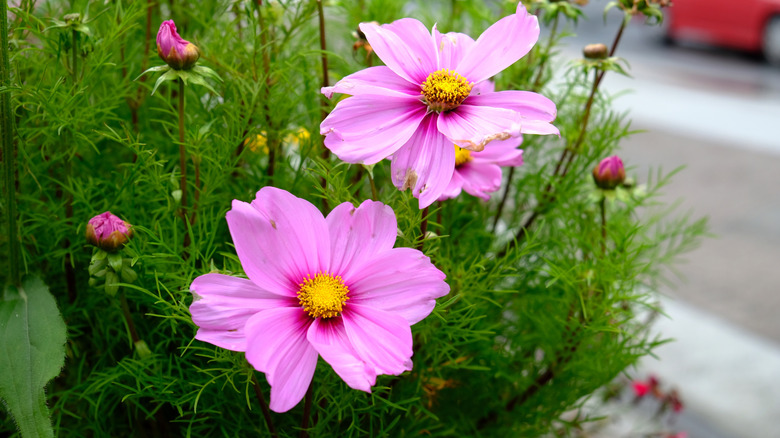
Cosmos are beautiful annual flowers that attract butterflies and bees in summer. The classic heirlooms come in shades of pink and white, but there are also yellow, orange, and red varieties. I've had great luck with these reseeding in the garden, even though they're not a cold-hardy perennial. For containers, you can direct sow after the last frost date has passed. Cosmos can get tall, but there are compact varieties perfect for containers, like 'Snow Sonata' (white, 24 inches), 'Apricot Lemonade' (peach-coral, 20 to 30 inches), and dwarf 'Sensation' (mix of pink, red, and white, 12 to 24 inches).
Calendula
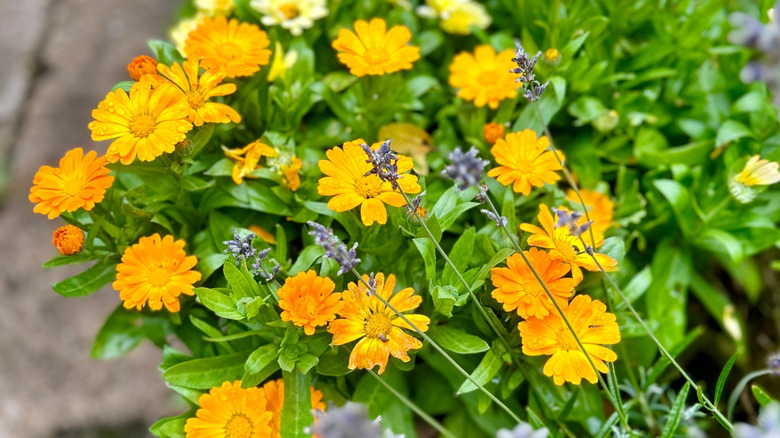
Calendula (Calendula officinalis) are also known as "pot marigolds" and are very easy to grow from seed. They reseed readily, and you can direct sow in containers in May after the last frost date has passed. These hardy flowers need no fertilizer or special care, and bloom all summer long. They like plenty of sun, but they may wilt in excessive heat, so keep them watered when it's hot. Collect the crescent-shaped seeds in fall to plant the following spring. These perky flowers come in shades of yellow, orange, and pink (try the colorful 'Flashback' or 'Sunset' seed mixes).
Celosia
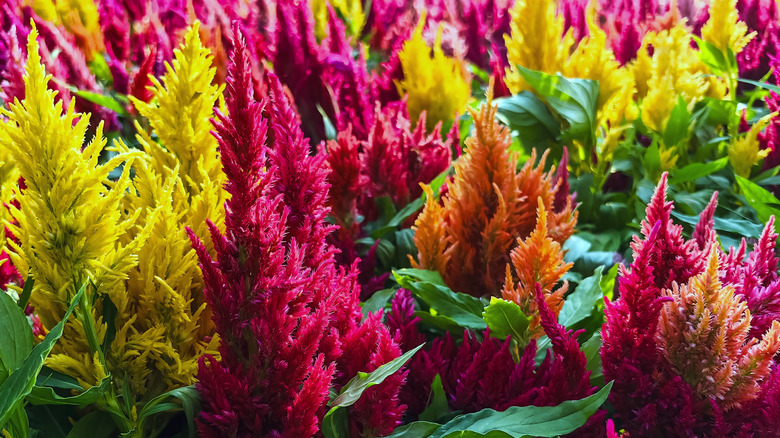
These odd-looking annuals add dramatic shapes, textures, and fiery colors to your summer containers. I usually start seeing celosia plants in nurseries in May, and the seedlings in the six packs are fairly small. But tuck them into your containers, and after a few weeks the little bushy blooms get taller and fuller. Deadhead them as they turn brown to encourage season-long color. The pinks and oranges are particularly vivid, and the colors stay bright without fading. The deep red ones also have striking red foliage accents. Celosia tolerates heat and thrives in full sun.
Annuel verbena
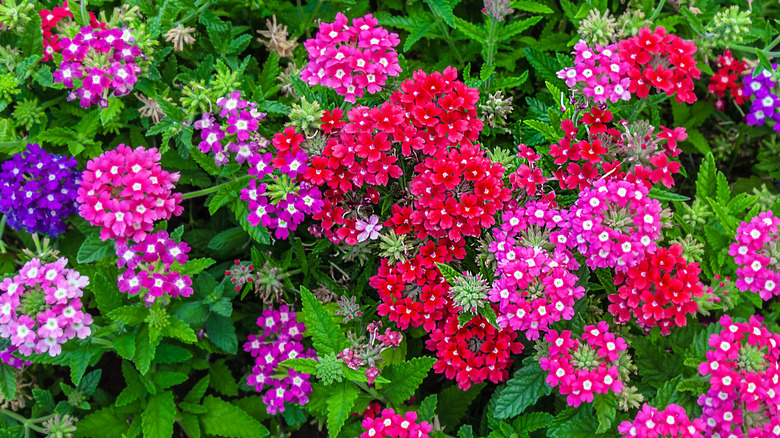
This is another annual that I like to get at nurseries and tuck into container arrangements for a boost of color. Annual verbena or garden verbena (Verbena x hybrida) has delicate clusters of blooms that last for weeks. If you gently snip off the spent flowers, a new round of buds emerges, keeping the show going all season. From delicate pastels to vivid jewel tones, these diminutive annuals really add spice to containers. They thrive in partial or full sun, and may droop a bit when it gets very hot, but will revive again in cooler temperatures.
Sweet alyssum
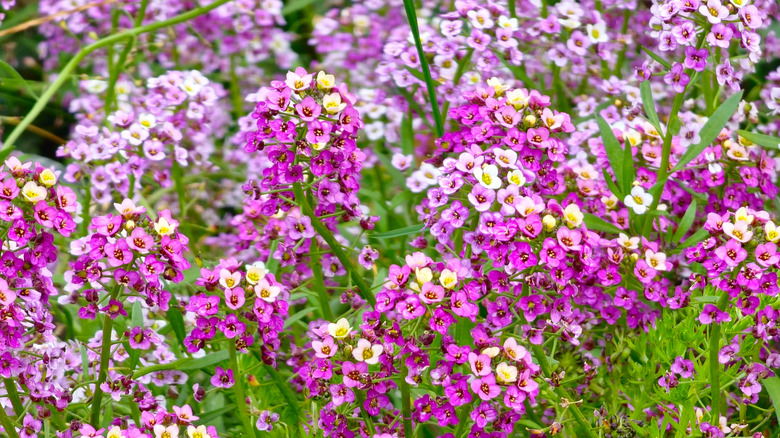
Sweet alyssum (Lobularia maritima) are low-maintenance flowers that attract plenty of butterflies and bees with their bright colors and abundant nectar. These honey-scented annuals are lovely "spillers" for containers, and the tiny flowers last for weeks. The seeds can be direct sown in containers in May, or you can buy plants in nurseries. They come in a lovely range of colors, including white, yellow, peach, pink, magenta, and dark purple. Shear off the first round of blooms gently to encourage more buds.
Petunia
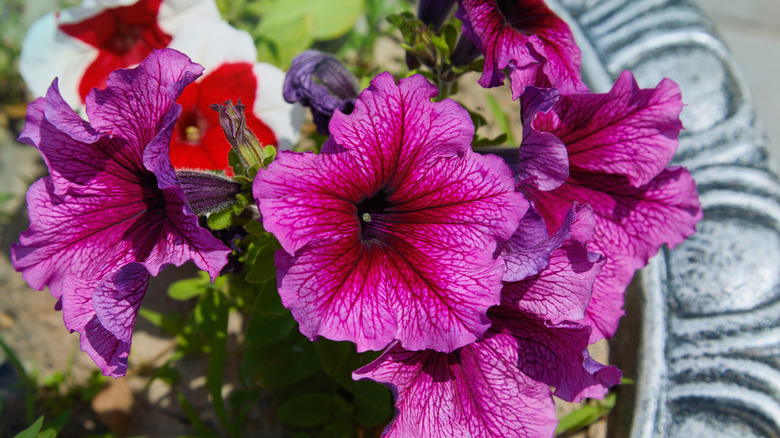
Petunias (Petunia x hybrida) are one of my favorite choices for containers. Whether upright or trailing, they add gorgeous texture and color to any arrangement. They like regular water and seem to do best in partial sun, or morning sun with afternoon shade. Deadhead the spent blooms to keep them coming all season long. My favorites are the 'Daddy' cultivars for their unique ombre shading. I also love the pale pink 'Dreams Appleblossom' and rich violet-blue 'Dreams Sky Blue' for easy non-stop summer color.
Marigold
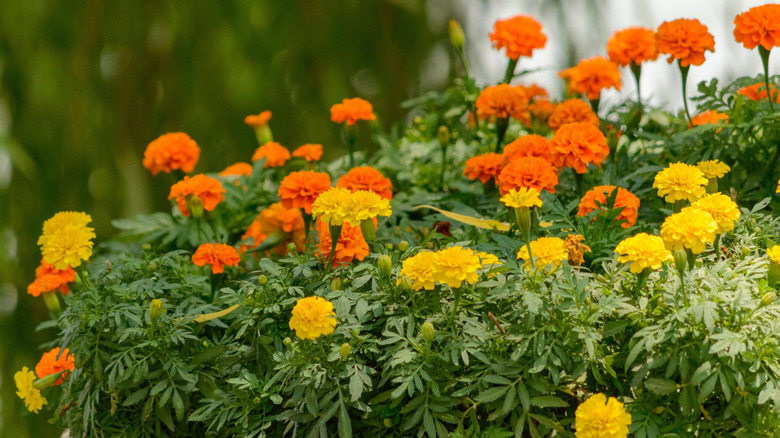
Marigolds are easy to grow and basically trouble-free. They're sometimes thought of as "flowers for the vegetable garden," and indeed their herb-like scent does repel pests. But their bright color and low-maintenance, hardy nature make them great container annuals also. French marigolds (Tagetes patula) grow up to 18 inches tall, and have compact, frilly flowers. They come in a wide range of warm colors, from creamy white to deep vermilion, and many shades of yellow and orange. Give them ample sun, regular water, and trim off the spent flowers to keep them going through autumn.
Coleus
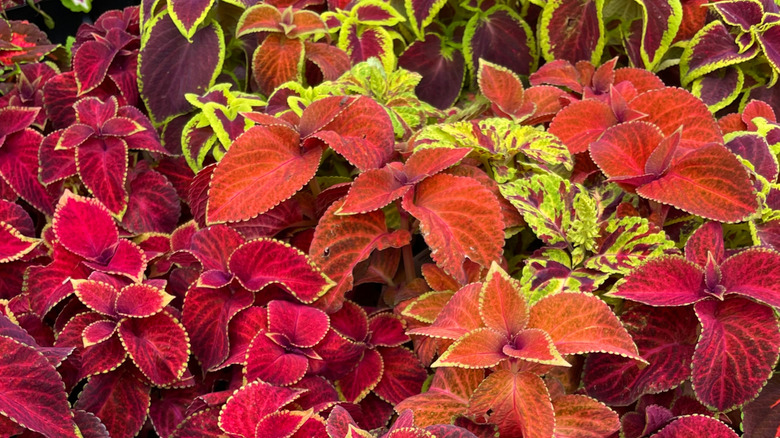
Coleus (Coleus scutellarioides) are a perfect choice for adding vividly-colored foliage to containers. Partial sun is best to keep leaves from scorching in the heat of summer. Small six-pack starts will grow steadily through the season and reach between 12 and 18 inches tall, depending on the variety. The flowers (thin stalks with small purple petals) aren't terribly interesting, and tend to steal energy from the foliage, so I usually snip them off to keep these plants looking vibrant. An added bonus: The color range includes many warm hues that easily transition to autumn arrangements by adding some mums or asters.
Snapdragon
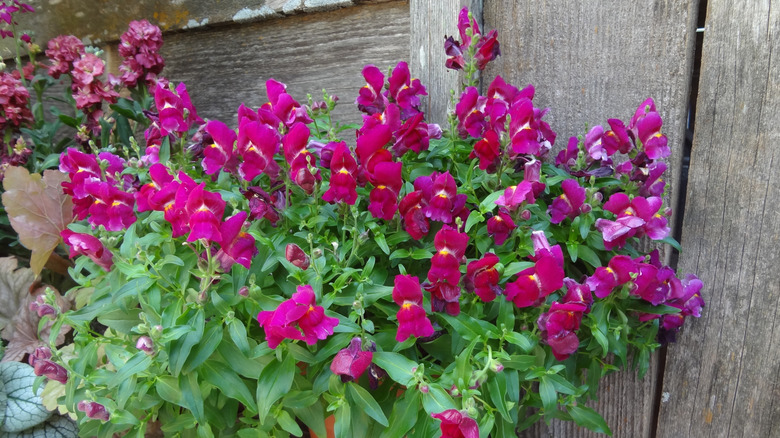
With their rainbow of colors, long blooming season, and unusual frilly shapes, snapdragons (Antirrhinum majus) are a highly desirable container annual. I sometimes find that shorter varieties tend to peter out by early autumn, while taller ones (like 'Chantilly' or 'Rocket') will keep forming flower buds well past frost. Just snip off the central stem when blooms fade, and the side stems will keep flowering until November.
Zinnia
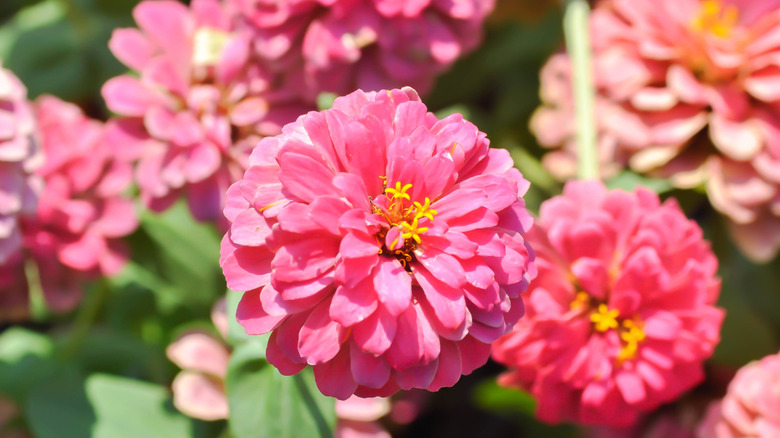
Zinnias are lovely for summer color in flower beds, but there are some diminutive varieties that work well for containers, too. They attract plenty of butterflies and other pollinating insects. The easiest way to add zinnias to container arrangements is to get them at nurseries, but you can start them from seed indoors and move them outside once days get above 65 degrees consistently. Some of my favorite dwarf zinnia varieties are 'Profusion', 'Lilliput', and 'Thumbelina'. All come in a range of colors and grow easily from seed. Zinnias can handle plenty of sun and warm weather.
Portulaca
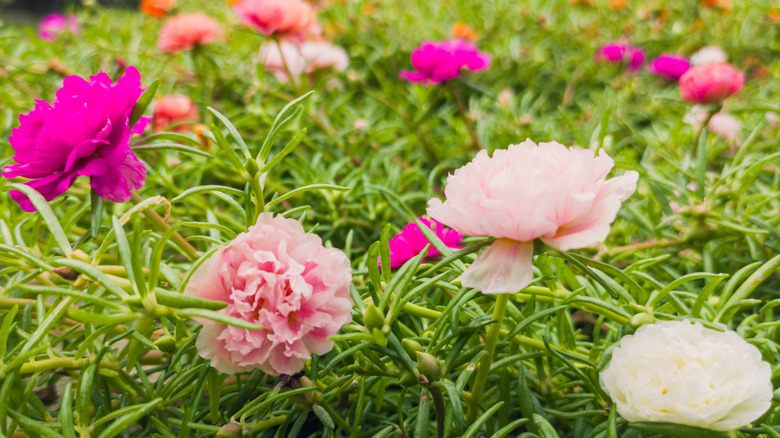
These drought-tolerant sun lovers are such a perfect container annual. They bloom for weeks and keep putting out new flower buds. They trail a bit, so if you put them close to the container edge they can work as a "spiller" plant. Most nurseries sell six-packs of mixed hues, and there's a range of solid and bi-colors, so if you like a carnival of color, these are for you! Deadhead them with small snips to keep the plants looking neat.