

The Ultimate Guide To Spring Cleaning Your Closet & Drawers
We may receive a commission on purchases made from links.
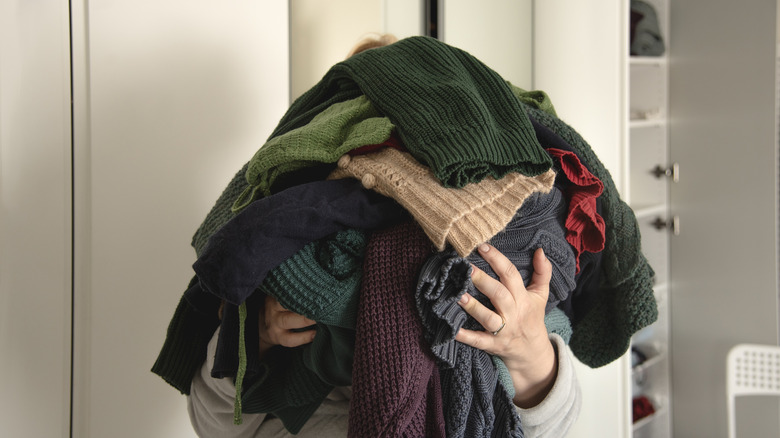
It's spring cleaning season, and one of the main sections people tackle during this time is their closets and dressers. It's the perfect time to haul out items you no longer need, rethink systems that need some fine-tuning, and reorganize everything in a way that will make navigating your clothes much easier. But how, exactly, do you tackle such a large task? In this ultimate guide to spring cleaning your wardrobe, we break down all of the steps, from how to remove the clothes to how to whittle down your "maybes," and how to place everything back so it feels tidier than ever before.
Spring cleaning your wardrobe isn't as easy as throwing out clothes you no longer like or finding new ways to hang or fold items. People often hit roadblocks when trying to declutter, wondering if they will regret tossing an item or are unsure how to maximize the space they have. Here is how to avoid those pitfalls and get your wardrobe decluttered for the year.
Remove everything from your closet and drawers
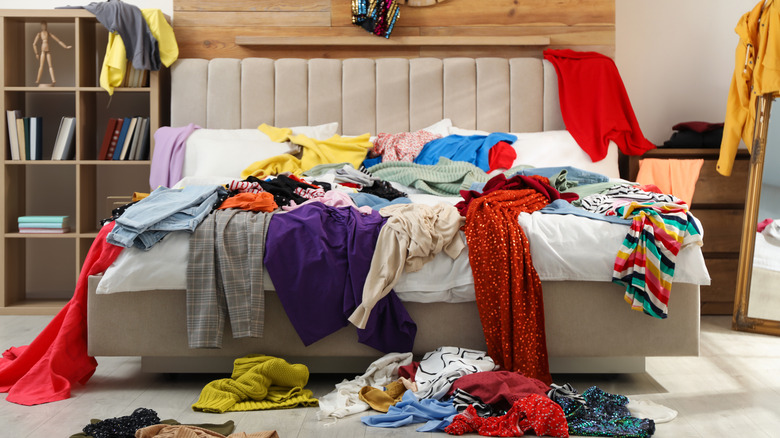
It can be tempting to tackle things drawer by drawer or closet section by section. After all, breaking big tasks into smaller, bite-sized steps is often said to make them more manageable. And while that's true for a general wardrobe tidy, that's not the case for spring cleaning. If you want to prune out all of your junk and refresh your space, you need to see everything you own and make some difficult cuts. You can't do that if you can't see everything you have accumulated.
Because of this, haul out absolutely everything from your closet and drawers. It's a decluttering technique that changes the game. However, have a plan for where you will dump it. If you know you won't be able to finish it in one sitting, then putting your items on the bed isn't the smartest move. Instead, consider putting your piles on the floor, but off to the side so they're not in the way of your walkways. Or, if you know this will likely take a week or more, consider spreading them out in a guest bedroom or somewhere you don't interact with as often. That way, you won't be living in chaos.
Sort items into three piles: keep, maybe keep, and toss

To get started with your decluttering, you need to know what you definitely want to keep and put back, and what you definitely don't want anymore. And then you need to know what you need to weigh and consider, which will be your "maybe" pile. But before we jump into the difficult task of hemming and hawing over what may no longer work, we need to create these piles.
Because of this, this step is based purely on gut reactions. You want to take a maximum of three seconds to make your decision on these piles. You know what you love and wear weekly, you know what you have zero interest in and haven't worn in two years, and you know what you're unsure about. Pick up each item, give yourself a moment to react, and then place the item in its appropriate category. Just remember: It's okay if your "maybe" pile is huge. This step is just to get us started; you will edit it further down later.
Find duplicates in your 'maybe' pile
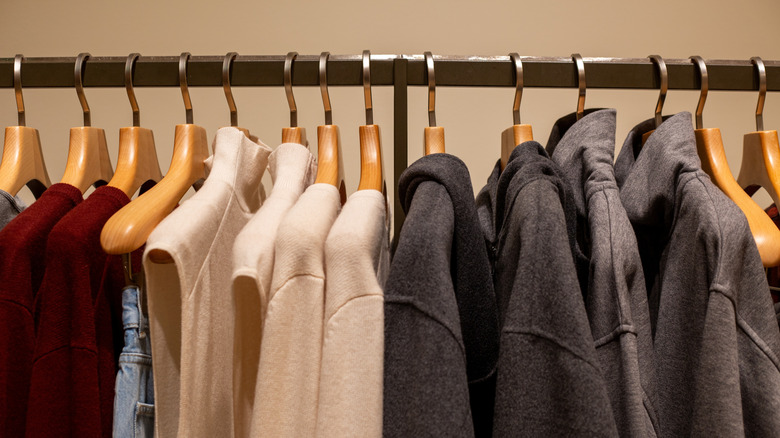
Now the hard part begins: It's time to figure out what to remove from your "maybe" pile. The easiest way to do that is to remove your least favorite duplicates. We often don't realize how many of the same items we repurchase, and when you see them all grouped together, it becomes obvious that you don't need so many repeats. This makes it easier to prune what you have.
Group all like items together. Do you have six white shirts? And one of them has become dingy and gray? Or maybe you have nine pairs of black pants, and two of them have outdated silhouettes you no longer like wearing. Seeing them together will make it easier to spot which ones you rarely wear and could easily cut.
Ask some clarifying questions regarding your 'maybe' pile

To whittle it further down, ask yourself two questions: 1) Would I wear this this month? And 2) If I saw it in a store today, would I buy it? These questions help you see your clothes from a fresh perspective. It's easy to fall into the sunk-cost fallacy, where you hold onto something just because you paid for it, as if getting rid of it means throwing money away. That guilt keeps items hanging in your closet. But these questions shift the focus from what you spent to what you actually use. If the answer to either question is no, it's much easier to let go.
Start by asking yourself if you'd feel good wearing it this month. Maybe you no longer like the style, but you're worried you might again in the future. Well, it's not worth storing in your closet for years. You can let go of those pieces and rebuy (their updated versions) if that time ever comes. Or maybe the sizes no longer fit you. Same thing – if you fluctuate, you can always rebuy the size without taking up a chunk of your wardrobe or dresser for a version of you that doesn't currently exist.
Then, look at the pieces left in your "maybe" pile and ask yourself the second question: If you saw it hanging in a store today, would you buy it? If the answer is no, you know you don't enthusiastically like it, and it doesn't need to take up room.
Actually try on the clothes
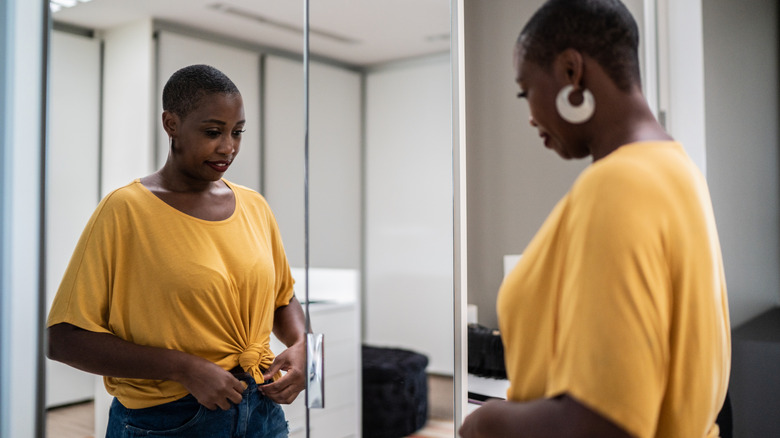
Your "maybe" pile is getting smaller and smaller, but to help prune it further, take a moment and try on each remaining piece and see how you feel in it. Putting them on can be pretty illuminating.
For example, are some too big or too small, making you unable to wear them? Or maybe it's apparent that they're no longer your style when you put them on, making you feel like a person you no longer relate to. (Looking at you, club T-shirts while in my thirties.) Seeing them on can help you make the hard decision to let certain pieces go.
Put the rest of the undecided maybes in a box

Still have a "maybe" pile you can't let go of? That's okay: Put the remaining items in a separate box that you can store in the back of your closet or a nearby room. It's the maybe box decluttering hack. This way, the "maybes" aren't taking up precious storage space in your closets and drawers, and if you end up needing something from that pile, it will be easily accessible. But most importantly, if you don't end up wanting to wear anything from that box after a few months, it will be much easier to haul it to a donation center.
Because of this, put the items in a cardboard box that you are okay with donating. Avoid a nice storage box so you can easily throw the container into your car and take it to donations – the fewer steps it takes you to get it out of the front door, the more successful you'll be. Second, give yourself a time limit for how long you can keep the items. It can be as little as two weeks or as long as a year. And since part of the goal is to hopefully use some of the items in the box, make sure it's in an easily accessible place, like on the floor of the closet. Avoid putting things in front of or on top of it, or stashing it on a different floor. This will allow you to reach in and grab what you have in mind without any obstacles.
Clean your space
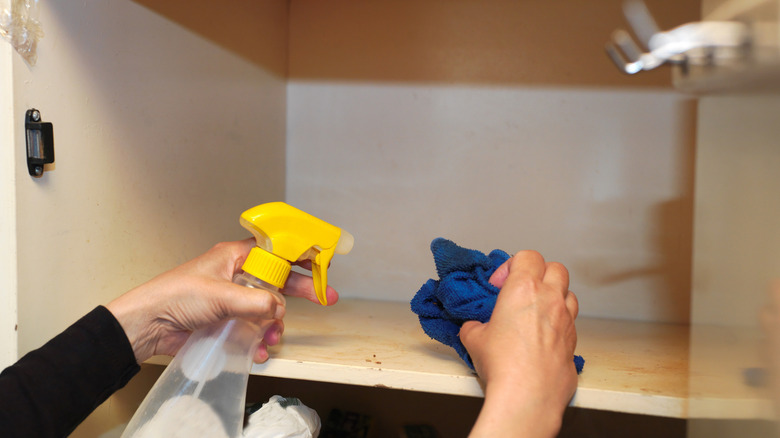
Now that you have your final set of clothes to put back, it's time to prep your drawers and closets for reorganization. But before you start folding or hanging, make sure you deep clean the space to give it a fresh start that spring cleaning is known for. This involves things like wiping down drawers, dusting shelves, wiping down rods, and vacuuming and washing floors.
The easiest way to do this is with a Swiffer duster or a damp microfiber cloth. Both will catch all dust, leaving your space feeling refreshed. If you have a trickier buildup due to not cleaning the area all year, you can use a multipurpose spray to help loosen the dirt. Shoe scuffs on dressers or baseboards can be tackled with melamine sponges like Magic Eraser, and walls can be quickly wiped down with vinegar and water.
Upgrade your storage space
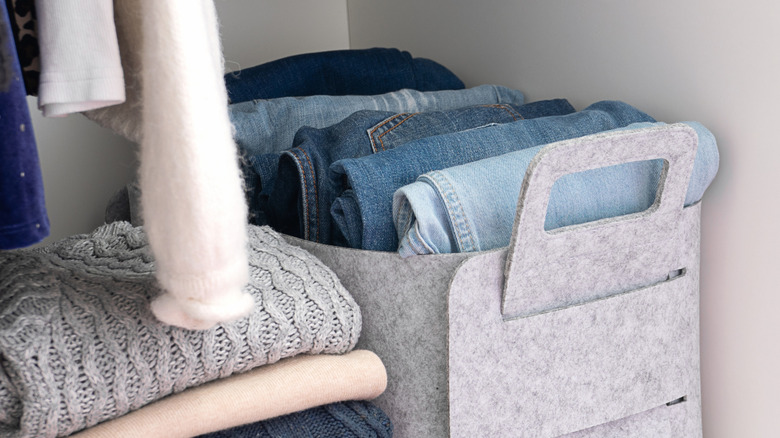
Since you have been living with your closet and dresser all year, you likely know its pain points. Before putting all your clothes back, take a minute to figure out how to resolve those issues so the entire system functions better and you have more space to store things. For example, if your drawers become a tangled mess after digging for T-shirts or socks, consider drawer dividers or specialty storage boxes. If your sweaters always topple over in the closet, get sweater boxes or shelf dividers.
To get ideas on what's possible, scroll through Pinterest and TikTok for solutions. For example, one issue can have several products to help resolve it. Take hanging pants. You can hang them on kids' hangers to make them more visible, fold and store them in fabric boxes on shelves, or hang them off S-hooks. You can see the options and see which works best for your setup. You can also find clever DIYs that won't break the bank to create more organized storage space. For example, you can unlock extra closet storage space by using Dollar Tree S-hooks and a broomstick to create an extra rod.
Or see if you have to overhaul your entire system:
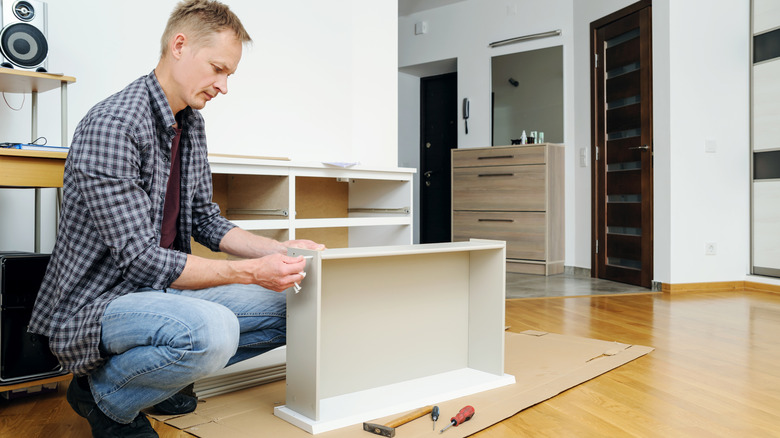
Going further from the last tip, maybe a few extra drawer dividers or organizing boxes won't be enough to corral your items. Instead, maybe it's time to upgrade the entire system. For example, if you have a 3-drawer dresser but are struggling to store everything, maybe you need to upgrade to an 8-drawer option, or maybe even a larger armoire. Or, if you hang everything in your closet, but notice that certain things like t-shirts and wool sweaters would be best stored in drawers, it might be time to get a small dresser or slide-out bins for the closet.
To figure out if this is what you need, separate your items into like-groups and label how you would like to store them. For example, all of your workout gear goes into one drawer, your socks into another, t-shirts on hangers in a closet. If you end up with groupings that would fit into six drawers but you have a 3-drawer dresser, you can consider upgrading. If you have more items you want to hang than you need to fold away, then it might be time to upgrade how many rods you have or invest in a standalone wardrobe.
Look for open space in your closet to further utilize
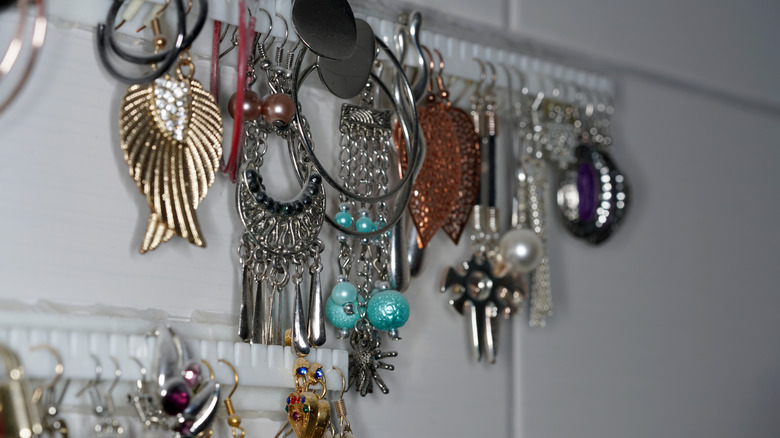
No matter how big your closet is, people always need more space. It's so much easier to take stock of everything you have and designate it a "home" if you have a clear area to store it in. Because of this, take a closer look at your closet and see if there are any nooks or crannies you're not utilizing. This will help carve out more storage room, allowing you to better display what you have and (hopefully) keep it neater in the long run.
Some obvious areas to look at are empty walls that could be filled with either shelves or hooks. But this doesn't have to be a giant expanse of wall. Instead, you can add shelves to small nooks, like the 8-inch sliver of wall space between your closet unit and pull-out baskets. You can do so by investing in thin shelving like IKEA's LACK Wall Shelf. You can also put shelving way on top of your closet system, near the ceiling, creating space for seasonal items. If there isn't space for shelves, you can instead add hooks for things like jewelry or belts. Some examples include the Perfect Curve Handbag Organizer, which holds 18 purses, and the Spring Clip Hat Organizer, which holds 20 hats. If you don't have any wall space available, see if you have any shelf space that's underutilized. For example, if there is space between your hanging shirts and the bottom of the shelf, you can put a tray of sunglasses or a divider of clutches there.
Upgrade your folding system
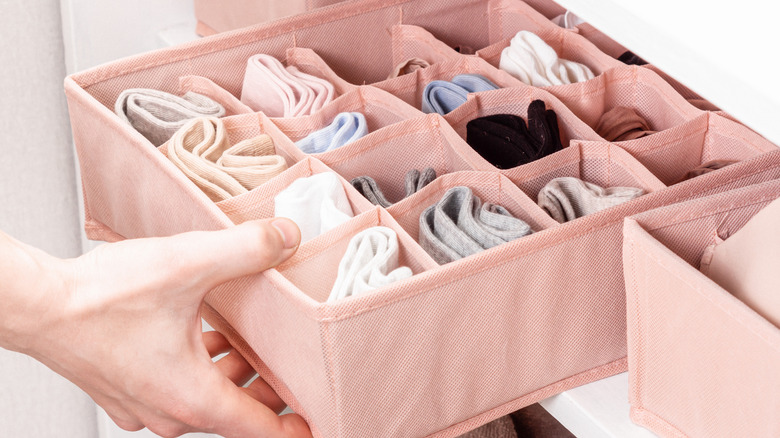
Before putting items back into drawers, see if you can upgrade your folding system to not only make the space look neater but also allow you to fill it more efficiently. If you're able to fold the items down to size, you will be able to fit more in a single drawer than before. There are also more efficient ways to store your folded items. For example, Marie Kondo recommends storing things like T-shirts and pants vertically rather than stacked one on top of the other, allowing you to see your options more clearly.
To figure out what is best for your space, look at videos on TikTok and YouTube to see what is possible. For example, if you store your hoodies in drawers, you can fold them into logs, which are then secured by the hood. If you're folding pajamas, you can store the pants inside the shirt before folding, creating a packaged bundle. If you're storing socks, some people like to fold them into crisp squares to help fit more in a given space. The possibilities are endless.
Change what you hate doing
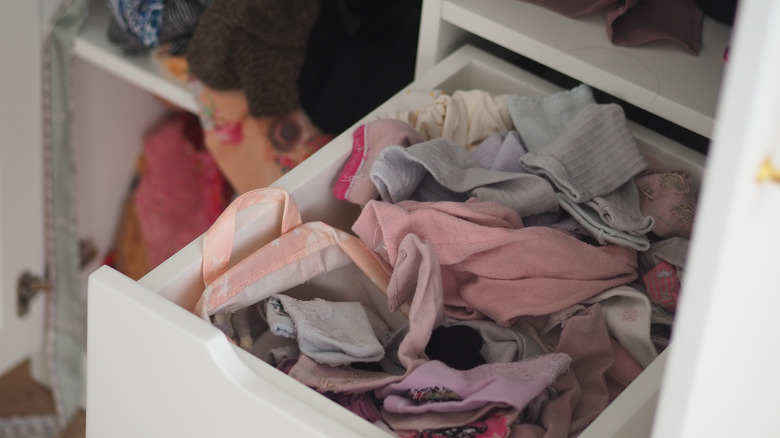
Part of spring cleaning is editing out what doesn't work, so before you start restocking your drawers and closet rods, take stock of any hitches in your organizing flow. Specifically, what do you hate doing when you put your items away? This is where you usually get tripped up and resort to creating a mess as a shortcut. Instead of fighting your messy habits that feel impossible to break, accommodate them.
For example, do you loathe folding T-shirts, so your drawers end up a jumbled mess? Rather than beating yourself up over it, change the system. Get a deep basket system like the Ikea JONAXEL and just toss them in without folding them. Since the baskets are deep, they won't get wrinkled because they won't be crushed like in a drawer. Or maybe you hate finding pairs to your socks while washing laundry, so you dump them into your drawer and then fight each morning to find two matching ones. As an alternative to that chaos, consider getting rid of all of your socks and instead getting the same pair 10 times. That way you never have to match them — they're all the same.
Rotate out seasonal items
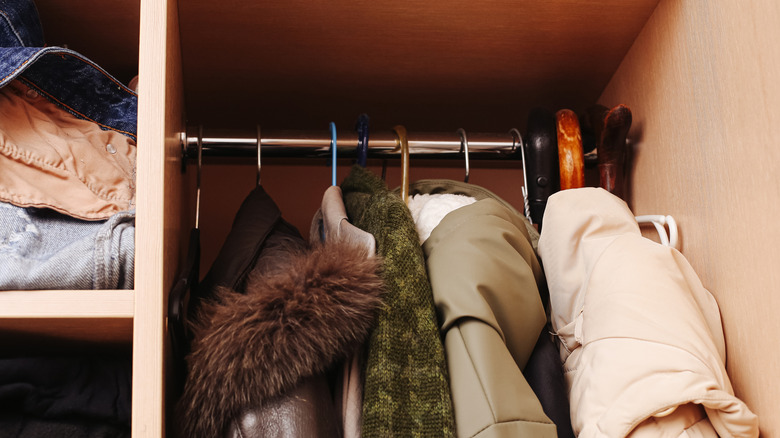
Even if your closet is big enough to store everything, that doesn't mean you have to. Having everything in one spot can seem convenient at first, but it also confuses things. Rather than walking into your closet or opening your drawers and only seeing your warm-season options during the summer, your eyes also have to scan over knits and boots. This can make the space feel overwhelming, and unless you have an abundance of space, it can make the entire setup feel crammed.
Instead, consider rotating out seasonal, bulky items like jackets, boots, and thick knits. Store them in bins or plastic storage bags either on the bottom or back of your closet, or a separate room like a guest bedroom or basement. It's best to store them in airtight storage containers so moths or other pests can't access them (especially if you stash them away in unfinished areas like crawlspaces or basements). If you're low on space, put these items into vacuum-sealed bags to reduce their bulk. It's the space-saving storage item you need for your closet.
See if certain items can go somewhere else in the house

Similarly, if you're feeling overwhelmed by housing everything in your closet or a specific chest of drawers, don't feel like you have to keep it in your bedroom. While it might not be ideal to have certain items dispersed across different rooms, if it can help keep everything more visible and organized, it could be beneficial.
For example, if you have an extensive shoe collection, move your most-used shoes to the entryway and leave your fun or going-out shoes in your bedroom closet, where you need to see them paired with outfits. Do you have a large collection of suits but no longer go to the office? Perhaps you can leave your button-downs in the closet for Zoom calls, but stash the suits in a guest bedroom for the rare office day (or special occasion). Don't feel like absolutely everything has to be stashed in your room. Instead, make room for items you use regularly.
Put back items in categories that make sense to you

Most people think they have to put their clothes back into the closet a certain way. All sweaters are lumped together, all long sleeves are together, all pants are hanging in the same section, and so on. But not everyone's brain works the same way. If you like to get dressed a certain way, organize your items in that manner.
For example, if you have slob T-shirts you like to lounge in and nicer T-shirts you wear outside, don't lump them together. Break them out into separate sections so you can grab what you need without having to sift. Similarly, maybe you have jeans you like to lounge in and jeans you only wear out. Separate them out into different sections so you can make a beeline for exactly what you need.