

Forgetting To Pinch Your Perennial Plants In May Is A Mistake

If you've ever wondered why your perennial plants appear leggy, droopy, tatty, or worse, bloom poorly, you may be making the mistake of not pinching them. Unless you live in the South, where the growing season is almost always on, May (running into June) is the month when most perennials put on their first surge of spring growth. If you leave them to their devices at this time, you miss your best shot at shaping their performance and appearance later in the season. Besides, pinching also improves air circulation, minimizing disease risk.
Pinching is a form of pruning, which luckily doesn't require fancy hand pruners; your hands will do just fine, or you could use a pair of sterile scissors. By taking the stem between your thumb and forefinger, you "pinch off" or remove a couple of inches of the tender, fleshy growth, including the bud or the top pair of leaves. Make sure you cut close to the next leaf node, without damaging other buds. Moreover, wait until your plant is about 8 to 12 inches tall and has several pairs of true leaves before the first pinch, so it can sustain itself and grow.
Pinching your plant for various outcomes
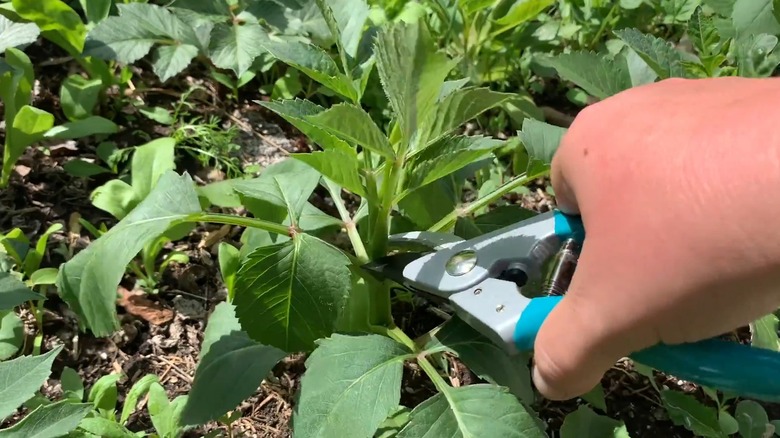
Pinching can accomplish several objectives, including making your plants bushier and compact, improving the number or size of flowers, or extending the blooming period. To understand how, you must know the concept of "apical dominance." Un-pinched plants focus their resources on "apical or terminal buds," the main buds at the stem tips. Due to that, side buds don't develop side branches or bloom.
So, when you pinch, you force the perennial to branch out. As a result, it looks fuller, tidier, and well-formed, and less likely to flop down later in the season. More branches also mean more buds, and hence, a more floriferous display. However, the flowers will be smaller and delayed, since plants need time for recovery and setting new buds. If you're controlling for height, you may remove more stem growth.
In contrast, if you'd rather have bigger or single-stemmed blooms for cut arrangements, you can instead pinch off the side buds and shoots. That way, plants will direct their resources into main buds, leading to fuller flowers, though there will be fewer of them. This is a spectacular way to get more out of your fall mums. If your perennial plants flower later in the season, you may stagger their blooms for a more continual display. Simply pinch ⅓ of the total stems in one go, and repeat weekly until you get them all. But be sure to pinch them all by July 4, so they can bloom before frost.
Plants you can pinch, and the ones you shouldn't
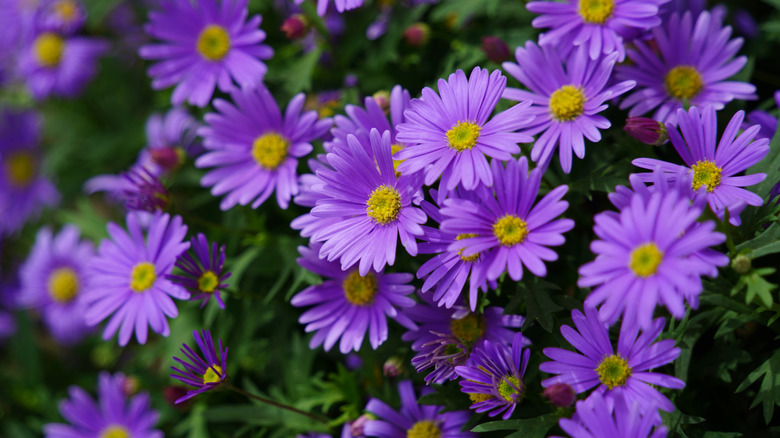
Since perennials differ in their habits and blooming periods, pinching doesn't yield the same advantages for all of them. In fact, it can be hugely damaging in some cases, causing you to lose all the flowers in the current season. Pinch perennials with a multi-stemmed habit, such as asters, hybrid goldenrods, coneflowers, yarrows, bee balms, catmints, and turtleheads. Late-blooming perennials like mums, sneezeweed, non-invasive speedwells, joe-pye weed, ironweed, monkshood, phlox, and Russian sage also benefit from pinching.
You may also pinch perennial herbs like rosemary, lavender, oregano, tarragon, thyme, and sage. In their case, pinch the top pair of leaves to encourage branching at the next node. This keeps them compact while ensuring you have more leaves to harvest later in the season, provided they're well-watered and fertilized, of course. Foliage-heavy plants like coleus also benefit from such pinching.
On the other hand, avoid pinching perennials producing single-stemmed flowers or with a basal rosette (since they usually shoot out leafless stalks). Examples include Hosta, coral bells, columbine, astilbe, campanula, and delphinium. You may also want to take a hands-off approach for perennials with sword-like foliage — think irises, true lilies, and red hot pokers.