

Why Consumer Reports Suggests Steering Clear Of Inflatable Pools
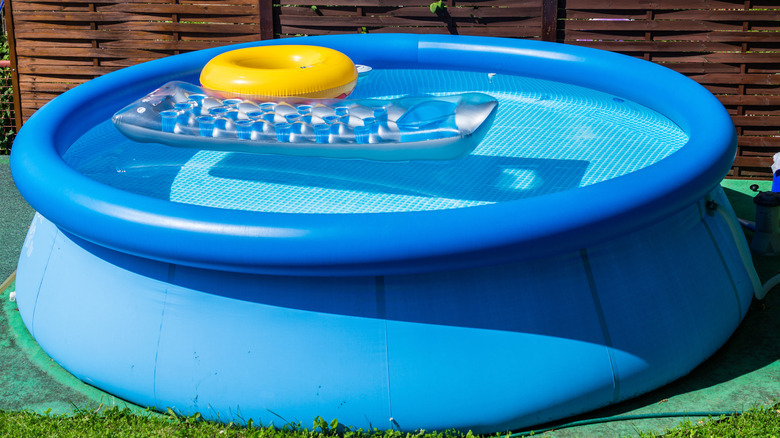
Inflatable pools are the perfect way to enjoy your summer. Unlike in-ground or other above-ground options, these can be put away when the season is over, saving space and making them a great option for your backyard. They are also more affordable than other alternatives. Despite this, Consumer Reports says there are a few reasons why you may want to avoid inflatable pools. Two of the biggest dangers are drowning and diseases.
Of course, these problems can be found in any other kind of pool as well. The reason that they're such an issue with inflatable designs is because they often lack the protections put in place with other pools — things like secure fences and a proper filtration system. After all, many are small and made to be a simple, shallow way to cool off in the summer for both children and adults. Many don't even associate these smaller, lounge-like pools with the dangers of more permanent alternatives.
But even a small inflatable kiddie splash pool can cause injury, sickness, or death if you aren't careful. As mentioned, some aren't aware of the dangers, and they don't take the proper steps to keep their family and themselves safe. This lack of knowledge is what makes them more dangerous than even a regular pool, which is why Consumer Reports suggests steering clear of them.
Drowning and diseases are the biggest hazards
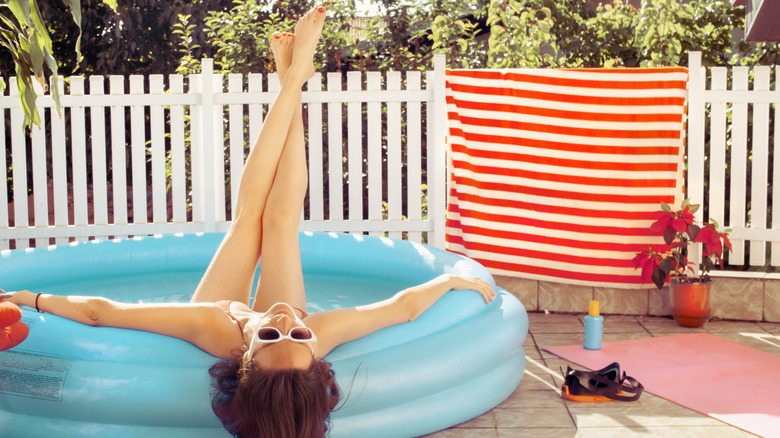
Drowning, especially for small children, is a pressing concern. Most U.S. jurisdictions require a fence around in-ground pools as well as inflatable and above-ground models. However, the standards are often relaxed for any pool that holds 2 feet of water or less. And as the Home Depot product recall with a fatal warning revealed, kids are sometimes prone to climbing, which can make poor-quality ladders almost more dangerous.
Another issue with inflatable pools, according to Consumer Reports, is the danger from bacteria and diseases. Bigger above-ground models often include a pump to help keep the water clean and circulating. With kiddie-sized options, it sits there and grows stagnant, becoming a mosquito and bacteria breeding ground. This alone can pose risks like diarrhea caused by E. coli and norovirus, often known as recreational water illnesses. And when you introduce children with dirty feet, colds, or sticky hands from that summer popsicle, the chances of bacterial growth increase. Not to mention, a dirty diaper or an accident in the pool can be quite a problem. Just rinsing it out on occasion isn't enough to keep it clean, either.
Keeping your pool protected and clean
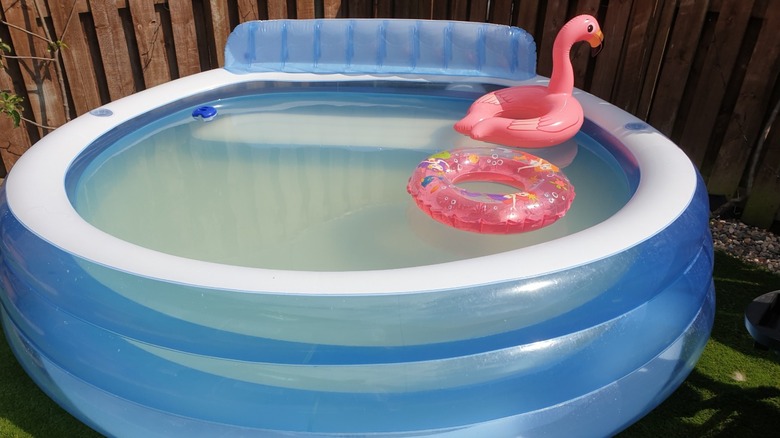
Though Consumer Reports targets inflatable pools specifically, these dangers can be present in any pool, including in-ground or above-ground DIY options like stock tanks and storage containers. Thankfully, you can mitigate these hazards. To fit the requirements of most states and keep people as safe as possible, you must have a fence at least 48 inches tall surrounding it, though in some regions, 60 inches is the law. You cannot have gaps bigger than 4 inches between bars, and the latch must be at least 54 inches high. The gate also needs to be a self-closing and self-latching variety, and you need to ensure that there is nothing to climb on nearby. Though the law targets pools more than 2 feet deep, to be extra safe, it wouldn't hurt to have gates around any unsupervised and filled pool.
As for keeping it clean, scrubbing it out well with soap and water is helpful, but a little diluted bleach on occasion might be required. You also want to empty out the pool fully and let it air dry between uses. These steps are particularly important if people outside the immediate family have used it recently, as there is a higher chance of them transmitting unfamiliar bacteria to you and your children. Even if your model does have a pump, you still need to avoid the worst mistakes when cleaning your pool for the summer, like not cleaning out filters regularly.