

It's Termite Swarming Season — There's A Common Mistake You Need To Avoid
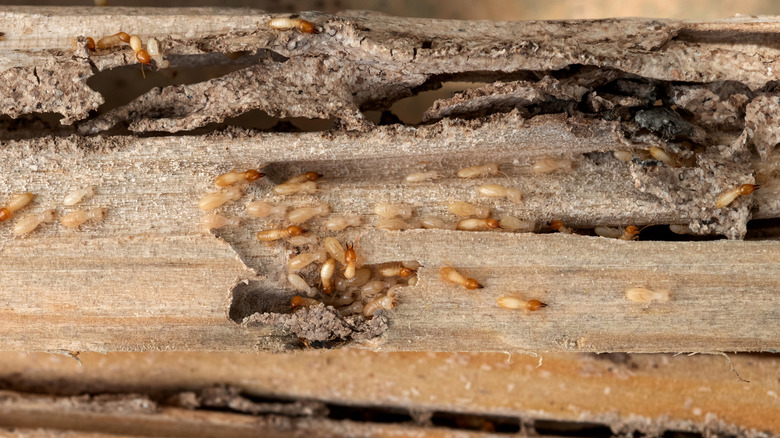
While there are many types of bugs you don't want living in your home, termites are probably at the top of the list. So seeing winged termites fluttering around a window all of a sudden isn't exactly good news. In fact, when you see a termite swarm, it's an indicator that a mature colony is already likely living inside your house, or could be soon. Though your reaction is probably to grab a can of bug spray and aim, spraying the swarm is about the worst thing you can do. There's a proper set of steps you should follow, including collecting the bugs and calling an exterminator, to handle the problem.
Why is spraying a termite swarm the wrong move? Because you're only addressing a tiny fraction of a bigger issue, and it can make things worse. Swarmer termites are a group within the colony that reproduce and create new nests. Swarmers don't bite or munch on wood, unlike worker termites. And yes, while bug spray does repel insects, when you blast the swarmers with it, the scent can often alert the colony to danger; it only forces the termites to retreat deeper into your home's framework to cause more damage.
Although there are ways to get rid of termites on your own, calling in a professional exterminator is always the best bet. Either way, spraying the swarm with chemicals just makes it harder to find and destroy the main nest. Instead, the only thing getting destroyed then is your home's framing.
What you should actually do if you see a termite swarm
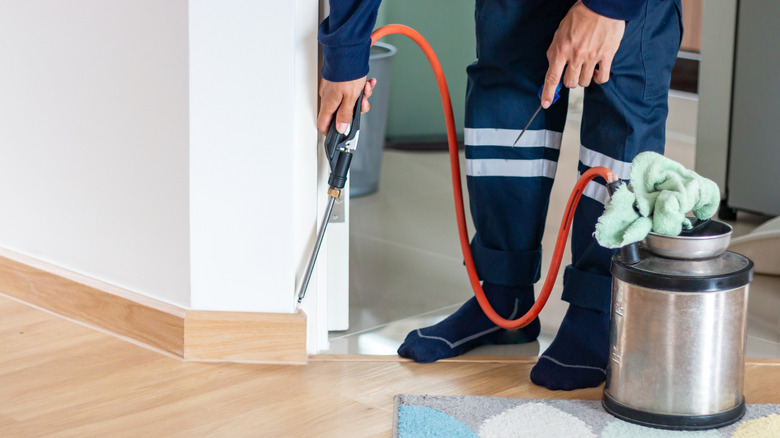
Instead of grabbing the bug spray, your first steps should be to contain all the swarmers, and preserve a few. These winged insects are drawn to light, so they'll likely hang out around your windows and lamps. The easiest way to contain them is to vacuum them up; then, empty your bag or canister into a sealed trash container. Before you snatch them all up, though, be sure to save some in a small glass jar or ziplock bag. This step is important. Why? Because the exterminator needs to see what exact termite type is there to set up the right plan for treatment.
Also try to give the pest control technician a head start by finding where the little critters entered your room to begin with. Don't seal the entry point up or mess with it; just mark it with some brightly-colored painters tape. This helps the professionals know where to start applying treatments to kill the colony. By taking these important steps after finding a swarm, you can efficiently hand the problem over to the exterminators and streamline the whole process. From there, you can focus on the precautions you should take to prevent termite infestations going forward.