

10 Deer-Resistant Perennials To Plant In Spring And Summer
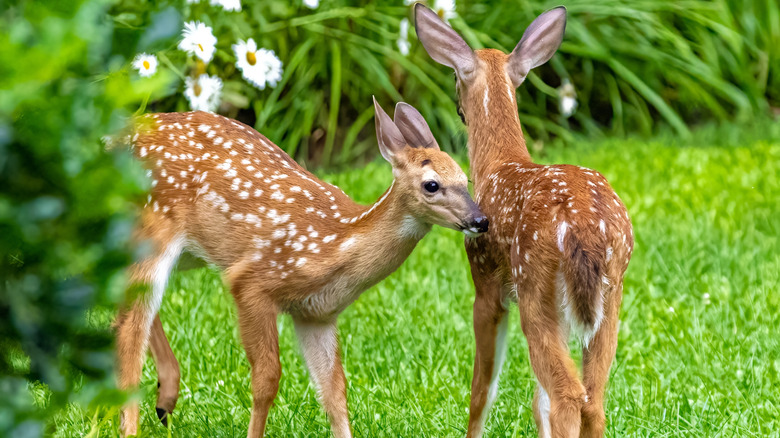
Gardening can be a labor of love, which is why it can be extremely frustrating to find your newly planted perennials eaten by the local deer. While you may have no interest in harming Bambi simply to save your garden from becoming a buffet, it can be exhausting trying to find ways to deter them. The simple solution is to plant perennials that the deer will find unappetizing. There are quite a few plants that keep away deer, but lavender (Lavandula spp.), catmint (Nepeta), allium, and even peonies (Paeonia lactiflora) are a few perennials that you can plant that deer will generally avoid.
There are many plants you want to think twice about adding to your garden if you have a deer problem. But using some strategy in your planting this spring and early summer by choosing perennials that deer won't eat might also keep them from perusing your garden in the first place. The plants on our list have special attributes that make them unappealing in a variety of ways. Like you, deer avoid eating things that have a weird texture, smell funny, or are bitter and bad tasting. They prefer plants that are juicy, sweet, and tender, like your favorite hosta. Deer dislike plants with a tough or fuzzy texture, extremely strong scents, as well as those that are bitter or have natural toxins. The beauty of all of these deer-resistant plants is that they are perennials that you only have to plant once and they return every year.
Lavender
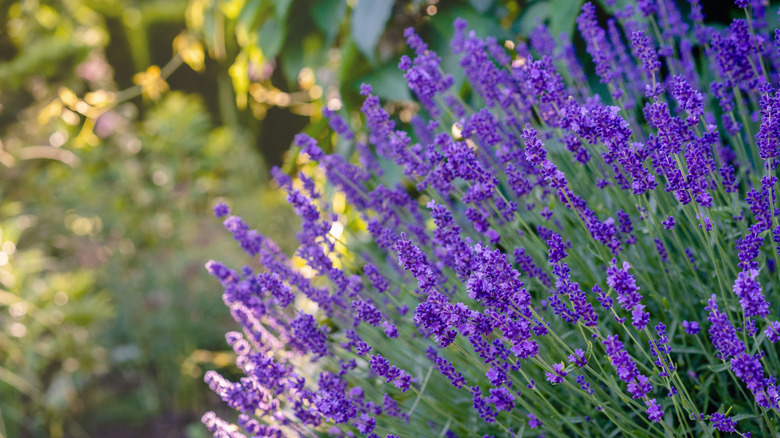
Lavender is a great deer-resistant perennial option to plant in the spring or summer if you live in USDA Hardiness Zones 5 through 9. Choose a location in your yard that is extremely well-draining (they don't like to sit in wet soil), has full sun at least 6 hours a day, with at least 12 inches of space around it.
Lavender has woody stems and a strong scent that deer will avoid. It is one of the many beautiful purple deer-resistant flowers you can add to your garden.
Russian sage
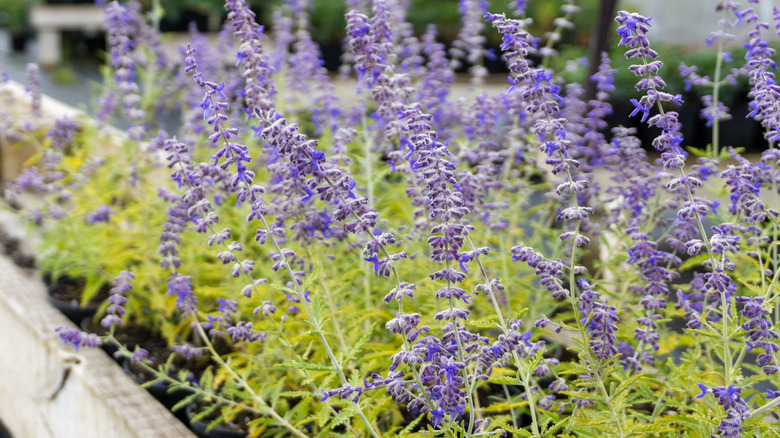
Russian sage (Salvia yangii) is similar to lavender in its color and shape and also thrives in USDA Hardiness Zones 5 through 9. Deer avoid it because of its woody main stem and it has an extremely strong scent they dislike.
Russian sage has similar growing needs as lavender and should be planted in an area that receives full sun for the majority of the day and well-draining soil that stays dry (they are drought tolerant).
Yarrow
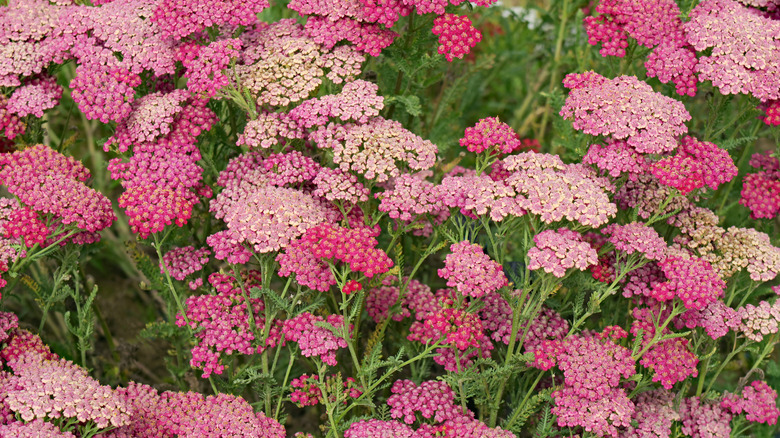
Yarrow (Achillea millefolium) is another deer-resistant perennial that can be planted in spring. If you live in USDA Hardiness Zones 3 through 9, yarrow will thrive in your garden and will be safe from becoming a deer's lunch. It comes in a variety of colors, from white or yellow to even a deep red or purple.
These plants avoid becoming deer food because their leaves and flowers are bitter, they have a strong odor, and their stems are hairy. They should be planted in the spring in a sunny location of your yard, with soil that has good drainage, and in a spot that doesn't get a lot of wind.
Catmint
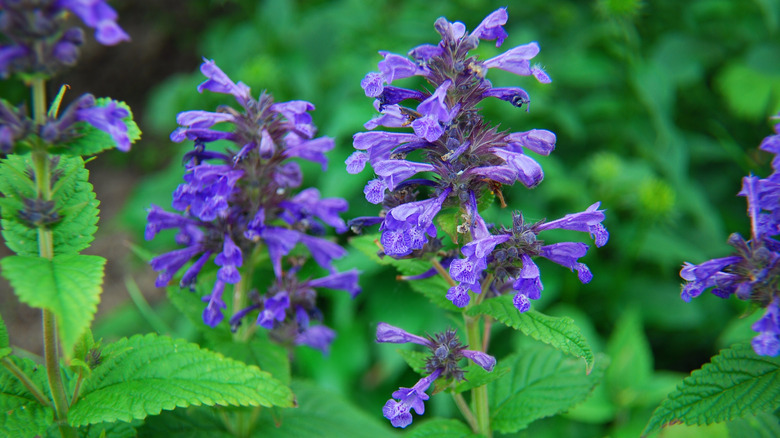
Catmint (Nepeta), not to be confused with its weedier cousin catnip, is a lovely, purple-flowered perennial that is best suited to USDA Hardiness Zones 3 through 9. You should plant it in the spring in a location that gets full sun and has well-draining soil.
Deer tend to avoid catmint due to its strong, minty scent and its hairy foliage. This perennial is a great option for beginner gardeners and those looking for something low maintenance.
Salvia
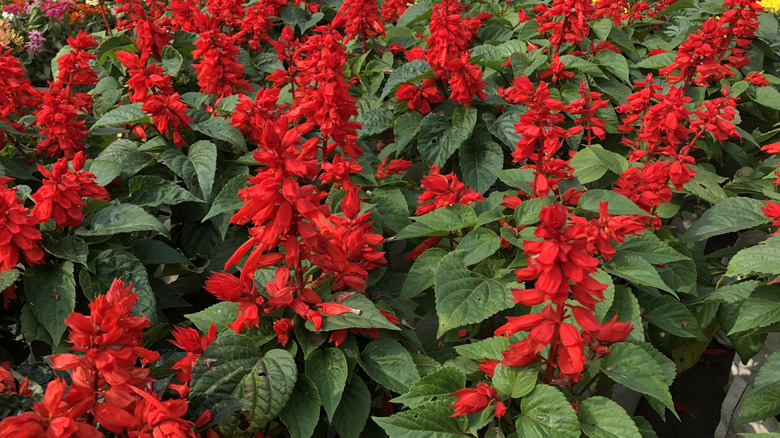
Salvia is often considered an ornamental variety of sage, but in reality, all sages are a variety of salvias. Whatever you choose to call them, they come in an abundance of species with a rainbow of different colors. This is another plant deer tend to avoid because of its strong odor.
Plant your salvia in April or May, whenever your soil temperature stays above 55 degrees Fahrenheit. These perennials are best grown in USDA Hardiness Zones 5 through 10. Salvia plants need full sun for the majority of the day and well-draining soil.
Bleeding heart
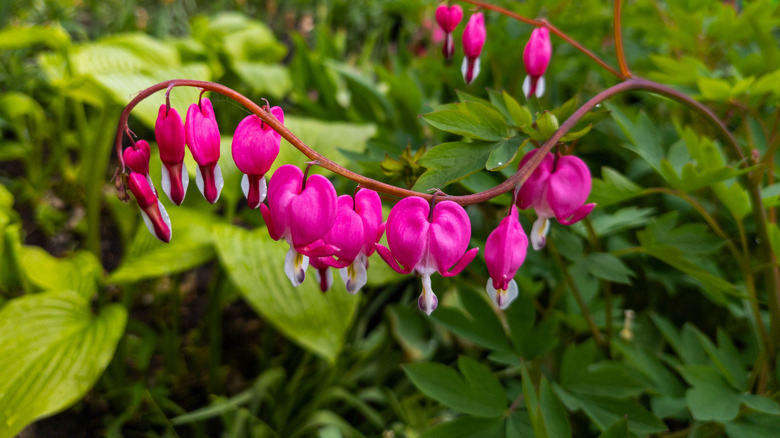
Bleeding hearts (Lamprocapnos spectabilis) are one of the more interesting-looking plants on our list, with flowers shaped like hearts with a drop of blood, hence the name. Deer avoid them because of a toxin that makes the plant bitter tasting and causes an upset stomach.
Bleeding hearts thrive in USDA Hardiness Zones 3 through 9. They prefer moist, well-draining soil and do well in partial to full shade. You should plant these lovely perennials in the spring after the danger of frost has passed.
Coneflower
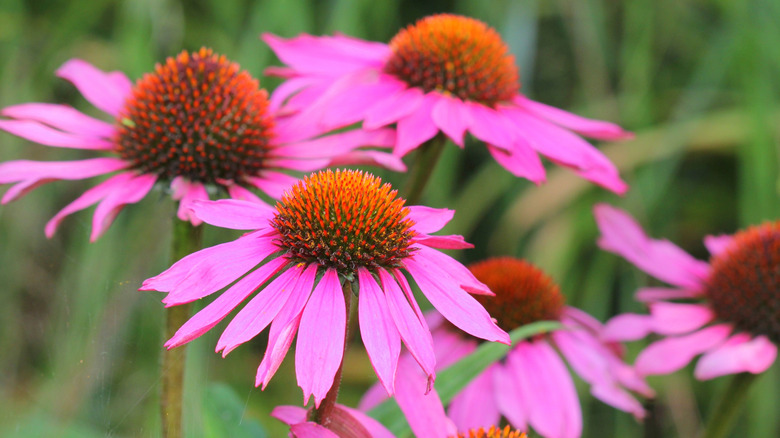
Coneflower (Echinacea purpurea), also known as echinacea, is a purple-flowered herbaceous perennial that is well suited to USDA Hardiness Zones 3 through 8. Coneflowers aren't as deer-resistant as the rest of the plants on our list. Deer might consider them, but only as a last resort due to their flower's spiky center and rough texture.
You could plant them next to some of the other strong-scented perennials on our list to keep them safe. They have similar requirements to lavender and salvia, needing full sun for most of the day, well-draining soil, and they can be drought tolerant.
Lamb's ear
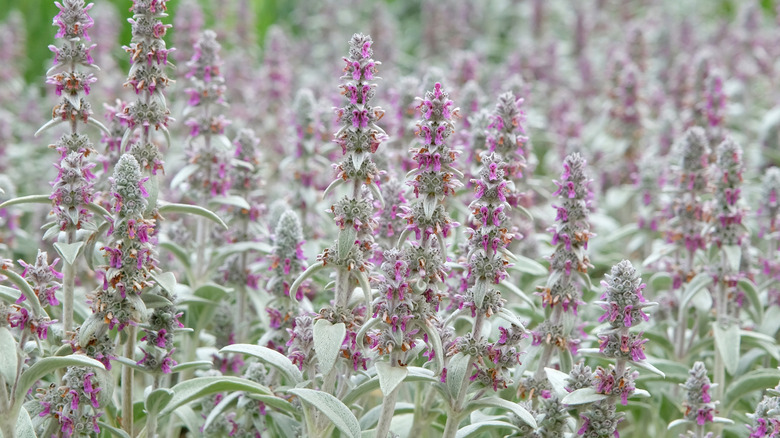
Lamb's ear (Stachys byzantina) is the perfect choice for a perennial ground cover. They have a bluish gray color, with leaves that have a soft, fuzzy texture (where it gets its name), and pink or purple flowers. Deer avoid them because of the aforementioned texture.
They are best suited to be grown in USDA Hardiness Zones 4 through 8, thrive in 6 or more hours of full sun, and can work with various soil types with good drainage. It is best to plant them in the spring but can be planted in the summer as well.
Peony
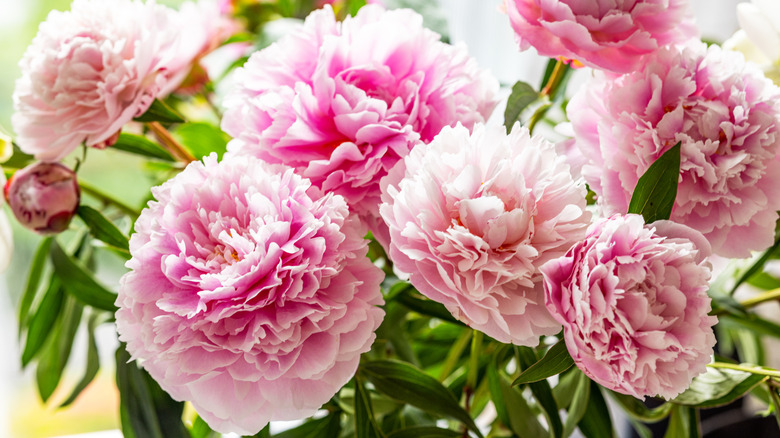
Thankfully, the gorgeous peony (Paeonia spp.) is also among the perennials that deer prefer to avoid. The peony's sticky nature and strong scent are unappealing to our deer neighbors.
You can plant peonies in the spring in USDA Hardiness Zones 3 through 9, in full to partial sun, in well-draining soil. They come in an amazing variety of colors and petal structures, sure to suit anyone's tastes. Unlike their more finicky garden mates, peonies are relatively low maintenance.
Allium
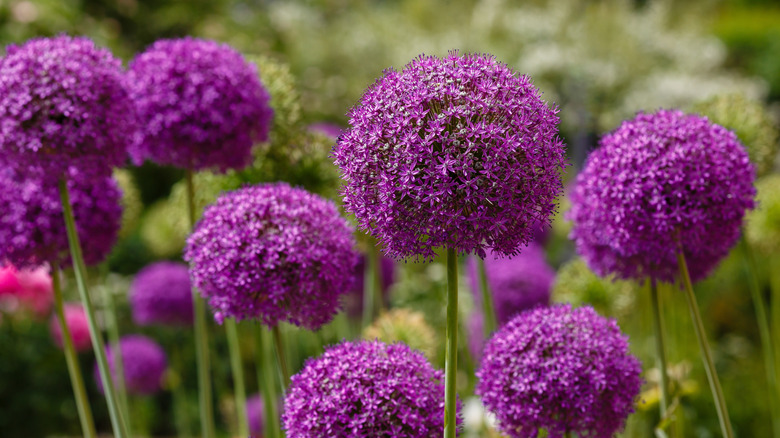
Allium, also known as ornamental onion, is a deer-resistant perennial due to their strong odor that deer absolutely despise. This is great for gardeners because these plants have some of the most beautiful ball-shaped flowers, sure to bring visual interest to any garden.
You can grow allium if you live in USDA Hardiness Zones 4 through 9. Generally the majority of allium varieties are bulb types and need to be planted in the fall, but fibrous rooted summer varieties like allium tuberosum and 'Allium Millennium' can be planted in the summer. This perennial prefers everything from full sun to partial shade and well-draining soil.