

13 Of The Strangest Creatures That Could Be Lurking In Your Backyard
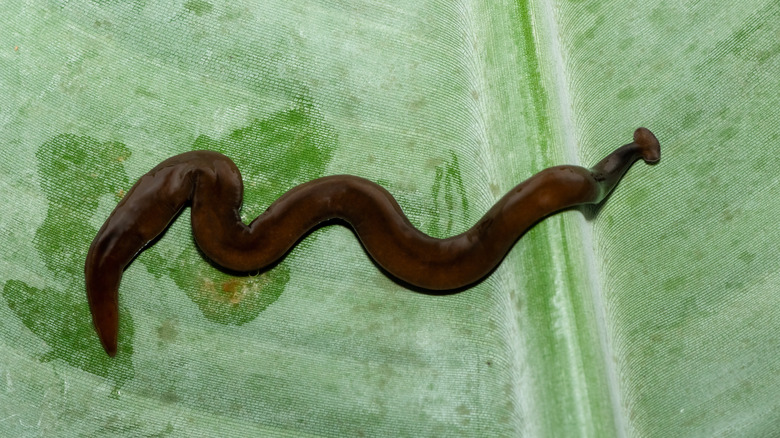
I know lots of people get freaked out by the wildlife that they are sharing their yard with, but I'm a master gardener and a permaculture specialist, so I am fascinated by the weird and wonderful critters that are all around us. Some of which you'll rarely, if ever, see. Under the moss mulch, leaf litter, and in your garden beds and overgrown borders, there may be creatures with star-shaped noses, glowing bodies, detachable tails, and even neurotoxic mucus. Many are harmless oddities or useful predators. Others are invasive species that can damage your soil and cause problems for other wildlife.
I urge everybody to pay attention to the creatures in their backyard, because they can tell you a great deal about your yard and the conditions, ranging from biodiversity and ability to support a range of habitats, to soil health and water quality. Unless I'm dealing with something invasive or particularly problematic, I leave the creatures in my garden alone. Spiders, for example, are excellent predators and keep the populations of more problematic insects in check. If, however, I were to come across a hammerhead worm, I would very quickly remove and destroy it.
Star-nosed moles have the most sensitive noses
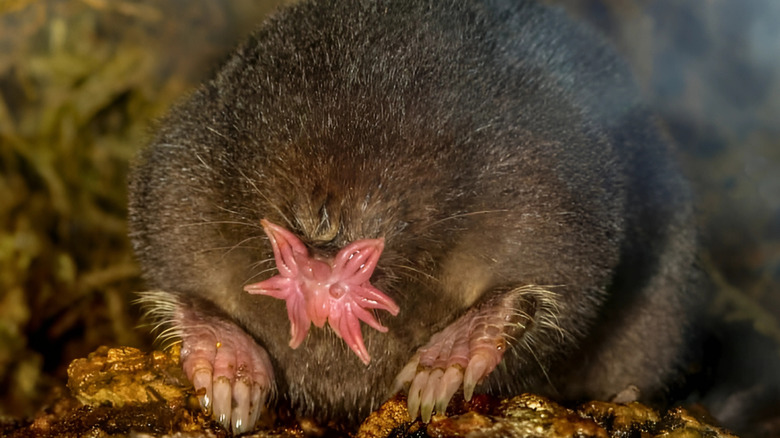
Star-nosed moles have to be some of the weirdest but cutest backyard visitors. Look for raised ridges and soft mounds, particularly in damp and low-lying parts of the yard and most especially near a stream or pond. These are the classic signs of the presence of a star-nosed mole. Star-nosed moles are near-blind, semi-acquatic mammals and do best in wet ground. They are impressive underground hunters. Many of their subterranean tunnels open into bodies of water, and the moles will actively hunt in the water, too.
The particularly weird thing about these fascinating critters is the fleshy star for a nose. It has 22 tentacles surrounding its nose, and looks like a mole and an Ood had a love child. (Doctor Who fans will know exactly what I mean). This cute, wiggly little nose has an amazing 25,000 sensory receptors, which is astonishing given that the nose is less than half an inch wide. Their remarkable noses also let them smell underwater. Star-nosed moles don't want to eat your plants, so if you have them in your yard, just leave them alone. It's simply an indication that you have healthy soil full of life and at least a portion of wetland habitat that's perfect for these tentacle-nosed little beasties.
Virginia opossums play dead
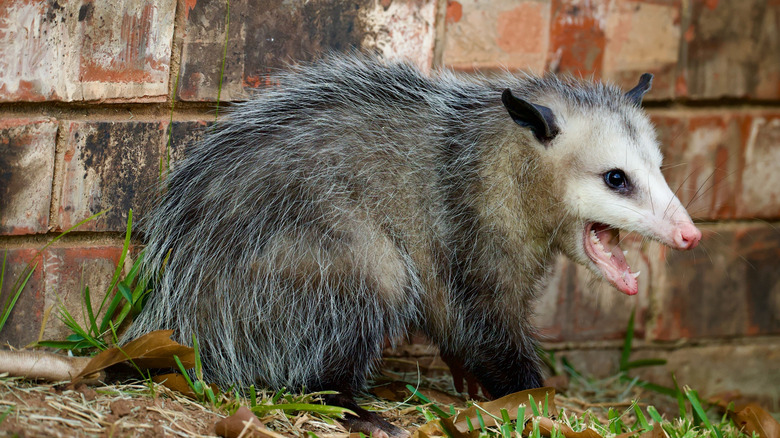
The Virginia opossum is North America's only marsupial and is a slow, shuffling, opportunistic scavenger that will eat almost anything. One of the oddest things about this creature is that when cornered, it loses consciousness and collapses, completely involuntarily. This is where we get the phrase "playing possum." The Virginia opossum's "playing dead" response is very convincing. The breathing slows, the tongue lolls out, and the creature releases a deeply unpleasant scent. It can't help it either; its nervous system just shuts down under extreme stress.
These are welcome scavengers in your yard, as they will hunt pretty much anything, including some of your most problematic garden pests. Even though the internet tells us that Virginia opossums are heroes in the fight against Lyme disease because they consume thousands of ticks, a 2021 study that examined the stomach contents of 32 wild Virginia opossums found no ticks or tick parts in any of them, so don't rely on them for tick control.
Hammerhead worms are invasive pests
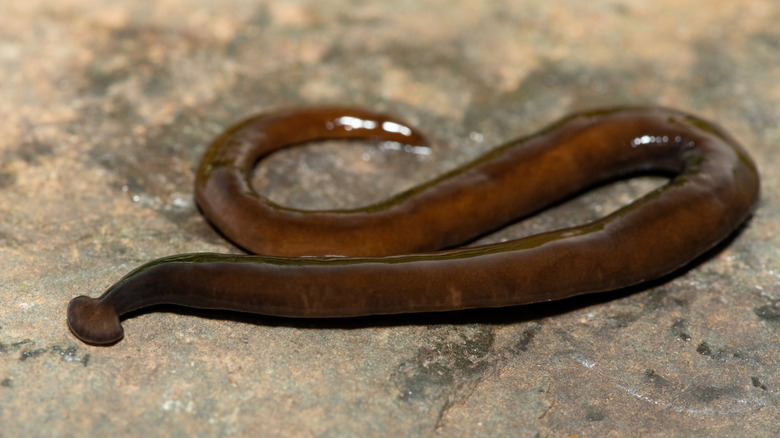
When you were a kid, you probably heard the story about how if you cut an earthworm in half, it would form two new worms. If you tried it, you found out it was not the case. However, there is some truth to that weird schoolyard myth. The hammerhead worm does indeed regenerate itself into a complete worm if you chop one up. If you find these invasive pests in your yard, do not try to kill them by cutting them in half. Each segment will just grow a new worm.
This is an invasive flatworm from Southeast Asia with a distinctive, shovel-shaped head. When fully stretched, its body can reach a foot long. The hammerhead worm is a garden pest you can't afford to ignore, and is believed to have arrived in the US in the late 1800s, probably in the soil of imported plants. Since then, it has rapidly established itself across the southeast and parts of the northeast, and, of course, it spreads further with every load of contaminated mulch or potted plant. It is undoubtedly an invasive species. The hammerhead worm hunts earthworms so it's a real threat to your soil health. Interestingly and alarmingly, it carries the same neurotoxin as pufferfish. Contact with its mucus can cause skin irritation in people and pets, and eating one can cause significant sickness. Wear gloves to handle them. Place them in a sealed bag and leave the bag in direct sunlight to kill them.
Wheel bugs look fearsome but eat pests
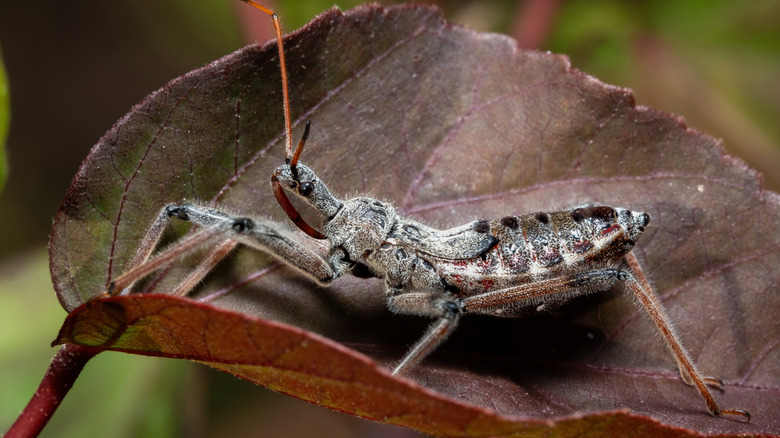
The largest of around 160 species of assassin bugs in North America, the wheel bug is unmistakable. It has a cog-like crest that runs across its thorax and can reach 1.5 inches. This is an ambush predator that injects a paralyzing venom into its prey through a curved rostrum and then consumes the liquefied innards. The wheel bug is an excellent pest controller in your backyard as it eats caterpillars, stink bugs, hornworms, aphids, and many other soft-bodied garden pests.
Finding a wheel bug clinging to your tomato plants or working its way up a rose cane is fantastic, as it means your garden has enough prey diversity to sustain a predator that's at the top of the insect food chain, and that you have nature's pest controllers patrolling your yard. While wheel bugs are exceedingly beneficial for your garden, don't touch them. They deliver a painful bite. I've never been bitten by a wheel bug, thankfully, but most accounts say their bite is considerably more painful than a wasp sting. Wheel bugs are not aggressive toward people. They'll try to pull away from you, but they will defend themselves with a bite if you grab them, so just leave them alone to get on with killing pests.
Velvet ants are really wasps
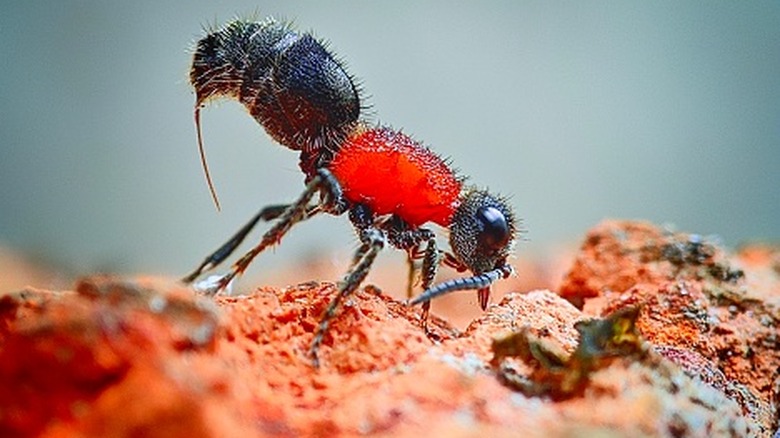
This one is a bit of a misnomer. The velvet ant is not an ant at all. This vivid red and black insect you might see determinedly marching across a sunny, sandy patch of your yard is actually a wingless female wasp of the Mutillidae family. Its common name is the cow killer. The sting of the cow killer ant, or the velvet ant, is ranked as one of the most painful insect stings in North America, and it can cause significant swelling and distress that lasts for days. Its bright coloring is aposematic, meaning it's a warning signal to any creature that might be thinking of making a meal of the velvet ant. If discouragement doesn't work, the velvet ant's exoskeleton is so tough and dense that many creatures struggle to pierce it.
These mildly terrifying creatures are most common in the South and Mid-Atlantic, and you'll usually find them in open, sunny, dry areas, so they'll be more common wandering across your driveway than on your lawn. She is female, and she is most likely looking for a ground-nesting bee or wasp burrow where she will lay her eggs. Once hatched, those larvae are parasitoids, so they feed on the host's larvae. I will say that although she has a fearsome sting, the female velvet ant just wants to lay her eggs. She is not interested in you, and she is not aggressive, but she will sting you if you grab her or stand on her, so my advice would be just to leave her alone, and she will lay her eggs and move on.
Hummingbird clearwing moths look just like their namesake
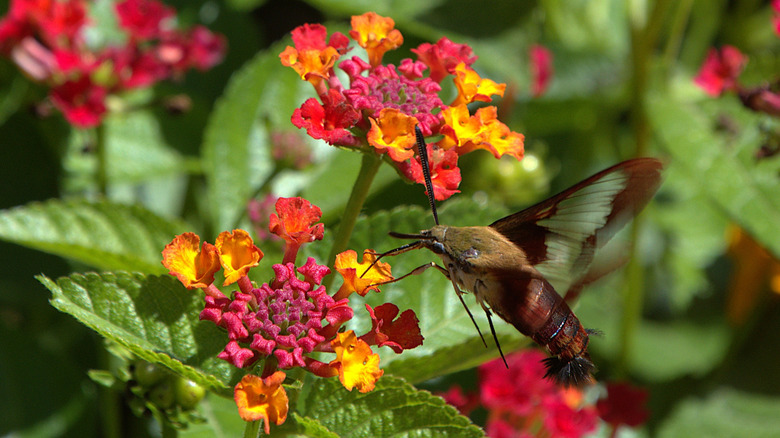
You'll be looking at a patch of bee balm, and suddenly something will appear, hovering over it that your brain can't quite classify. It's too small for a hummingbird but too big for a bumblebee. Its wings move super fast while its body hovers perfectly still, and its proboscis will extend into a flower. The hummingbird clearwing is a diurnal sphinx moth that has evolved to mimic hummingbirds so effectively that they are nearly indistinguishable from a distance. Unlike many moths, the hummingbird clearwing is a legitimate pollinator.
Spotting a hummingbird clearwing moth is a reliable sign that your garden is beautifully pollinator-friendly and wonderfully biodiverse. These daytime flying moths favour deep-throated flowers. They love things like bee balm, verbena, and honeysuckle. For those trying to grow a pollinator-friendly garden, seeing one is a real treat, as it tells you that you are heading in the right direction.
Tardigrades are microscopic survivors
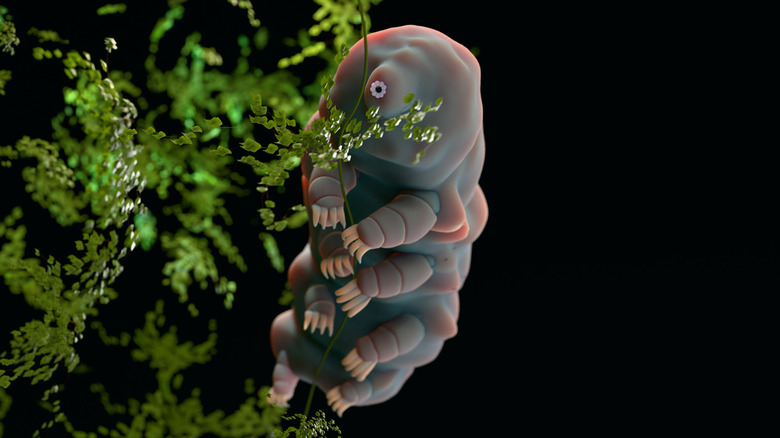
Tardigrades, or waterbears, are some of the most fascinating creatures that I've ever heard of, and there are most likely tens of thousands of them, probably more, in your garden right now. These teeny tiny creatures aren't visible to the naked eye, but they live in the moss on your fence posts, the leaf litter under your shrubs, and in the film of moisture that coats almost any organic surface. They are microscopic, eight-legged animals, less than a millimeter, and they've been on Earth for at least 500 million years. Under a microscope, they look like tiny armored bears with eight stubby legs.
One of the things that makes them so extraordinary is their near indestructibility. In unfavorable conditions, they enter a dormant state called cryptobiosis and can survive complete dehydration, temperatures from close to absolute zero to around 300°F, intense radiation, the vacuum of deep space, and pressure that would crush most organisms. Tardigrades are found everywhere, from deep in the ocean trenches to high up in the Himalayan glaciers. You obviously won't know they're in your yard without a microscope. But they'll be there, grazing on bacteria and algae, hydrating, and doing their weird tiny waterbear thing, just as they've been doing since long before the dinosaurs.
Eastern dobsonfly larvae take three years to mature
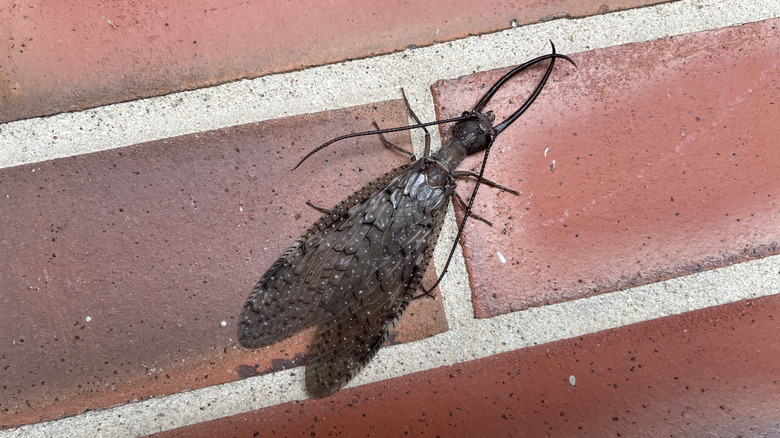
Eastern dobsonflies are prehistoric-looking insects native to North America. You may have seen one on your fence or your porch light if you live near a clean, fast-moving rocky stream. They're fairly large, with adults reaching around 2 inches and a wingspan of 5 inches. The males have long, sickle-shaped tusks that extend an inch and a half beyond their heads like weird, tiny winged elephants. Although those tusks look terrifying, they aren't dangerous. Males just use them for grasping during mating, so they pose no risk to humans. The females, however, which are smaller and without the imposing-looking tusks, have short, powerful mandibles and absolutely will bite you if you handle them.
Fly fishers love the larvae, known as hellgrammites, as they make excellent live bait, and they spend up to three years embedded in the stream bed before they emerge as adults. If you see Eastern dobflies in your garden, it's a reliable biological indicator of excellent water quality. Their larvae require cold, well-oxygenated water with minimal pollution to survive.
Mole crickets are significant lawn and turf pests
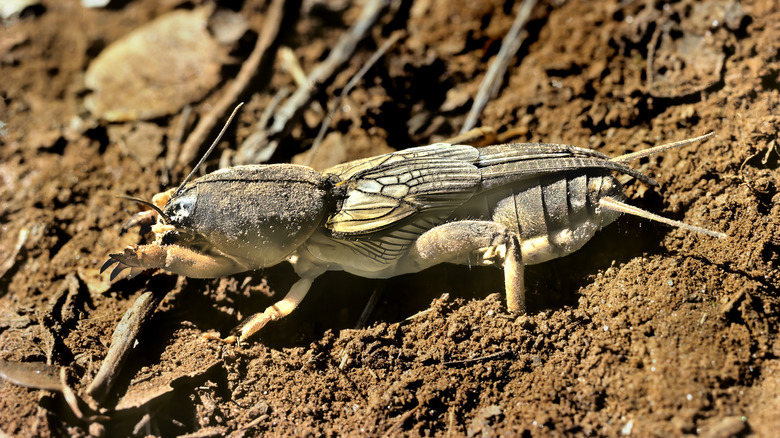
Mole crickets are just plain weird. They look like somebody tried to cross a cricket with a crayfish and a mole. They have shovel-like, stubby front claws that are used for digging, bulging compound eyes, and a velvety brown carapace. Three invasive species from South America have spread widely across the Southeastern US. They are considered a significant pest to lawns and turfs across the region.
Mole crickets tunnel just below the soil surface, and sever grass roots, causing the earth to bulge upward and leaving behind dead strips of lawn that have an unpleasant, spongy feel underfoot when you walk across them. Infestations are generally worse in late summer. If you think you have mole crickets, you can pour soapy water over the suspicious patches, and it should bring them to the surface. You can use targeted insecticides. However, I'm a permaculture enthusiast, so I prefer natural control options, which in the case of mole crickets, is largely nematode treatments and Larra bicolor wasps. These are more sustainable and ecologically friendly than insecticides, and they work well to target young nymphs in early summer.
Eastern glass lizards look just like snakes
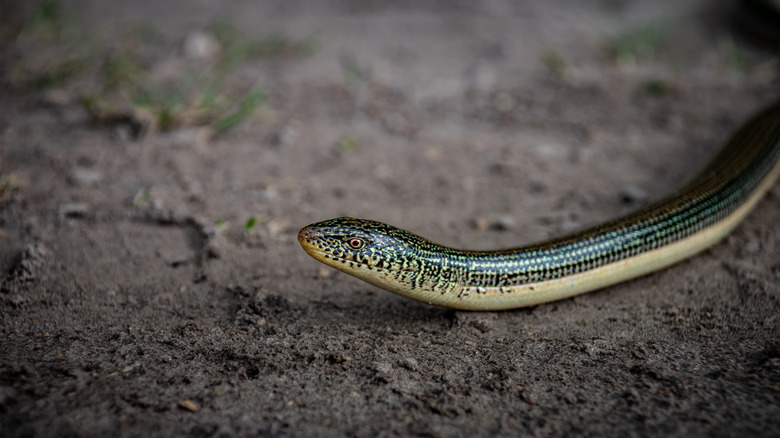
If it's about three feet long, legless, moves like a snake, and looks like a snake, look closely, because it could be an eastern glass lizard. It has movable eyelids and visible ear openings on the side of its head, and doesn't unhinge or flex its jaws in the way that snakes do. It's known as a glass lizard because of its tail, which is roughly half the length of its body and will snap off into multiple wriggling fragments if it's grabbed by a predator. The wriggling fragments confuse predators long enough for the lizard to escape. This sounds horrific, but it's not that bad. The tail re-grows, often in a different colour than the original.
You'll find eastern glass lizards most commonly in sandy, open habitats across the southeast, and they are utterly harmless and very useful. They hunt insects, spiders, small invertebrates, and sometimes mice. Many people kill them because they mistake them for snakes, but it's a shame because they are fantastic pest controllers that will do you absolutely no harm. This is another case of just leave the poor creature alone, and it will help you out.
Nine-banded armadillos always have quadruplets
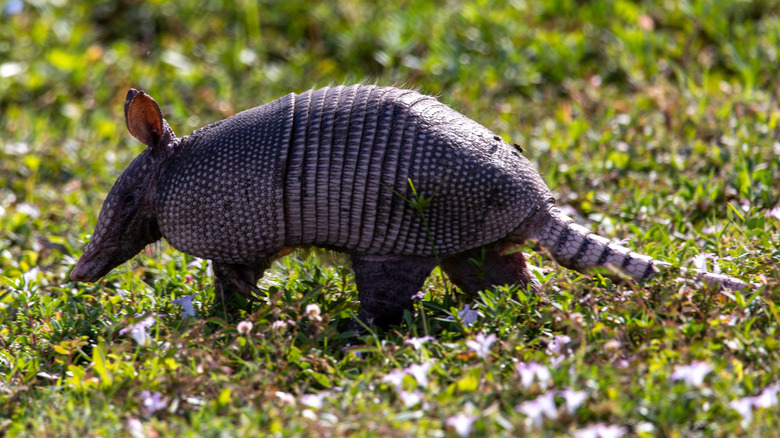
The nine-banded armadillo, which is the only native armadillo species in the U.S., is an interesting little creature. If you're in the South or lower Midwest and suddenly see a series of small conical holes in your lawn, flower beds, and garden borders, it's likely you have a resident armadillo. They spend their nights rooting around, using their sensitive noses to find grubs, beetles, and earthworms. Although they are annoying because they dig up your lawn and your flower beds, they are doing you a favor in terms of eating pests, but it does leave your lawn looking like there's been a minor explosion. Their nocturnal hunting activity can cause pretty extensive damage, but they are still fascinating creatures that I wouldn't want to hurt unnecessarily.
You can discourage them by making your yard less inviting, which involves clearing brush piles and reducing any shelter available for them. You can also encourage other predators that also feed on the same insects as armadillos and clear up things like fallen fruit. Although nine-banded armadillos are primarily insectivores, they will also occasionally eat fungus, berries, and other fruit. If you make your yard uninviting enough, the armadillo will move out. One of the oddest things about them is that every litter a female has consists of exactly four genetically identical babies. The quadruplets are produced from a single fertilized egg that splits before implantation, which is a weird evolutionary quirk.
Firefly larva glow just like the adults
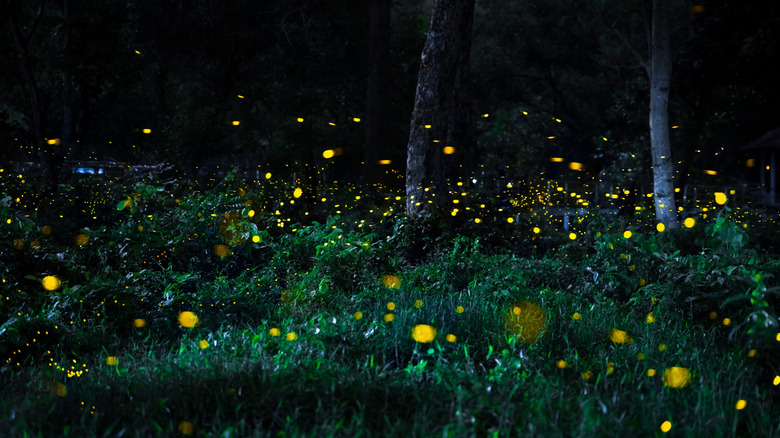
Even if they've never seen one, most people know that fireflies glow. What most people don't know is that their larvae glow too. Hence the term glowworm. These fascinating bioluminescent creatures work their way through your garden soil and leaf litter, actively hunting slugs, snails, and cutworms. They have hollow mandibles to inject paralytic neurotoxins into their prey before devouring them, which sounds gross but is very useful, as they help keep problem pests under control. It's a good idea to attract fireflies to your yard.
If there are glowing patches at the soil surface in the evening, there's a good chance that it's firefly larvae at work. Firefly populations have been in steep decline across North America for many years, thanks to a combination of habitat loss, light pollution, and pesticide use. If you have larvae in your garden, please be mindful, as they are particularly vulnerable because the systemic pesticides that move through soil and water harm both the larvae and the invertebrate prey they depend on. If you find glowworms in your garden, it's a fantastic sign that there's a low chemical burden, brilliant biodiversity, and good soil structure. You are providing a wildlife haven that is worth protecting.
Wolf spiders carry their babies and stalk their prey
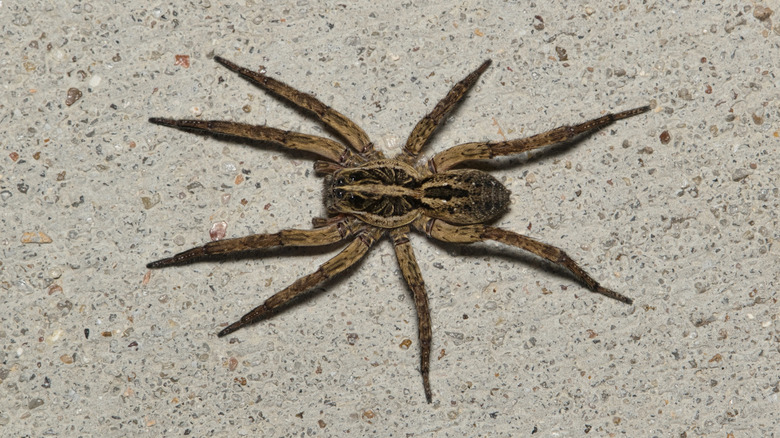
People are endlessly freaked out by spiders, but I think they are amazing, and they are my garden friends, even the huge, fast-moving wolf spider, which can reach 2 inches across. If you see a very large spider with a lumpy, gray mass on its abdomen, try not to panic, as this is most likely a female wolf spider carrying her egg sacs. She's just taking care of her babies until they hatch. Once hatched, they climb onto their mother's abdomen and ride there in a weird, wriggly carpet until they're old enough to hunt on their own. Seeing a wolf spider covered in dozens of tiny spiderlings is truly an extraordinary thing.
Don't kill her. Wolf spiders aren't web builders. They are active hunters and are among the best "bugs" for protecting your garden, as they kill ground-level insect and invertebrate pests. These spiders eat large quantities of insects, including grasshoppers, crickets, earwigs, flies, ants, and beetles. They get the name wolf spider from the way that they stalk and hunt their prey. Wolf spiders won't use venom defensively towards people under normal circumstances. They would much rather flee from you than bite you. If you have one indoors, be kind. Use the old glass and card capture trick and just let it go in the garden.