

How Often Do I Need To Replace Soil In Potted Planters?
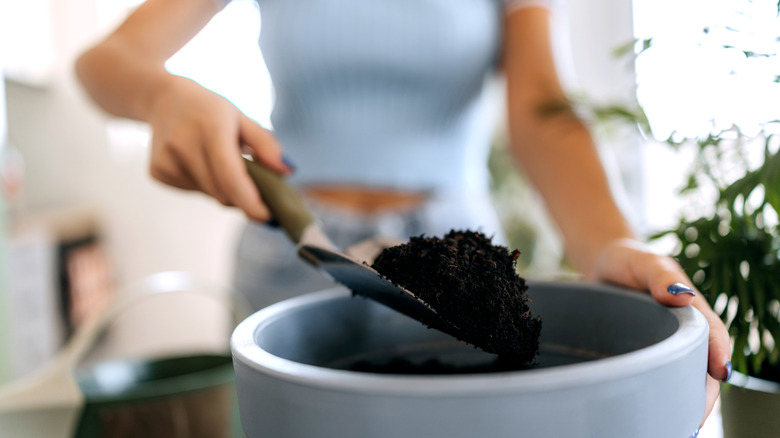
You already know how important soil is for providing your potted plants with nutrients. What may surprise you is that potting soil deteriorates over time and should be replaced periodically. The question remains — what length of time does "periodically" represent? We can (and will) give you some numbers that describe the frequency with which you should replace the soil, but perhaps more useful than a calendar-driven approach is to learn to recognize the signs in your plants and soil that tell you the current mix is no longer cutting it for your plants. Sometimes your fading soil medium can be revived, and you can save on potting soil by knowing when to refresh versus when to replace it.
Soil deterioration actually happens faster in soil for potted plants than it does in garden soil, as roots, water, and fertilizer mingle in a confined space. For outdoor potted plants, weather is also a factor in the soil's decline. As organic material in the soil decomposes, pore spaces that give your plants air collapse and soil becomes compacted. Compaction, in turn, impedes water drainage and threatens roots. Acid released as material decomposes can alter your soil's pH.
These deterioration processes leave their mark on your plants and pots, and if you know what to look for, you'll have a good idea whether you need to replace your potting soil. Sometimes the signs are obvious, such as if a plant has died from pest damage or disease in the soil you're questioning, but some are more subtle.
Learn the signs that tell you when to replace potting soil
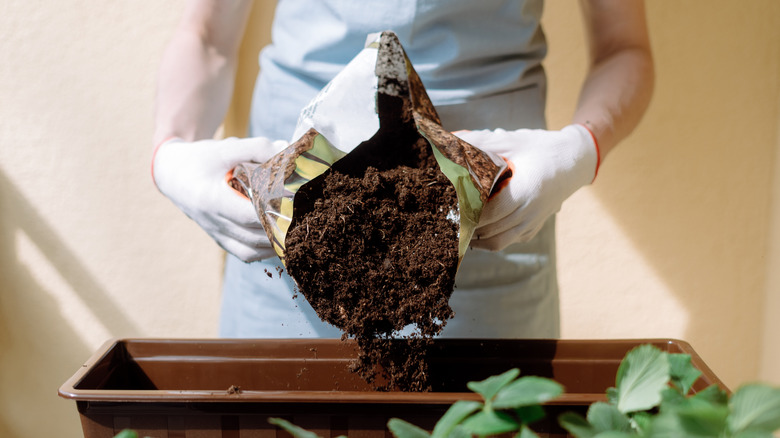
First, take a look at the plants currently in your pots. Do plants look healthy, and are they still growing? If not, your soil's nutrients may be depleted. If leaves are fading, yellowing, or wilting, and you've ruled out water and light issues, compacted soil could be blocking water and nutrients. Are roots poking out of the pot's drainage hole or circling the bottom of the pot? Your soil is no longer sufficiently supporting the plant, which has run out of space. Does the soil feel hard? It may be compacted. Inspect your pots, too. Crusty, white salt deposits on the pot indicate that too much salt from fertilizer may be concentrated in your soil, stressing your plants and knocking nutrients out of balance.
Several signs that show the plant needs to be re-potted also indicate the need for new soil. These include soil that seems abnormally heavy, soil that doesn't absorb water, and soil that recedes away from the pot rim, leaving a gap. The heavy, dense soil is likely lacking those pore spaces we mentioned and is starved for air. When water drains right through a pot and comes out the drainage hole, you likely have hydrophobic soil that repels water and likely needs to be replaced. In this case, the pot may also feel unusually light. The gap between soil and rim suggests declining soil structure.
Plan to replace potting soil according to your plants' needs
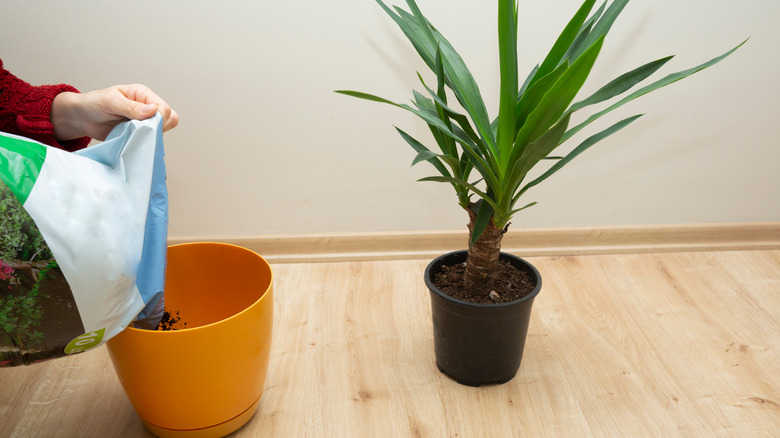
If you'd prefer to replace your soil on a set schedule, we're about ready to spill the tea, but be aware that the schedule is somewhat plant-dependent. For example, tropical houseplants like pothos and African violet, which are relatively fast growers, are candidates for an annual soil refresh. The same is true of veggies with high nutrient requirements, like peppers, tomatoes, and cucumbers. Cactus, however, can go two to four years without soil replacement.
Assuming your large planters are full of soil with no fillers to take up space, you can replace their soil every two years; it's the volume of soil that staves off the need for more frequent soil replacement. Another option with large pots is to replace just a third of the soil. Making a significant switch in what you're growing in the pot — say, veggies to flowers — also warrants fresh soil.
As a general rule for any plant not in these categories, every one to two years is an effective replacement schedule. Once you decide to replace potting soil, check out brilliant ways to reuse old potting soil instead of tossing it out.