

This Gardener Turned A Store-Bought Basil Plant Into A Towering Work Of Art
Is it possible that an Instagrammer has cracked the code on growing huge, lush, productive basil plants indoors? Leanne Kilroy, Instagram profile @goodboneslondon, has gone viral after sharing 11 tricks that she uses to keep her herbs healthy, and after taking a peek at her towering basil plants, the results speak for themselves. Some of her recommendations are common sense that can apply to many indoor plants, while others are a bit unconventional, especially when it comes to watering practices.
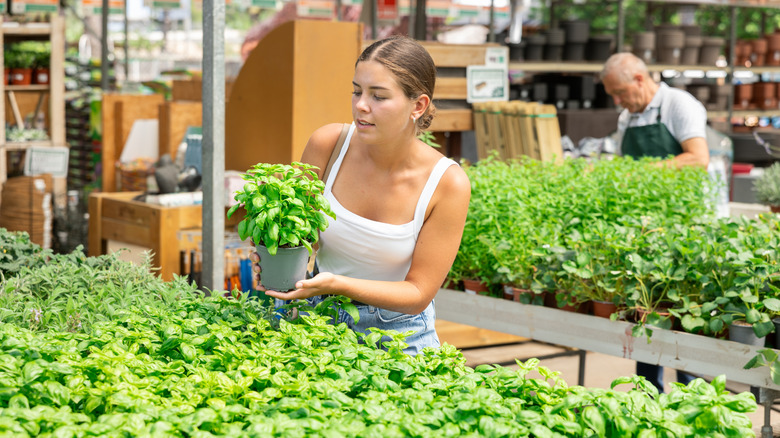
While it isn't the most difficult plant to maintain, there are plenty of common issues you should know about before growing basil, especially if you're starting with a plant from the grocery store that's in less-than-ideal condition. These plants often die quickly, only sticking around long enough to provide garnish for a couple of fresh meals before wilting. The cramped plastic pots they come in are the culprit, which is why Kilroy immediately transplants hers to larger pots after purchase. In addition to this transfer, the Instagrammer also implements specific watering and pruning practices.
Let's see what science says about Kilroy's basil techniques and how you can apply her successful practices on your own indoor basil. Indoor is key because Kilroy says the method can't be applied outdoors, even though she acknowledges it's possible to grow bushy basil outside.
Bottom-water basil to meet its irrigation needs
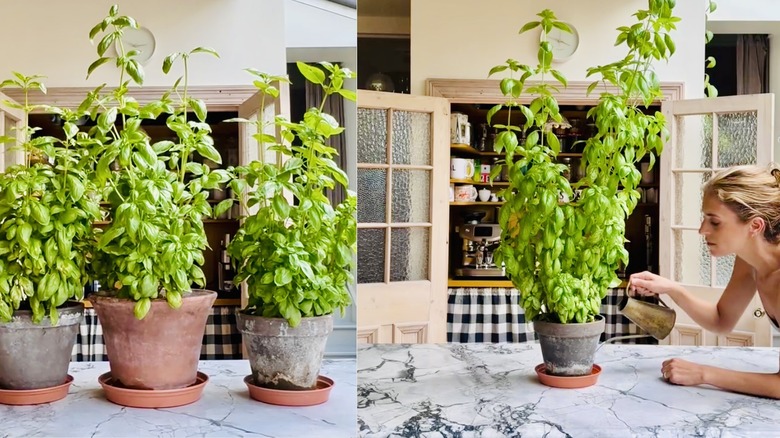
Kilroy's video focuses on just three of the 11 steps, calling them her "three simple rules," so these are presumably the most important. The first is to not water the soil of a basil plant from the top, but always from the bottom. So far, so good; science firmly supports this practice in which dry soil sucks up water until both soil and roots have what they need through capillary action. Even distribution of water in the pot is the result, which is less likely for top-watered potted plants because water runs down the sides instead of soaking through the middle. Kilroy's only exception to bottom watering is during the couple of weeks your basil is establishing itself.
It's the way Kilroy bottom waters that may raise eyebrows. She uses an oversized saucer up to three times larger than the pot would normally require and keeps it consistently full of water. Houseplant parents may become apoplectic thinking about plant roots sitting in water and rotting, but science may just support Kilroy in this practice. Unlike some herbs, basil loves lots of water. It's like an athlete who sweats profusely and craves water; only with basil, it's transpiration instead of perspiration, and the plant loses significant moisture by transpiring.
This large, water-filled saucer method wouldn't work if it weren't for another item in Kilroy's bag of basil tricks — terracotta pots. Basil needs a wet-dry cycle, and terracotta provides that by wicking moisture from the soil and providing air circulation. The final result is a balanced, low-effort watering system that's perfect for basil's needs.
Don't pluck leaves to harvest basil; snip off stems with leaves for bushy growth
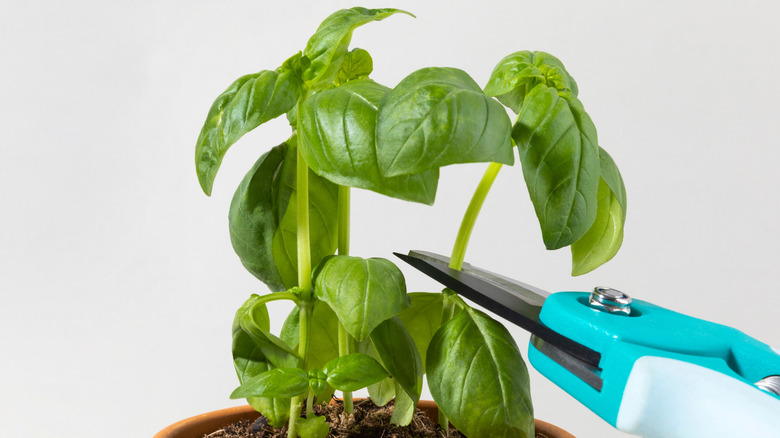
The third of Kilroy's major rules is aimed at promoting bushy growth and is a mashup of pruning and harvesting. The idea is to not just pluck off basil leaves as needed, but to cut whole stems with leaves because doing so triggers more growth. Cut the stem just above a leaf node, prompting the stem to morph into two. Science approves of both this practice and Kilroy's advice to always remove flower buds from basil as flowering tends to make the herb bitter. Kilroy advises holding off until the plant has some size to it before trimming; after this point, snip the plant regularly to maintain dense foliage. Improper pruning is one of the mistakes everyone makes when growing basil, so be sure to review the right techniques.
You can propagate pruned cuttings, too, for more basil plants. In fact, Kilroy suggests the first thing you should do after buying a basil plant is to separate it into more plants as you're re-potting it from its supermarket pot. Rounding out the rest of her 11 tips, there's a recommendation that should be followed for just about any herb: placing basil in a sunny spot. Basil needs at least six hours of sunlight daily and may become leggy without it. It's hard to argue with success, and since Kilroy's techniques don't fly in the face of scientific advice, consider giving them a try.