

Attract Lovely Butterflies To Your Yard With A Uniquely Shaped Flower
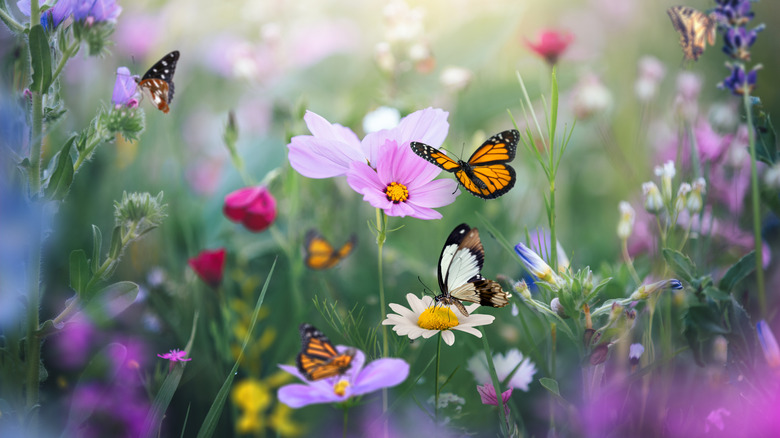
Butterflies are a welcome sight for many gardeners come spring. Besides being lovely to watch as they flit from flower to flower, they also benefit plants as common pollinators. If you're looking for a way to attract more butterflies to your garden while also adding a touch of visual interest, a lesser-known flower might be something to consider – the ismene (Hymenocallis). Not only is the ismene a flower that butterflies are attracted to, ut it's also a unique addition if you're tired of the usual pollinator plants.
The ismene, also known as the spider lily, may be a flower you've never heard of because it is not very well-known and often forgotten when it comes to flower gardens. Its heavenly-scented, funnel-shaped flowers with long, spidery petals are a favorite among pollinators, especially butterflies. The unique shape of its blooms provides easy access to valuable nectar that butterflies crave and are attracted to. With its strong scent — more noticeable in the evening — it draws butterflies from afar while adding a tropical feel to your garden. Once planted, the ismene's flowers bloom at the height of butterfly activity in early summer.
Tips for growing ismene to attract butterflies to your yard
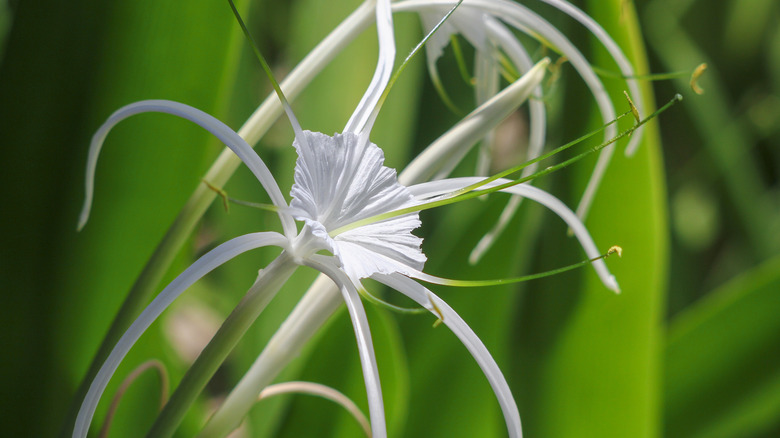
While ismenes are native to South America and the southern U.S., they can be grown in cooler regions with proper care. The ismene is considered an herbaceous perennial (in warmer climates) that grows from bulbs and reaches up to 2 feet tall. Similar to dahlias, it's grown as an annual in USDA Hardiness Zones 3 through 7. Planted in the spring, the bulbs are dug up in the fall and stored over winter. Ismene prefers a location in the garden that gets full to partial sun, has well-draining soil, but it will occasionally tolerate standing water or wet conditions. It's important to note that when you are planting the bulbs, you should cover them with soil up to where the neck starts.
Ismenes are low-maintenance plants despite being considered a tropical variety, which can sometimes be finicky. They make a striking centerpiece to a pollinator garden. For a more varied butterfly garden, fill in gaps with colorful lantana varieties that pollinators love. Creating a space where butterflies can feed and pollinate adds both function and beauty to your landscape, but it also creates a space you can enjoy as well. You could also add a seating area near your pollinator garden and enjoy watching the butterflies as they land on your unique ismene flowers.