

What To Do If You See A Bobcat In Your Yard
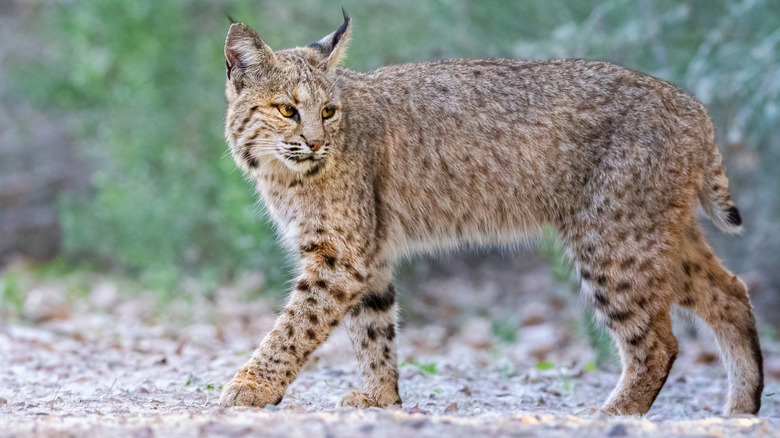
If you're not used to seeing wildlife up close, spotting a bobcat in your yard can be alarming. These wild cats, however, are rarely dangerous to humans. Most sightings are brief and uneventful. Still, it's important to understand why a bobcat may show up on your property. It's also helpful to know the steps you should take to keep both your household and the animal itself safe. Staying calm, scaring it off, removing potential attractants, and calling for professional help can all be useful when you experience a bobcat sighting.
Bobcats are highly adaptable animals and are seen across much of North America. They're also increasingly comfortable living near people. The primary reason they'll appear in your yard is a simple one: food. Bobcats hunt small prey like rabbits, birds, and rodents, and your place may act as a natural hunting ground. If you have clear signs of groundhogs in your yard, it could also result in a bobcat sighting. Other common things that attract them are bird feeders, unsecured garbage, or pet food left outside. Brush, woodpiles, and dense landscaping may provide shelter and encourage bobcat activity.
In most cases, you don't need to worry. Bobcats tend to avoid people, and encounters with humans are rare. Attacks are even less likely, but if one approaches you, do what you can to defend yourself and get immediate medical care if you become injured. Conflicts with a bobcat in your yard are uncommon and usually preventable. If you do have small pets, they could be vulnerable if left outside, so taking some precautions can reduce the risk.
Steps to take and when to call for help

If you see a bobcat in your yard, your main goal is to discourage it from staying and avoid confrontation. Start by staying calm, and do not run. Running may trigger its chase instinct. Keep the animal at a distance, and make your presence known by standing tall, waving your arms, and clapping or yelling at the cat. The animal will recognize you as a threat and look for an escape. Back away slowly, but don't turn your back to it. If you have children or pets nearby, pick them up, and bring them inside right away. In most cases, the bobcat will retreat once it sees a human.
Making your home safer starts in the yard. Your yard may offer something that the bobcat wants if it keeps coming back. Secure trash cans, and bring pet food inside. If you own bird feeders, consider moving them, or regularly pick up any spilled seed. Keep unwanted rodents out by cleaning your yard. Trim shrubs, and remove brush and woodpiles that could provide shelter. You may also want to invest in some motion-activated lights or sprinklers to startle the bobcats away.
Many bobcat sightings won't need intervention, but you should contact local animal control or the wildlife authorities if you notice it looks sick, injured, or is acting unusually aggressive. You also may want to call if you see the bobcat lingering or coming back often without any fear of humans. It may indicate a problem that professionals should handle. They can examine the situation and take the best action.