

Stop Weeds From Taking Over With A Plant Hummingbirds Can't Resist
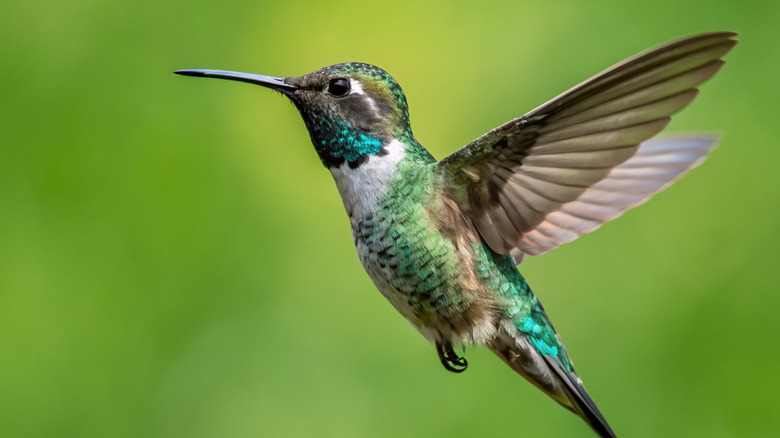
Is your hummingbird haven looking a little under the weather? Unfortunately, weeds can pop up anywhere in your yard, including the areas you've dedicated to starting your own pollinator garden. As a result, you may find yourself spending more time kneeling in the dirt weeding than sitting back, relaxing, and enjoying the vibrant colors of your feathered friends. However, you can also experiment with adding this ground cover, which pulls double-duty by keeping weeds at bay while attracting more hummingbirds to your yard.
Also known as blue bugle or carpet bugle, bugleweed (Ajuga reptans) is an evergreen ground cover that's named for its creeping spread. It grows as a dense mat of greenery which helps cover your soil and take up space, reducing the likelihood of weeds finding success in your garden. However, rather than solely occupying empty ground in your garden with no other benefits, bugleweed also blooms from May to June with eye-catching stakes of blue flowers. These showy flowers are a hit among pollinators, attracting bees and hummingbirds. Once they go to seed, you may also spot songbirds visiting these flowers. As a result, bugleweed makes a great choice if you're looking to reduce weeds without hurting your garden's hummingbird appeal. While bugleweed's spread is what allows it to hold up so well against weeds, it can become aggressive in the garden. In some areas, it's considered invasive. Double-check your region before planting to determine if it's safe to plant bugleweed or not.
How to grow bugleweed
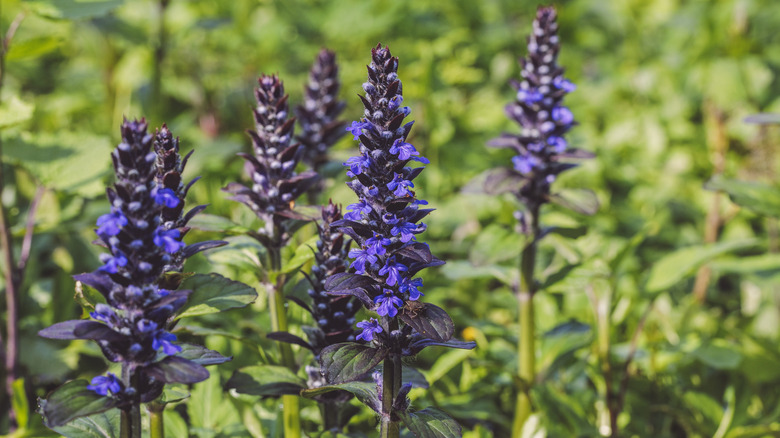
Bugleweed is an overall tough plant that holds up well to common challenges, including shade and the toxic juglone emitted by black walnut trees. As a result, it can be a durable plant for beginner gardeners needing to fill empty areas in their hummingbird gardens. It's hardy in most climates, with zones ranging from 3 all the way to 10, and it's not considered a high maintenance plant. However, while minimal care may be enough to keep this plant healthy enough to spread and keep weeds at bay, for attracting hummingbirds, you may want to brush up on optimal care requirements to boost flowering for more of those hummingbird-magnet blooms.
This plant isn't finicky when it comes to sunlight. You can grow it in full sun or deep shade, as well as everything in between. It also handles various soil textures, although it does best when offered an acidic pH and good drainage. As durable as it is, it's also not drought-tolerant and requires soil that's occasionally wet for the best results, especially if grown in a sunny spot. This means that you may also have to water regularly, especially during any dry spells in the warmer months. Just make sure not to overdo it, as waterlogging your plants can be just as harmful as leaving them to dry out. As for occasional maintenance, most bugleweed plants do well even without fertilizer. However, if you're planting it in an area with poor soil, an occasional feeding often boosts flower production, which can lead to more hummingbirds.