

What To Do If You Find Shed Lizard Skin In Your Yard
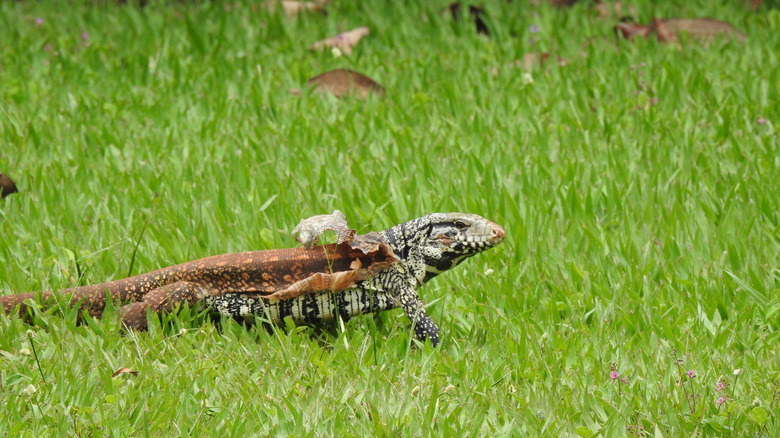
Lizards are native to every state in the U.S. except Alaska, Maine, New Hampshire, and Rhode Island. So while they are much more common in the warmer southwest, they are more widespread than some people imagine, and it's quite possible you'll find a shed lizard skin in your yard. The good news is that it's rarely a problem. Almost all U.S. lizards are harmless. If you're concerned about whether it might be dangerous, or you're unsure whether you have a lizard's or snake's skin, the safest course of action is to call your local animal control for advice. Let's look at what we know.
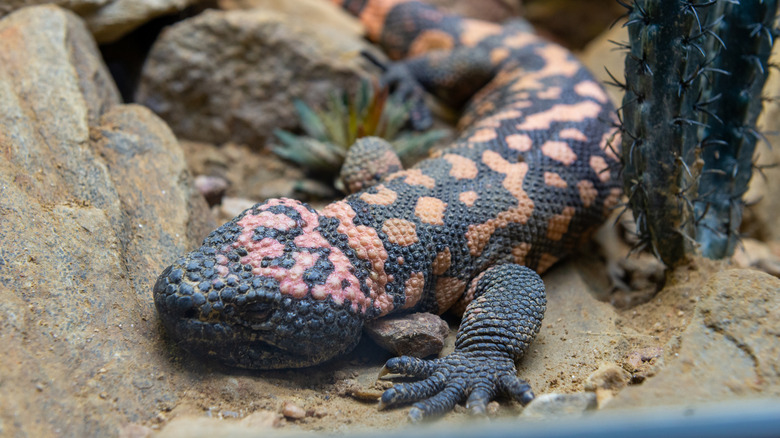
While there are 30-odd venomous snakes in the U.S. (including six snakes you definitely don't want to see in your yard), of the 90-plus lizard species, only one, the Gila Monster, is poisonous. Although these critters can grow to nearly 2 feet long, they are shy and live in southern desert areas, so finding one near your home is unlikely.
No other lizard in the U.S. can do anything more than make you jump if it pops out from under a rock and surprises you. Finding a shed lizard skin just means there are some of these harmless reptiles living in your garden. Shedding is perfectly natural for lizards. Unlike us (and other mammals), a lizard's skin doesn't stretch as it grows. So eventually it has to replace it with a new one and discard the old one.
How to tell shed lizard skin from snakes, and why having them around is a good thing
Lizards usually shed their skin in bits and pieces, leaving scaly, papery patches lying around. This makes it difficult to tell what you've got. You might find a little foot shape, and as snakes don't have feet, this is a dead giveaway. Confusingly, not having a foot doesn't necessarily mean it's a snakeskin. It could be a legless lizard. They are quite rare, but they can get to 3 feet long or more, so while they aren't dangerous, it might be time to consult an expert in case what you have is actually a snake.
There are actually good reasons not to get rid of lizards around your home. They are great for pest control. They help protect both you and your plants by eating things like flies, mosquitos, ants, crickets, spiders, and also caterpillars and snails. Western fence lizards are even known to eat the ticks that can cause Lyme disease.
If you really don't like the idea of lizards running around the place when you're trying to relax outdoors, there are ways to keep them off your porch or patio all summer long. They aren't doing any harm, though, and having lizards in your yard is a sign that it is offering the biodiversity that helps make it a more ecologically balanced place to live.