

What To Do If You Find Japanese Barberry In Your Yard
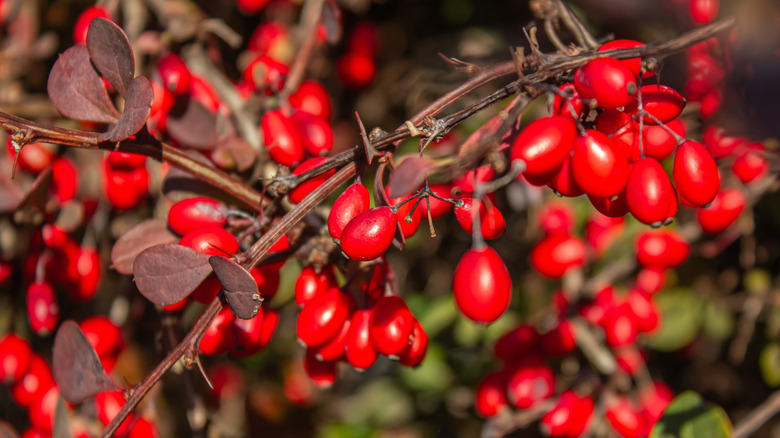
One of the most crucial tasks a gardener must undertake is staying alert for signs of any invasive plants. While invasive species like tree-of-heaven (Ailanthus altissima), bull thistle (Cirsium vulgare), and giant hogweed (Heracleum mantegazzianum) might be more commonly known and recognized, you may not be aware of another invasive plant that can easily sprout up on your property. Japanese barberry (Berberis thunbergii) came to the United States in the 19th century, and while it does show off attractive red leaves and berries, it is considered an exotic invasive plant due to its speedy spread. If it's found on your property, it is often recommended to remove the plant entirely. Some states, like Pennsylvania, Michigan, and Massachusetts, have joined the list banning the Japanese barberry shrub from distribution.
Since Japanese barberry can thrive in a wide variety of environments and conditions throughout zones 4-8, it can make itself at home just about anywhere. From commercial landscapes to forests, this invasive plant will find a way to grow. If you're not sure if you're dealing with Japanese barberry, there are a few telling characteristics you can look for. These thorny shrubs can grow in thickets up to six feet tall, with branches that tend to curve and arch. The egg-shaped leaves themselves are smooth and small, usually measuring about one inch long. Throughout the year, they typically transition in color, from green to yellow, then red, and finally purple. The biggest giveaway of a Japanese barberry is the production of bright red berries from August to October. As attractive as these berries might be, you do not want to plant a Japanese barberry in your garden.
How to get rid of Japanese barberry
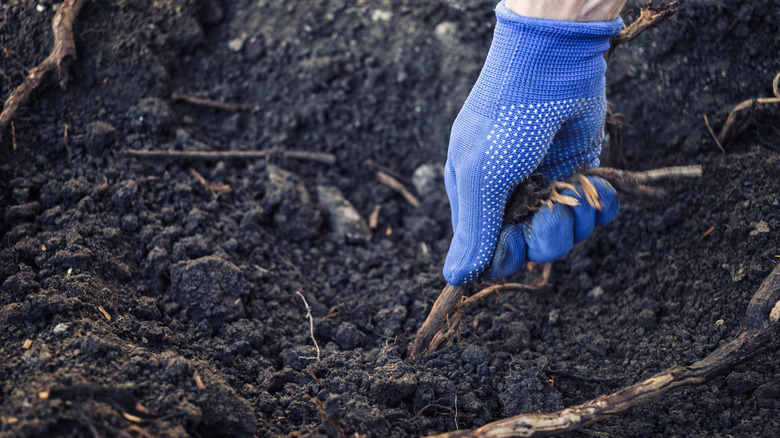
It's always recommended to safely remove invasive plant species like Japanese barberry from your yard. This plant in particular is fast-spreading, houses high tick populations, and potentially increases soil pH levels to choke out native plants. If you've inspected your property and are positive you are dealing with a Japanese barberry plant in your yard, there are a few DIY removal tactics you can try. Prioritize taking out plants living in direct sunlight, as they tend to produce the most seeds.
The first method is removing the plant manually as soon as possible, by hand. This is best for small Japanese barberry plants or areas with fewer plants. Note that this plant can produce thorns, so it's important to wear appropriate protective gear. Pull the plant out from the soil, including the root crowns. You may need to use a tool for larger plants. You can also utilize the help ofchemicals;foliar spray treatments with ingredients like triclopyr and glyphosate are known to be effective against this invasive plant.
Fire is another common method for removing Japanese barberry. Using a propane torch, you can burn the base of the plants for 15 to 20 seconds. While it's not as effective as the use of chemicals, fire can still help decrease the size of the plant. Mowing Japanese barberry can help shorten the plant and slow down its natural spread, too, but this chore is best combined with the addition of herbicide or fire after mowing.