

Forget The Fence: Plant This Tree For Natural Privacy And A Delicious Harvest
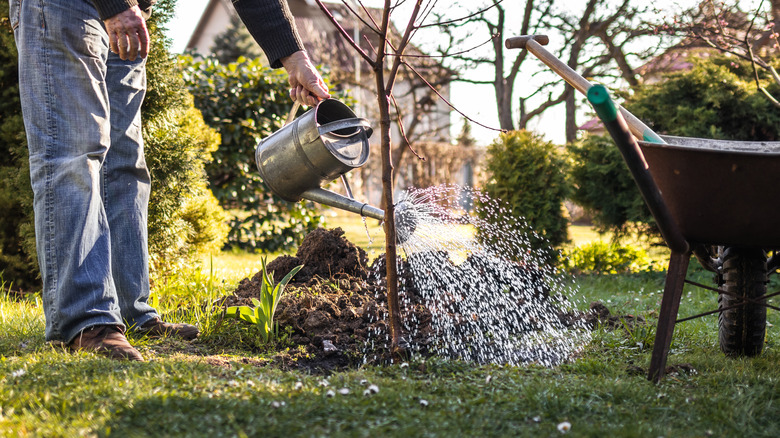
Trees have long been used by gardeners as living fences for their yards, particularly if the tree in question produces thick, bushy foliage. Whether you want to plant them around a busy patio or create a windbreak and privacy screen around your backyard, do some research into low-maintenance trees that you will want in your landscape. Some trees, like the Seckel pear (Pyrus communis 'Seckel'), create a win-win situation for gardeners.
Not only does this easy-to-grow pear tree produce delicious fruit, but it can even act as a view-blocking hedge. The Seckel pear is not too tall— it will only grow to 15 feet high in ideal conditions — and boasts an attractive voluminous shape. Like its larger cousins, this diminutive common pear tree cultivar blooms abundantly in mid-spring. With its pretty white blossoms, it numbers among the types of flowering pear trees that are good for any garden.
The Seckel pear is an excellent option for a natural privacy screen. It produces sweet fruit, has pretty flowers, and is small in stature. It's ideal for gardens with limited space and lots of visibility because you don't need to plant too many to create a barrier against prying eyes. Plus, who doesn't want to head outside to pluck pears from their living fence? To transform Seckel pears into a screen, you need to keep a few things in mind: sunlight exposure, the type of soil it prefers, and potential pests.
Plant Seckel pears 8 to 10 feet apart to create a privacy hedge
The Seckel pear is a relatively low-maintenance tree, requiring few inputs to thrive. Plant your trees in a full sun spot that gets at least six hours of sunlight a day. The soil should be well-draining and slightly acidic, with a pH level of 6 or below. This pear tree will grow in USDA Hardiness Zones 5 to 8 on coastal or mountainous properties. In order to create a fence-like effect, plant numerous Seckel pears 8 to 10 feet apart — just as you would other small pear tree varieties — along, for example, the outer edge of your lawn.
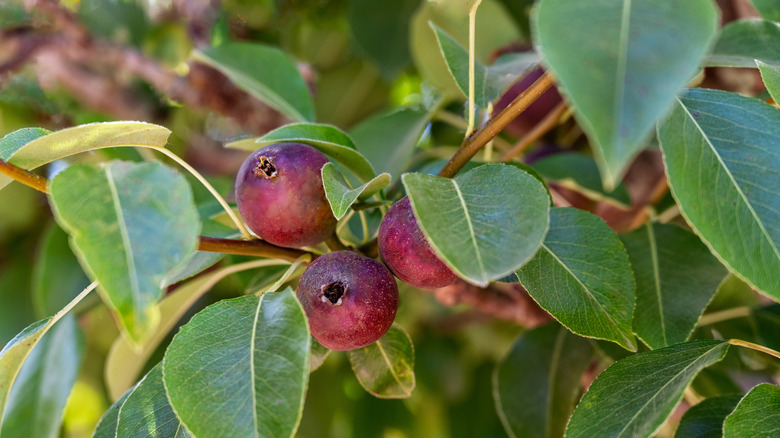
While Seckel pears are partially self-fertile, it's better to plant another pear variety alongside your Seckel pears at the same time. This ensures adequate cross pollination — in other words, you'll get the most possible pears from your trees. Alongside the small, delicious, lime green to maroon fruit that ripens in September, the Seckel pear also boasts nectar-filled flowers that attract bees and butterflies. Note that a Seckel tree likely won't produce flowers or fruit until it's at least three years old.
The only disease Seckel pears face is fire blight, though even then, it's largely resistant. One of the main signs of fire blight on fruit trees is brown, withering foliage and branches with diseased bark. Remove these infected plant parts to treat the issue. Outside of disease treatment, you should prune your Seckel pear trees at least once a year, and give them each about 1 to 2 inches of water every seven days.