

Why You Should Think Twice Before Putting Onion Scraps In Your Compost Pile
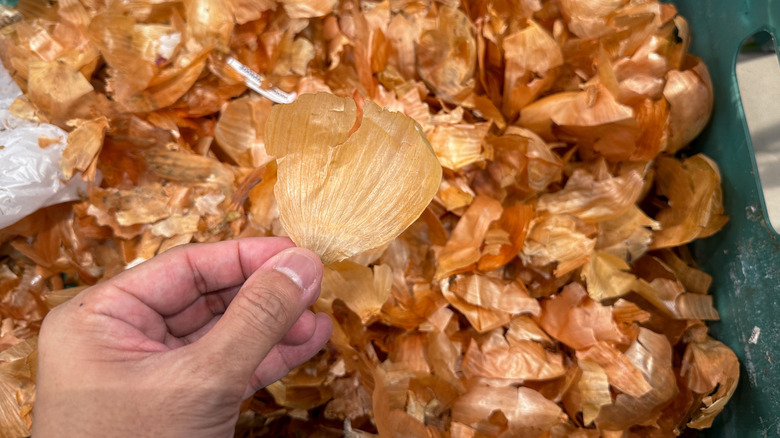
With the effects of global warming more prevalent than ever before, it's important to adopt more eco-friendly practices and try to reduce your carbon footprint. One known way to be environmentally friendly is composting food waste instead of pitching it with the rest of your garbage. Composting biodegradable items can help prevent them from piling up in landfills, which, in turn, reduces the amount of greenhouse gases that are emitted into the atmosphere. In fact, it actually helps reduce the amount of greenhouse gases by promoting and sustaining healthy plant growth. If you have a compost bin in your kitchen or yard that's dedicated to any and all food waste, you might want to take a little extra caution when throwing certain foods into it. Onions, especially, can be more detrimental than beneficial to a compost pile if proper steps are not taken prior to placing them in the bin. If not properly prepped, onions can sprout and overtake your compost bin, make your compost too acidic, and affect compost time.
Despite the precautions, it is not completely frowned upon to compost the aromatic vegetable, unless you are vermicomposting, which uses worms to help break down and distribute nutrients in soil. Onions can absolutely be composted in a standard compost bin to make effective fertilizer for soil. As they are easily broken down and can give your compost pile a serious nitrogen boost due to their high levels of the chemical element, onions can actually make a great addition to a traditional compost pile. However, precautions and prep work need to be done in order to make them more beneficial than detrimental for your soil.
What to do before composting onions
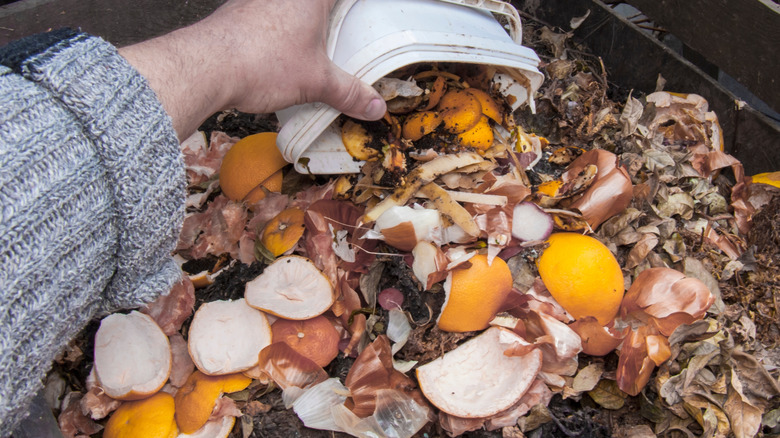
There are a few things you can do to make onion scraps fit for a compost pile. Onions are known to sprout relatively quickly, but you can prevent this from happening in your compost pile by cutting the scraps into very small pieces, allowing them to break down more quickly. To counteract and negate the abundance of acidity found in onions, which can taint your compost pile by warding off worms and bacteria that help break it down, add other biodegradable materials to your pile to reduce the acidity. Cardboard, eggshells, and newspaper scraps are great neutral materials that can be thrown into your bin to help neutralize acidity as well as eliminate any pungent odor caused by onions. Adding these other elements to a compost pile with any bulb veggie scraps can help maintain a green to brown balance, too, creating a carbon and nitrogen-rich addition to your soil.
Even if you follow the above tips, there are some onion scraps that should be disposed of in a waste bin instead of a compost bin. Cooked onions, for example, should be tossed into a waste bin because of the oils and seasoning they may be coated in. The extra flavors added to the onion scraps can impact the decomposing process by attracting pests to your yard and to your compost pile. Likewise, diseased onions should be tossed directly into a garbage can to prevent it from spreading through your compost. Moldy onions can be composted without the risk of spreading mold as long as your compost bin is kept dry and adequately aerated.
Veer away from adding onions to vermicompost
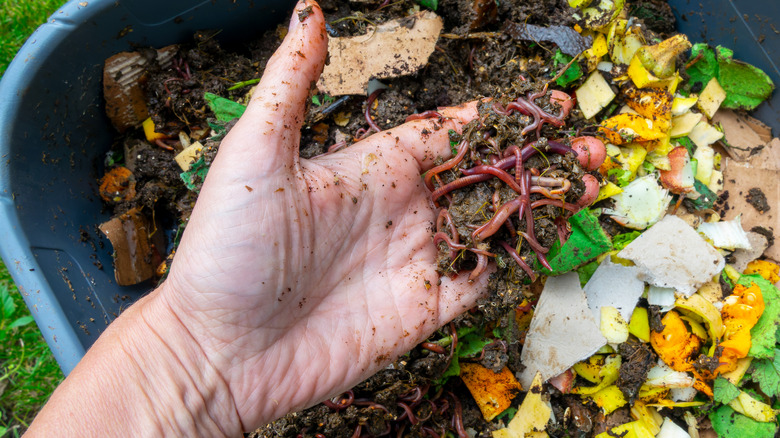
An absolute no-go for onion scraps is in a vermicompost pile. Vermicomposting is a method of creating compost using live worms and other organisms. The live organisms within the compost pile will eat food scraps and other consumable items, digest, convert, and distribute the nutrients from the waste throughout the compost, making it into the perfect, nutrient-rich addition for your garden. The high acidity and strong scent of onions deters both bacteria and worms, which could impact your vermicompost pile by preventing the organisms from eating and converting any organic material laced with onions. If consumed by worms, the high acidic level of the pungent scraps can affect their gastric and digestive systems.
If you are dead set on gleaning the carbon and nitrogen from onions for even a vermicompost pile, a small amount of the bulb vegetable won't be detrimental to your worms and compost. Adding a large quantity of onion scraps, however, is not recommended due to the acidity and odor. Like with other standard compost piles, cutting onion scraps into small pieces prior to adding a tiny amount to a vermicompost is okay, but overall, it's best to dispose of onion scraps in a regular compost pile.