

Goodbye Traditional Plastic Nursery Pots — There's A Plantable, More Eco-Friendly Option
We may receive a commission on purchases made from links.
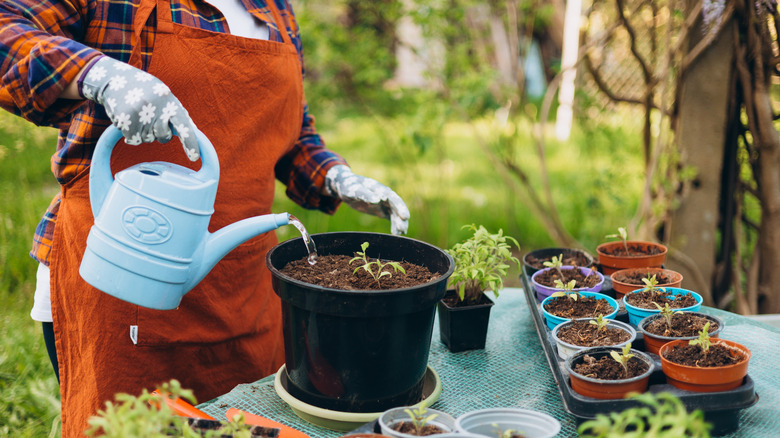
If part of your goal in cultivating a garden is to reduce your environmental footprint, you may be horrified by the large amounts of plastic used in plant production. Stop by your local nursery and you'll likely see shelves crammed with plastic seedling trays, nursery pots, and plant tags. Most of those pots and other plastic gardening materials will end up in a landfill because they're difficult to recycle. Thankfully, you have other options for growing edible and ornamental plants at home. For example, coconut coir seedling pots are an eco-friendly alternative to plastic nursery pots. You don't even have to remove the seedlings when transplanting them into your garden.
You may already be familiar with coconut coir — it is, after all, a common type of substrate for container gardening. It's a sustainable replacement for popular but non-renewable peat moss in soil mixes, where it helps with water retention. However, there are other gardening applications for this byproduct of coconut farming. Most often, compressed coir is formed into liners for hanging baskets. The liners keep the roots of plants aerated and stop water from draining away too quickly. If you're already a fan of coconut coir for these uses, you're about to become very interested in the plantable seedling pots made from the same material. They're created similarly to hanging basket liners — by pressing the fiber into a useful cup-like shape.
Why you should choose coconut coir pots for seed starting
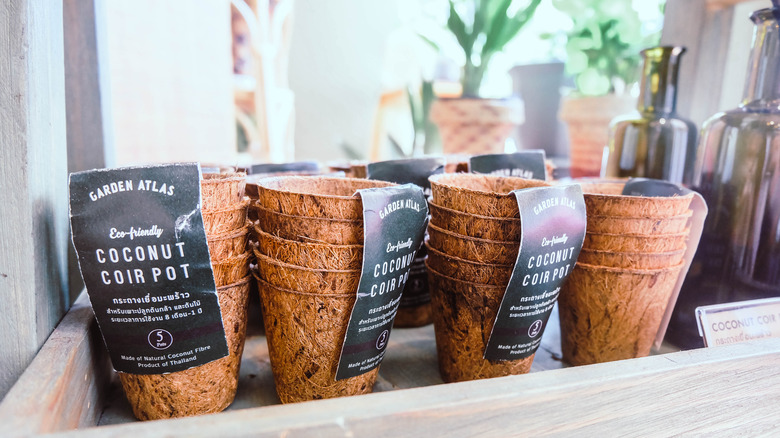
There are many negative impacts of using plastic that you're likely already aware of. This ubiquitous material is made from non-renewable fossil fuels. This process contributes to climate change, and the resulting plastic products pollute rivers and oceans, dominate landfills, and release harmful microplastics into the environment. Thankfully, container gardening is changing with more environmentally friendly solutions — coconut coir nursery pots are one such example. The fibrous material they're made of is sourced from coconut shells, which are themselves a byproduct of the agricultural industry. By repurposing the shells, we're removing them from the trash cycle. Plus, they're a biodegradable, renewable resource. You'd be hard-pressed to find a more eco-friendly gardening product.
Now that we've established how coconut coir seedling pots benefit the environment, you'll be happy to learn that these affordable products also make starting seeds for your garden a breeze. They're biodegradable, so you can sow your seeds into the pots and then plant the resulting seedlings directly into your garden without removing them from the container. Root disturbance is kept to a minimum, resulting in healthier, happier plants. You typically buy these plastic nursery pot alternatives in a pack — for example, this 24-pack of RimCereal Biodegradable Coco Coir Seed Starter Cups costs about $30. Is there a downside? Plant roots can have a tough time penetrating the material in dry climates, so cut slits in the sides of the pots before transplanting your seedlings.