

The Invasive Perennial That You'll Regret Planting In Your Garden

Every serious home gardener has been tempted at one point to plant something dramatic with oversized foliage and tall flowers. And why not, after all? Such a plant promises to give your yard that majestic and eye-catching focal point that'll make it stand out above the other neighborhood landscapes. This is precisely the allure of bear's breeches (Acanthus mollis). It's exciting to look at, but the romance ends there. This plant has a dark secret that makes it a nightmare: it's aggressive and invasive.
Still, the creeping perennial is understandably enchanting. With lobed, glossy dark green leaves and spikes of white to purple blooms. It also towers above many other flowering plants, growing anywhere from 3 to 5 feet tall. Anybody walking by your yard would certainly stop and admire it. However, once established, this Mediterranean native gets to work; it's among the worst invasive plants to avoid at all costs.
What makes it so vicious a spreader, though? It's the plant's vigorous rhizome root system. It can't even be stopped by planting it in a pot, then sinking that into a garden bed; bear breeches' wanderlusty roots just pop out through the bottom drainage holes and continue their journey. Fully getting rid of the plant is a huge struggle, as you must remove every single last piece of root. If even the tiniest fragment is left behind, it'll easily grow into a new plant and pick up where it left off.
The other issues with bear's breeches and better options
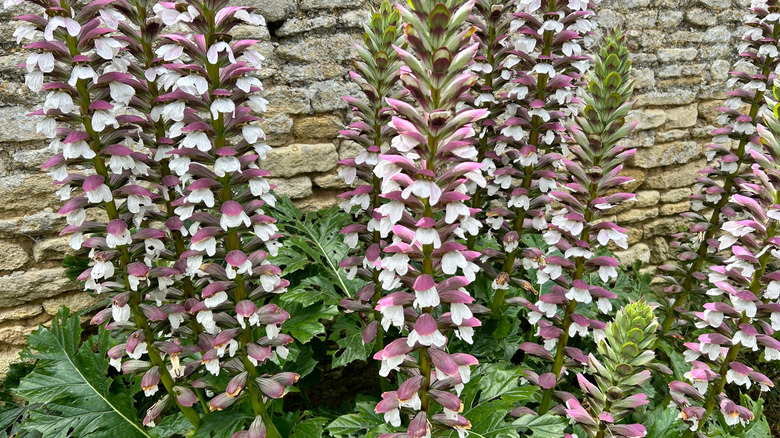
The real heartbreak of adding bear's breeches into your landscape is watching it bully your other carefully chosen plants. This perennial doesn't play well with others; it's a serious resource hog that aggressively competes for water, nutrients, and precious soil space. If you're wondering how to identify an invasive plant, just give it a moment: before long, you'll see it greedily smother out the other plants in your garden. Soon, all you'll have left is a yard full of bear's breeches, and it won't be such an exciting plant then.
If you can manage to resist its siren call, there are plenty of better alternatives out there that are just as striking and won't do a hostile takeover. If you still want large visual drama, consider planting the oak leaf hydrangea (Hydrangea quercifolia) instead; it can grow up to 8 feet tall. For a shade-loving flower that's also colorful, large-leaved hosta (Hosta plantaginea) varieties offer similar showy yet dainty-looking greenery vibes. And if your main goal is to add tall, vertical flower spikes to your borders, look toward blue false indigo (Baptisia australis). This flower provides height and beautiful color. By choosing a well-behaved option, you can avoid the nightmare of bear's breeches and get a jaw-dropping look that's far easier to manage for your garden.