

The Eco-Friendly Way To Keep Dandelions From Taking Over Your Lawn

We may receive a commission on purchases made from links.
The first rush of delight at seeing a few dandelion flowers in the spring can turn to frustration as their numbers multiply. These perennials have a tendency to overwhelm expanses of grass that many homeowners would prefer uninterrupted. Removing dandelions isn't at odds with caring about the environment — even though bees feed from the blooms, such pollinators are much better nourished by native plants — but some herbicides people use to tackle them can affect the water supply and cause other ecological harm. If you're finding it hard to stop dandelions from taking over your yard, iron-based products are a more eco-friendly alternative to other weed-killing chemicals.
Although iron spray poses fewer environmental risks than other options, it's safest to first try controlling dandelions by improving lawn or soil health and pulling up the weeds by hand or with tools as needed. Having a sparse lawn contributes to dandelion growth, but a lush carpet of turf will compete with them. It also helps to avoid cutting the lawn too short so the grass can cast shade that prevents dandelion seeds from taking hold. Hand weeding, or using a Dandelion Weeder Tool with Ergonomic Handle, tends to be easiest in the damp soil after a rainy day. Make sure to excavate the whole root; new plants can grow from even 1 inch long root fragments left in the ground. Also, a yard full of dandelions can mean your soil is low in calcium or compacted. You can try mulching, using an aerator, or mixing some compost into the soil to address the issue.
Why iron spray is effective at controlling dandelions (and safer for the environment)

Iron-based sprays for controlling dandelions and other broadleaf weeds are sold under brand names like Fiesta Turf Weed Killer and often labeled "FeHEDTA". This means the formulas include iron and acids that make it easier for plants to absorb it through a process called chelation. The natural herbicides work by drying up the weeds a few hours after application due to the stress iron causes to broadleaf plants such as dandelions. Fortunately, these treatments are known to leave the plants and grass that surround the dandelions intact and undamaged — sometimes even greener, since iron is a nutrient for grass. Several of these solutions are registered with the U.S. Environmental Protection Agency, which has found they don't cause danger to the environment when they're used properly.
In contrast to iron-based options, the selective and pre-emergent herbicides often used to combat weeds like dandelions have environmental risks. Even though many are formulated not to damage grass, they can drift on the wind and impact other broadleaf trees and shrubs which may feed and shelter nearby wildlife. In particular, isoxaben, an ingredient in some pre-emergent herbicides, may damage the organs of mammals and harm plants other than its targets. Humans are also at risk, as one of the greatest threats from herbicides is their potential to infiltrate our supply of drinking water.
How to use iron spray on your lawn
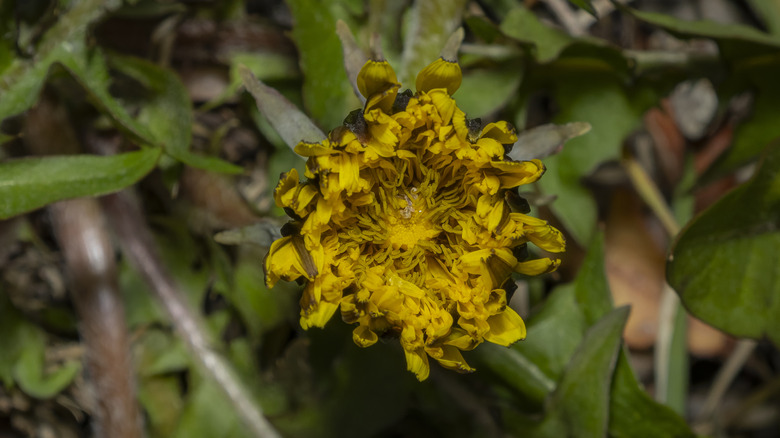
Unlike some other herbicides on the market, iron-based sprays are designed to work as post-emergent products, so you should use these treatments in places where dandelions have already sprung up. Apply them to your growing dandelions in the spring or autumn when the weather is cool and the weeds are still small for the best results, but be sure to pay attention to the package directions for more specifics. Iron-based herbicides tend to work best on seedlings and small dandelions, and they may need to be applied up to four times a year to continually control the weeds. If this sounds like too much trouble (or if you already have large dandelions), there's no shame in deciding the benefits of having dandelions in your yard outweigh the downsides.
Before spraying your dandelions, dilute the iron-based herbicide with the appropriate amount of water for the area you're treating, then pour the mixture into a spray bottle. Specific ratios can usually be found on the packaging or the manufacturer's website. In keeping with eco-friendliness, it's a good idea carefully to pick any dandelion flowers first so that no tiny pollinators are hurt by the spray. Even though they're gentler than other options, you should still wash your hands after applying iron-based herbicides and avoid getting them in your eyes.