

Hiding This Common Home Eyesore Has A Major Impact On HVAC

People who love perfecting the design of their homes tend to focus on little details and make everything look just right. Unfortunately, there are some parts of the home that are important for function, even if they don't add to your home's style. For example, air vents can be a bit of an eyesore. There are some fairly safe ways to hide the eyesore of air vents for an aesthetic upgrade, but methods of covering the vents completely with a sofa, rug, wall art, or other items can have consequences for your HVAC system. From mold and mildew to fire hazards, blocking an air vent to hide it can have serious effects that require expensive repairs.
It may not seem like a big deal to cover an unsightly vent, especially in rooms where you don't want there to be heating or cooling anyway. However, closed or covered vents put excess stress on your HVAC system, meaning it becomes less efficient and has to work harder. Over time, this can reduce the lifespan of your HVAC unit or, as a result of the pressure imbalance and extra work of the machine, cause a potential fire hazard from the system overheating.
Since blocking vents and closing vents sounds similar, you might wonder if closing the vents in unused rooms during the summer heat is really a good idea. The answer is that both can be bad for your HVAC system, though permanently blocking a vent with furniture will likely lead to worse outcomes than temporarily closing a vent because of the longer time for damage to occur.
The costs of blocking the air vents in your home
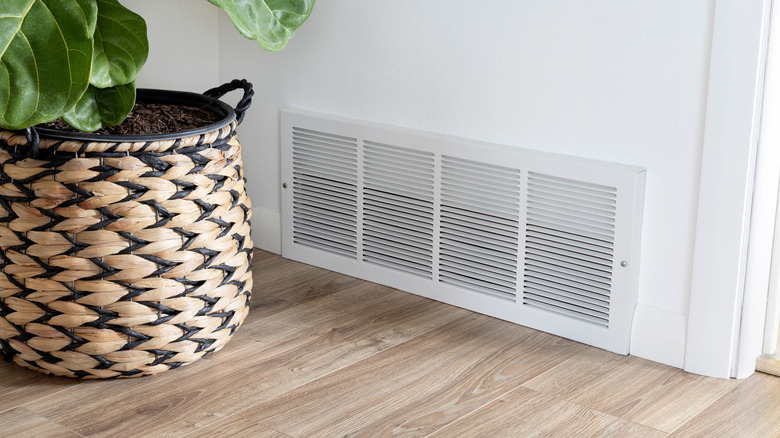
If you're still considering hiding your air vents, the potential cost of repairs may convince you that the danger outweighs the aesthetic benefit. When your HVAC system is overworked consistently, its lifespan may be shortened, potentially leading to you needing a new HVAC system entirely. This can cost between $5,000 and $28,000 depending on your home's size and ventilation needs.
While not as severe, you might also experience more humidity in the home, mold and mildew growth, and inefficiency with your HVAC — in that case, add on a couple of thousand dollars for mold remediation and higher utility bills throughout the year. You should also be on the lookout for other warning signs from your HVAC system you shouldn't ignore, which may need repairs and add up in cost over time, even if you don't need to replace the whole system. Some fixes may cost a few hundred dollars, while others can reach over a thousand.
In order to prevent the major negative impact on your HVAC, be sure to leave at least 10 inches of space between the air vent and anything you plan to hide it with so that the vent can work properly. Rather than hiding your vents by completely blocking them, you may want to try assessing what viewpoint of the vent bothers you most and strategically placing an item to hide the vent from that view while allowing adequate space for airflow. Ultimately, while you may think a room will look better with the vents covered, it won't feel better for your temperature, your wallet, or your HVAC system.