

If You Plant One Drought-Resistant Flower This Year, It Needs To Be This Classic
Whether you're hoping to save on your water bill or you simply prefer a low-maintenance garden, there are a variety of drought-resistant flowers you can plant for a beautiful, hands-off oasis. Coneflower (Echinacea spp.) is a timeless beauty perfect for the leisurely gardener. You truly can't go wrong with this classic bloom.
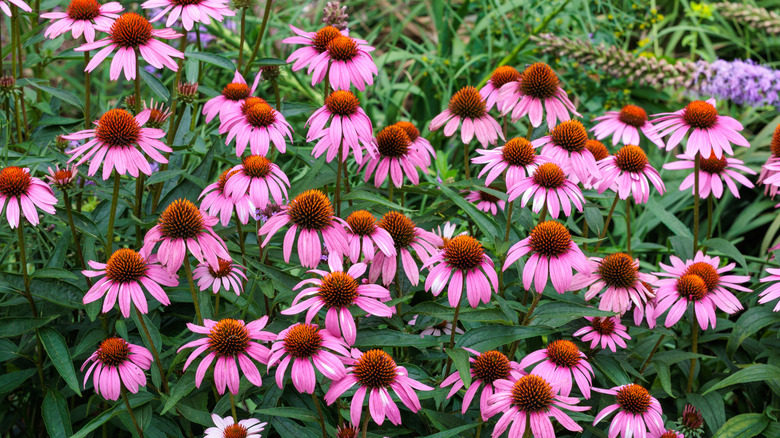
Native to the eastern and central United States, they bloom from the summer into the fall. While this plant is often associated with purple flowers, its daisy-like blooms can also be yellow, orange, red, white, or even green. Often used as an herbal tea to support immune health, these resilient wildflowers are suitable to grow perennially in USDA Hardiness Zones 4 to 9. Colorful coneflowers attract a host of pollinators including butterflies. They naturally self-seed if you wait until winter to cut back spent flowers. Conversely, you can deadhead the blooms once they start to fade if you don't want you plant to go to seed.
Not only are coneflowers easy to grow, but they're also impressively drought-tolerant. When you first plant coneflowers, you'll need to keep them moist so they can establish their thick tap roots. These sometimes 5 feet deep roots are the key to these flowers' drought-residence. Once established, their dense roots make it so coneflowers don't require a lot of water.
Creating a drought-resistant garden featuring coneflowers
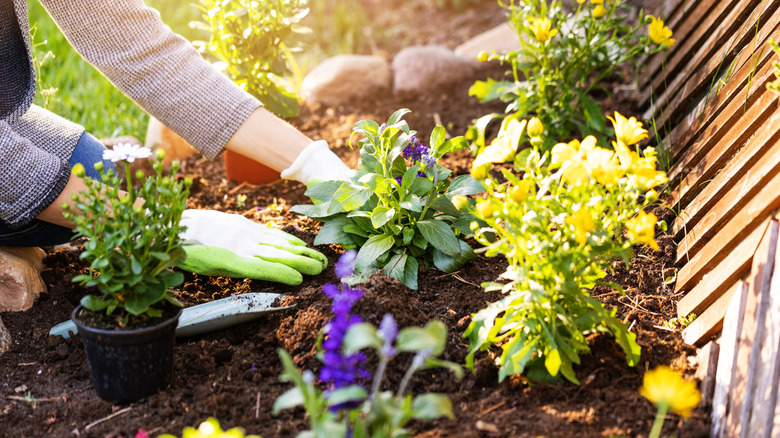
Coneflowers are quite easygoing. They can grow generously in most conditions. However, to help them thrive, establish them in rich, well-drained soil. Pick a spot where they can receive 6 to 8 hours of sunshine daily. Partial shade is appropriate if you live in a warm climate. You can introduce coneflowers to your yard by planting starters or seeds. If you choose to plant a starter, transplant it in spring or early summer. If you're opting to plant seeds, you can either start them indoors eight to 10 weeks before the last frost or directly sow them in the ground. Just keep in mind that these plants may not flower for two to three years. Water your new coneflowers regularly for their first season in your yard. Once they're established, you can reserve supplemental watering for long dry spells.
If you want thriving coneflowers, spread a layer of compost on their topsoil to provide supplemental nutrients, retain moisture, and prevent weeds. Further support your coneflowers by growing them alongside companion plants. These helpful neighbors can bolster soil health and help deter pests. Some great options include gaillardia, monarda, or sedum. Not only do these and other companions offer a range of benefits for your coneflowers, but they can also help you cultivate a completely drought-resistant garden in many cases. Just double check that your companions don't need a lot of water if this is your goal.
To make your coneflowers last for decades, select native or non-cultivated species for your yard. These varieties last longer than cultivated coneflowers and will reseed over and over for essentially indefinite blooms. Every year you can enjoy their stunning blooms without the worry of wasting water.