

Dig That Bag Of Dry Lentils Out Of The Pantry — You Can Grow Them Into Delicious Sprouts

We may receive a commission on purchases made from links.
If your garden isn't quite ready for you to start planting yet, or you find yourself wanting to flex your green thumb indoors, sprouting is the perfect small-scale growing project to try out in your kitchen. And you don't have to purchase specialty seeds to get started, you might have everything you need already in your cupboards — like that bag of dry lentils tucked away in your pantry. Think of its contents as the makings for sprouts or microgreens you can grow indoors for a quick and nutritious harvest. Just be sure to follow some food safety tips and make sure you don't miss any important steps.
Sprouts are germinated seeds and are low-maintenance veggies that grow perfectly in your kitchen all year long. You may be familiar with sprouted soy or mung beans, but those aren't the only seeds you can use for a fresh, kitchen-grown vegetable. Lentils, the legume that you may use primarily to make hearty soups, can also be transformed into a fresh harvest in roughly three or four days. Wondering what the difference is between sprouts and microgreens? Microgreens are harvested later than sprouts, after the true leaves are produced — they also require a substrate, such as soil, coir, or hemp mats, while sprouts need only water. Since they require fewer materials, it makes sense to start with sprouting.
How to safely sprout lentils for delicious fresh greens
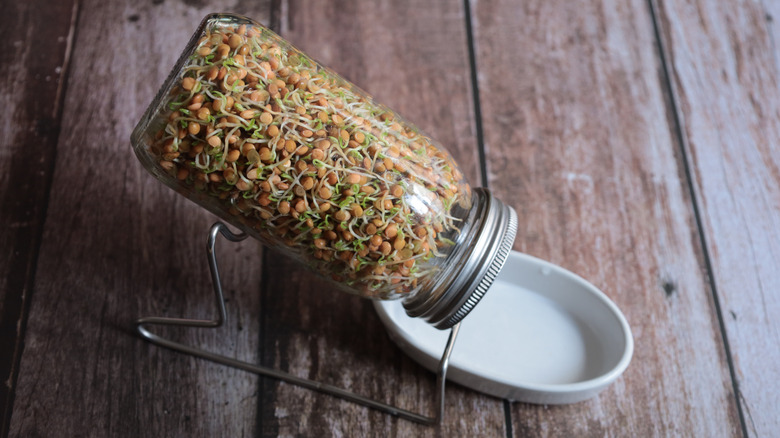
If you'd like to try turning your bag of dry legumes into a fresh salad ingredient, the steps are similar to growing alfalfa sprouts in a jar. However, it's important to follow some food safety recommendations, because skipping these steps can lead to bacterial illnesses like salmonella. First, measure out the amount of lentils you need — enough to fill the bottom of a mason jar up to 1 inch high. Next, wash the dry lentils and sort through them to remove any debris. Now comes the safety part — since seeds can harbor bacteria, you'll need to soak them in undiluted vinegar for 15 minutes. After, rinse the lentils under running water for 60 seconds.
There's another safety measure to take before you start sprouting. You'll also want to sanitize the jars by placing them in boiling water for 10 minutes. Place the lentils in the jar, and add some water, then remove any debris. Cover the seeds with at least twice as much water, and soak them overnight. The next morning, drain the soaking water and rinse again, then cover the jar with a mesh covering, like a cheesecloth or Stainless Steel Sprouting Lid from HomuHomu. Invert the jar so that the lentils don't sit in standing water, and place it in a dark location at a temperature between 70 and 80 degrees Fahrenheit. Rinse the seeds with lukewarm water every four to six hours, and turn the jar back upside down. Finally, harvest the lentil sprouts after the seeds germinate, when they are 1 to 2 inches long.