

How To Keep Thistle Out Of Your Lawn For Good
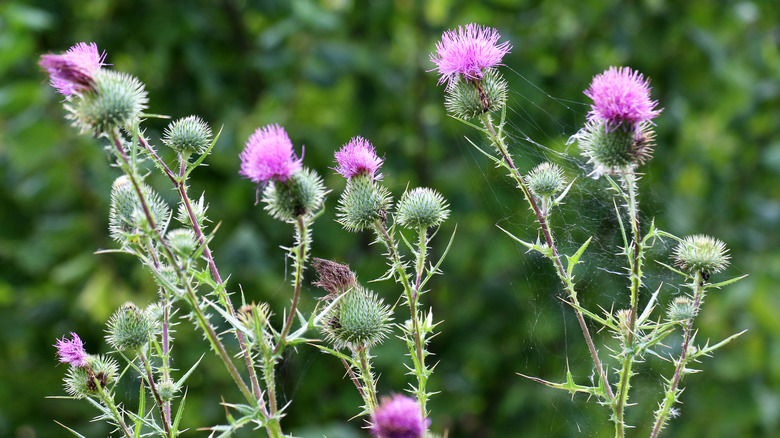
It's official: We are in the thistle-blooming season. These invasive, warm-season weeds are considered noxious throughout most of the United States and, while they can attract wonderful pollinators like bees and butterflies, thistles are notorious for pushing out native plants. If you are already experiencing thistle growth in your lawn, you can try a few different tactics to remove them, like pulling the weeds by hand. However, when it comes to prevention, there are a few basic tasks to complete that will keep thistles from growing on your property and taking over the rest of your garden. These chores include regular mowing, proper watering, fertilization, and providing competition. The healthier and fuller your lawn, the less of a chance of thistle development.
While there is a wide variety of thistles, two of the most widespread types in North America are bull or common thistle (Cirsium vulgare) and Canada or creeping thistle (Cirsium arvense). You may recognize the Canada thistle by its long hairy stems, thick buds, and purple and white blooms. The bull thistle, meanwhile, has a singular stalk, hairy leaves, and purple flowers. These thistles can grow up to 5 or 6 feet tall. Since a thistle's typical blooming season is from May to September, with its most intense growth during the summertime, it's imperative to take preventative action as soon as possible.
How to prevent thistles in your garden

Similar to other types of weeds, like chickweed and crabgrass, it's imperative to begin the preventative process before the thistles have had a chance to truly establish into the soil. Thistles like the Canada and bull varieties establish their roots early on in the year, eventually blooming and spreading their seeds during the May to September window.
One of the best ways to keep any potential thistle growth in check is to ensure your lawn is thick and healthy. This means staying on top of mowing the grass, which can also help cut down any potentially growing thistles from blooming. If your thistles never have the chance to flower, they can't spread their seeds. Instead of removing your grassing cuttings after you mow, leave them on the lawn as a good source of nutrients. When it comes to watering your lawn properly, apply heavy, infrequent doses to prevent the thistles from enjoying their preferred moist environment. In order to boost the health of your lawn and take away real estate from weeds, fill in any gaps with competition like grass seed or new plants, which can reduce the potential thistles' surface area. You can also add mulch that helps to prevent weeds, like bark mulch.
If you're trying to prevent invasive thistle during the hot summer months, or if you want to get ahead of your lawn care before a single thistle can germinate, you can also opt to apply a pre-emergent herbicide to your lawn. The best times to apply pre-emergent herbicide are in the fall and early summer. Note that these types of chemicals can potentially harm your surrounding plants, so make sure to thoroughly read the instructions and apply them with caution.