

Fill Your Garden With This Summer Flower After Tulip Blooms Have Faded
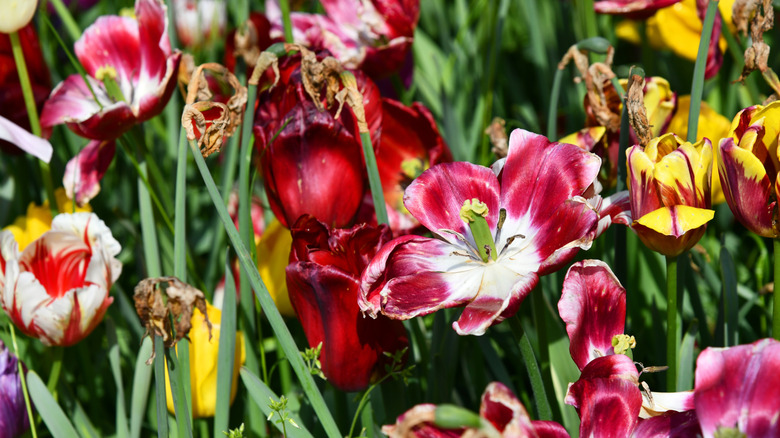
It's hard to beat tulips as colorful harbingers of spring. In fact, the only thing wrong with these iconic spring flowers is that they don't bloom for long, with early tulips typically blooming for a week and the latest-blooming varieties flowering for about three weeks. It sure would be nice to have a summer flower that could step in to fill the big shoes left behind by this crowd favorite as spring winds to an end. Meet salvia (Salvia), a genus with no lack of selection among its nearly 1,000 varieties. Expect vibrant blooms in early summer. You may not even miss tulips once you fill your garden with these pollinator-attracting beauties.
You'll find a wide range of salvia colors — red, burgundy, blue, gold, yellow, purple, lavender, white, and pink — and availability of both annual and perennial varieties. These spiky plants grow up to 4 feet tall and 4 feet wide. Enjoy a minty foliage fragrance from many varieties; that same scent makes them deer- and rabbit-resistant. Salvia plants are also drought-tolerant. As you bring in a new plant after tulips fade, it's comforting to know that salvia is easy to care for.
Plant salvia for color and easy care when tulips are gone
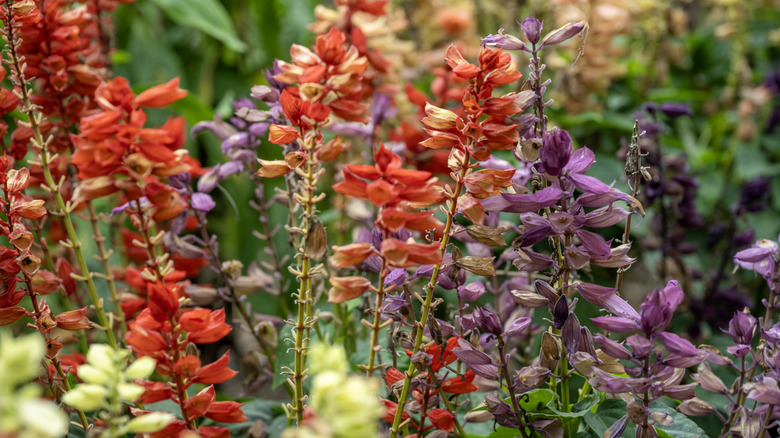
Salvia can weather the cold in USDA Hardiness Zones 5 to 10. You can grow it from seeds, which can be started indoors, or you can transplant from nursery pots. When planting in the spring to replace tulips, pay attention to its needs over the summer, especially the need for water. Plant in well-draining soil with a pH of 6 to 7. Salvia can handle a range of soil types; consider amending heavy soils with compost for better drainage. Most salvia plants thrive in full sun to partial shade, but you may see fewer flowers on shade-planted salvia. Lighter-colored annuals may burn in intense summer sun, while darker colors are better at resisting the scorch.
While salvia is drought tolerant, it's best to water it when the top 2 inches of soil have dried out. You'll get better flowering with consistent watering. In spring, apply a slow-release, balanced fertilizer, following label instructions. You'll want to know how to prune salvia for endless blooms all summer. Start by deadheading spent blooms; here's how to deadhead salvias in the summer. You can give plants a light pruning during the blooming season. Avoid pruning when plants go dormant and instead prune when new growth emerges in the spring. Under optimal conditions, salvia isn't especially susceptible to pest and disease issues, but it can experience spider mites, slugs, spittle bugs, and wilt.
You can learn to grow salvia from one plant forever through propagation. In addition to propagating salvia via seeds, you can layer, divide, or use stem cuttings to get more salvia plants. Some species even propagate themselves via seedlings in the landscape, taking care of the work for you.