

Don't Toss Plant Cuttings - Your Neighbors May Be Thrilled To Use Them
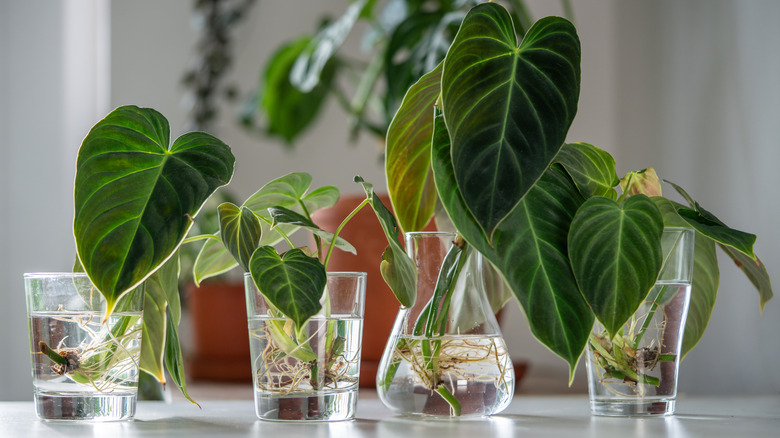
Whether you're trimming back a houseplant or pruning a garden plant, you'll most likely end up with a load of cuttings that just get thrown into the compost at the end. There may, however, be a solution to this problem that feels a little more neighborly. People across the internet are gifting their leftover snips to those who live near them, and it can be as low effort as just leaving a few stems in bags on the street or some jars of water-propagated cuttings on your windowsill or front step. Some have taken it further by creating adorable outdoor stations — like putting them on a shelf on a tree with a little "free plants" sign — where passersby can pick up a cutting and take it home.
It's a wonderfully simple concept: don't throw it out, pass it on. Propagating can give dying house plants new life, and even for healthy plants cutting them back is an essential part of helping them grow more thick. It's also so easy to trim them in a way that leaves viable cuttings, especially if you are cutting from a species of plant that roots easily.
How to share plant cuttings successfully
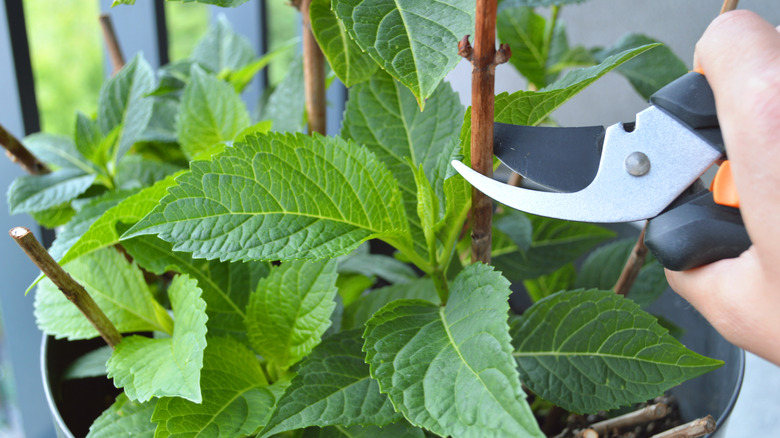
While the concept is straightforward, you can make it even more successful by taking a few extra steps. First, choose plants that propagate with ease; for example, pothos can bring endless greenery to homes thanks to how easily they take root, especially in water. Whatever it is you're taking a cutting from, make sure it has least one visible node and a few strong leaves as these are more likely to root successfully. Then, if you've taken a cutting from a plant that can propagate in water, place the stem in a glass or jar ensuring the nodes are submerged. Houseplants are the natural choice here, but there are also many delicious herbs you can propagate from cuttings, like basil and mint as well as other garden plants like geraniums or even some soft-stem perennials that root easily.
You should also place the cuttings in a manner that makes it obvious to passersby that they're meant to be taken, so signs can be a nice touch. Or if you're feeling extra generous, you could add small handwritten labels with the plant name or basic care tips to make the whole setup seem more intentional and less of a random rubbish dump. Put them somewhere where there is quite a bit of foot traffic, but try not to keep them in direct sun all day. For many people, this could be an easy method of connecting with the others that live nearby and, even if you never speak to them, it's a lovely way of sharing a piece of your home or garden with someone else.