

How To Keep Chickweed Out Of Your Lawn For Good
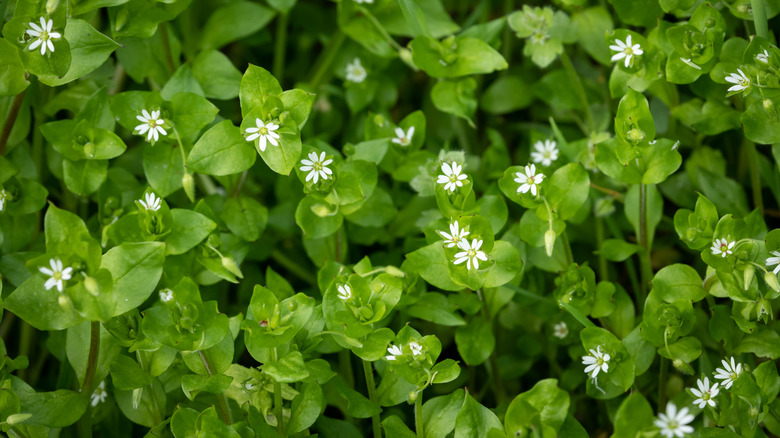
No one wants their garden taken over by weeds, especially by those that can spread quickly. Chickweed (Stellaria media), unfortunately, is one of those pesky low-growing plants that can quickly infiltrate your lawn if you don't take the right preventative measures. Getting rid of already-grown chickweed is a separate process, but you can prevent the growth and spread of this weed with a few basic lawn chores, including aeration, mowing, reseeding, and deep watering. If your outdoor space tends to be susceptible to chickweed, it may be trying to tell you that it needs better lawn care.
Known by many other nicknames, including birdweed, starwort, winterweed, and chickenwort, chickweed is a cool-season annual that thrives in many soil types, spreads like wildfire, and is considered invasive in North America. You may recognize the plant by its teardrop-shaped leaves and small, five-petal white flowers. Some may even have hairy stems. While the plants themselves aren't particularly large, reaching anywhere from 4 to 20 inches high and 4 to 12 inches wide, chickweed is known for quickly producing seeds for weeks or even months on end. Just one chickweed plant on average produces 25,000 seeds. The best course of action with this weed is prevention involving lawn care. In general, chickweed will not survive in a healthy, well-maintained lawn.
How to prevent chickweed
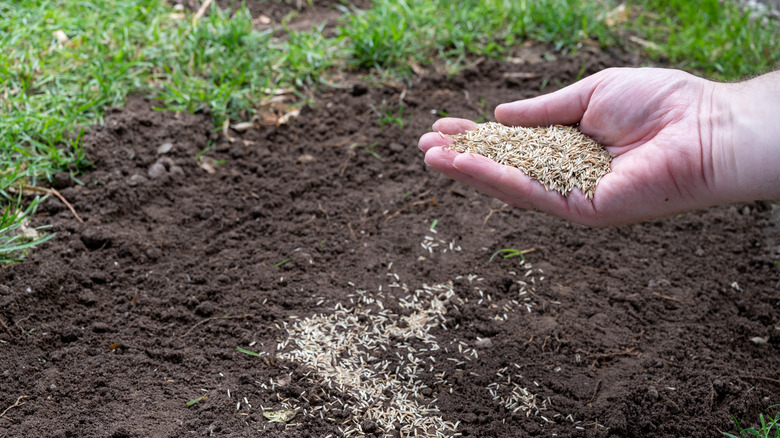
If you want to keep your lawn from developing chickweed, the general rule of thumb is to ensure your grass is as healthy as possible. The thicker your lawn, the more difficult it is for chickweed to grow. Since this plant typically sets seed in springtime and sprouts in the fall, those two seasons are ideal for chickweed prevention chores. Since chickweed grows quickly, it can easily take over your lawn in the cool seasons before the rest of your lawn or garden even have a chance to establish. To prevent chickweed and maintain a healthy, luscious lawn, you should incorporate aeration, mowing, reseeding, and deep watering into your routine.
Aerating your lawn, which is the act of creating holes in soil to allow air, water, and nutrients to absorb more deeply, can boost the development of your other plants, in conjunction with consistent mowing. If you want to reseed your lawn to fill any bare patches, complete this task in the fall to choke out any incoming chickweed growth. Lastly, opt for deep occasional watering, since chickweed thrives in consistently damp soil.
You can also apply pre-emergent herbicides to your lawn, especially if you know your property is prone to chickweed. The best time to apply these chemicals is around the late fall or early winter, before the seeds have had a chance to establish. You can apply a second round in early spring. Note that if you plan to reseed your lawn in the fall, wait a few months before adding your pre-emergent so you don't accidentally kill your new grass. You can also choose to reseed in the spring.