

The Valuable Blanket Full Of History That You'd Be Lucky To Score At The Thrift Store
It's no secret that you may leave a trip to your local thrift shop with a new-to-you quilt. These trendy, decades-old home accent pieces are mainstays of secondhand store bedding sections, but with some knowledge of an early 20th-century craft, you may be equipped to spot something rare and valuable: a flour sack quilt handmade by artfully incorporating colorful cotton packaging picked up while shopping for the household or farm. Intricate flour sack quilts sold on eBay can fetch anywhere from $200 to $500, but some particularly special picks go for even more.
Flour sack quilts (also called feed sack quilts) are made from the cotton bags widely used to store and transport dry goods and animal feed starting at the end of the 19th century. Over time, companies began packaging goods like flour and sugar sacks in colorful prints that gave resourceful crafters pieces of patterned fabric to use in quilting. This decorative packaging was seen as early as the 1920s when the George P. Plant Milling Company released flour sacks in red gingham. The bags also came with design elements like borders and pastel colors. Women made clothes and household fabric goods — including quilts — out of these decorated sacks during the Great Depression in the United States. Although feed sack as a clothing material eventually fell out of fashion, quilters continued to cherish the practice of repurposing it. Products made from sacks were often kept as long as they were useful instead of being handed down, however, so you'd be lucky to find one on a thrifting mission.
How to identify and style treasured feed sack quilts
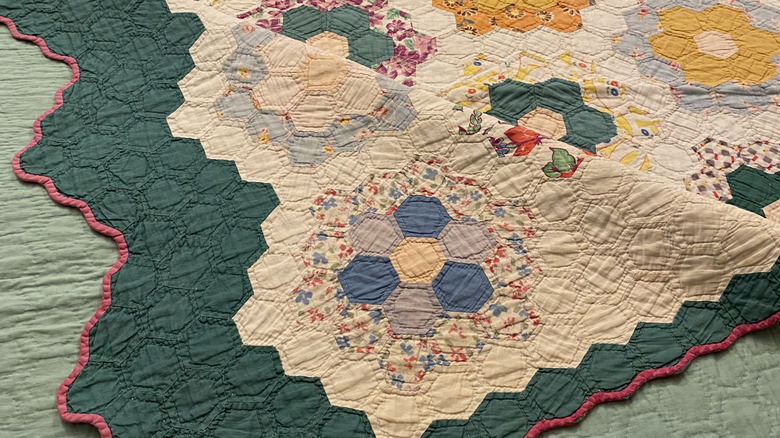
There are some signs that can help you tell if sack cloth fabric was used in a quilt and whether it's a pattern that could actually be worth a lot of money. Look for a loose weave and feel the fabric of the quilt. If its texture is rough, that could indicate it's made with osnaburg, a type of cotton commonly used for flour and feed bags. Fabric used in sacks lent themselves to several patterns that are valuable if they're in good condition, like one with interlocking circles called "double wedding ring." Another sought-after pattern, "grandmother's flower garden," features floral shapes made out of hexagons often cut from sacks.
The motifs on the quilt can also offer a clue. There may be printed labels from the flour or feed brands, sometimes appearing only faintly, as quilt makers would try to obscure them by using bleach. Bemis Brothers of Tennessee and Percy Kent of Buffalo, New York were well-known for making beautiful sacks. Patriotic images were seen on flour bags sent from the U.S. and Canada to Belgium and other besieged areas during World War I. The fabric made its way back through goods embroidered by the locals.
If you manage to find a feed sack quilt and decide to take it home, you can use it in a rustic bedroom, as framed decor, or as the basis for your own crafting. First, give it a wash or use vinegar to get any unwanted scents out of the fabric. After this, it will be ready for everyday use or primed to be transformed into beautiful home decor.