

Say Goodbye To Basic Wood Decks And Discover This Eco-Friendly, Long-Lasting Option
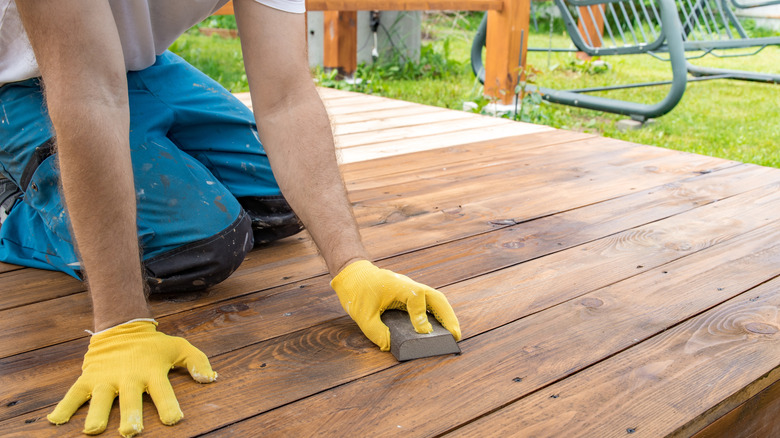
There's no denying it, well-maintained wood decks are beautiful. They bring texture and warmth to an outdoor entertaining space, and are easily customizable through paint or stain. But, they're certainly not perfect. Wood decks are susceptible to rot, warping, and insect damage, with an average lifespan of about 10 to 30 years. To keep a wood deck in great shape, you must clean it at least once a year, seal it every one to two years, and restain it every two to three years — which is a lot of upkeep. If you want the look of a wood deck, but something that lasts longer and requires very little maintenance, PVC decking may be the way to go.
There are many clever tips to help you build the perfect deck, but the material you choose is one of the most important factors. Unlike composite decking that's made of a combination of plastic and wood fibers, PVC decking is made of a strong plastic called polyvinyl chloride. Because it contains no organic fibers, it's one of the longest-lasting decking materials with a lifespan of up to 50 years. Plus, it's fully recyclable, so it won't end up in the landfill when it's time to replace it.
What to know before purchasing PVC decking
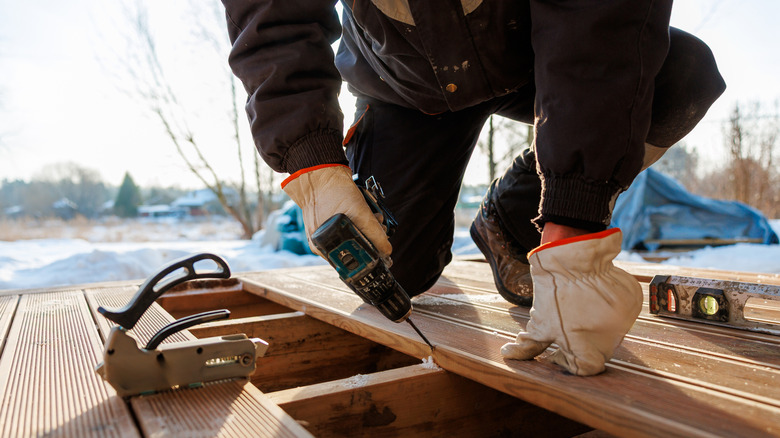
If your wood deck is beyond repair and longevity is a top concern, it might be worth exploring PVC construction. Like any decking material, PVC isn't a one-size-fits-all solution, but it does have some attractive selling points. It mimics the look of wood but is resistant to pest damage and moisture that can cause rot and decay. That means if you live in an area that receives a large amount of snow or rain, you won't have to worry about your PVC deck taking a beating. Compared to composite decking, PVC also stays cooler to the touch, so it's less likely you'll burn your bare feet during the scorching hot months. It's also more lightweight, making it easier to handle and install. But best of all, there is very little maintenance. This deck material doesn't require sealing or staining; all you need to do is clean at least once a year or at the first sign of dirt buildup.
Before you run to buy PVC decking, it's important to consider the cons. Perhaps the biggest is its hefty upfront cost. PVC is not one of the seven budget-friendly DIY deck ideas for your backyard. It's considered a high-end material and is one of the most expensive decking options on the market, often commanding $8 to $15 or more per square foot, which is higher than composite or traditional wood. However, since PVC decking lasts for decades, it could likely save you money in the long run. Another potential downside of PVC is that it can become slippery when wet, which can be hazardous, especially if you have young kids or people with mobility issues in the house.