

13 Underrated Herbs To Try Planting In 2026
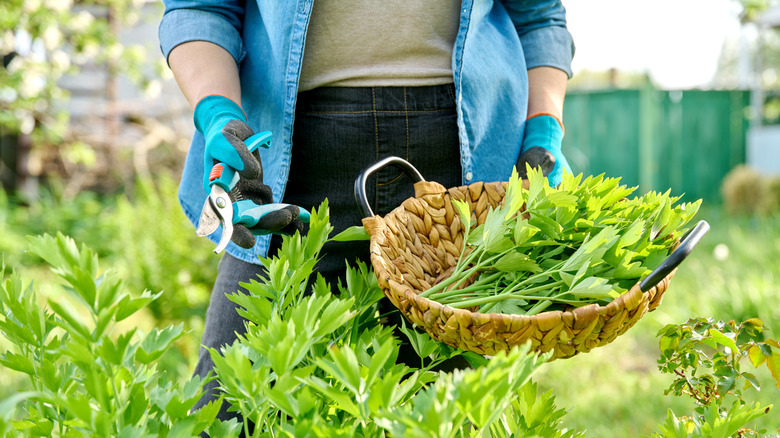
I am a master gardener, permaculturist, master herbalist, and an enthusiastic from-scratch cook, so I grow a serious quantity of herbs. I use them for companion planting with other flowers and produce, cooking, and some for simple herbal remedies. A good portion of my back garden is essentially a herbal wonderland. And yes, like many people, I have the standard rosemary, thyme, sage, mint, dill, and chives, etc.
However, because I'm also a history geek, I enjoy finding lesser-known herbs or plants that have fallen out of favor (but were historically significant) and giving them a try. There are many varieties of herbs that are underplanted in American gardens, simply because the growing culture moved away from them and they fell out of favor, not because they're particularly difficult or niche. Many are hardy, low-maintenance perennials that require pretty much no intervention from you once they get established. Several will flavor your cooking, and all are genuinely beautiful in their own way and look just as at home in an ornamental garden as a productive kitchen garden. If 2026 is the year you want to grow your herb collection to include some interesting, underrated varieties, these are my top 13 recommendations.
Chervil tolerates shade beneath trees
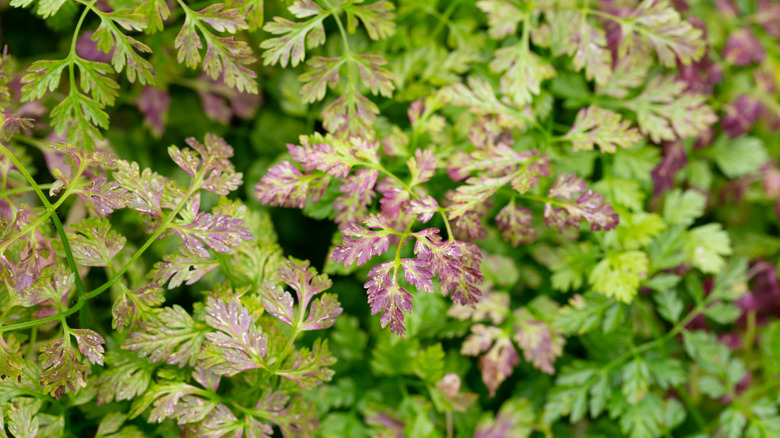
Chervil, even though it's a close relative of parsley, is one of those herbs that sits in those big spice rack gift sets and is still there when all of the other herbs have been used, because nobody quite knows what to do with it. It's long been a classic of French cooking, and is actually pretty delicious. Many people think it lacks flavor, but that's because chervil needs adding at the very end, or to be used fresh. If you cook chervil for any length of time, it loses any meaningful flavor. When treated properly, chervil has a delicate, bright flavor that is more interesting than parsley but subtler than tarragon. It's really nice in a herb butter with chives and a touch of dill. You can also use it to finish off spring soups or top poached eggs.
I like this plant in the garden because it can cope with a fair amount of shade. Chervil will happily grow under a deciduous tree that gets morning light and then shade for the rest of the day. Too much heat or direct sun can make it bolt. If you want a steady supply of chervil, you will need to successionally sow it and avoid placing it in direct sun. It's a fairly quick crop, going from seed to harvest in eight weeks.
Summer savory is a traditional bean seasoning
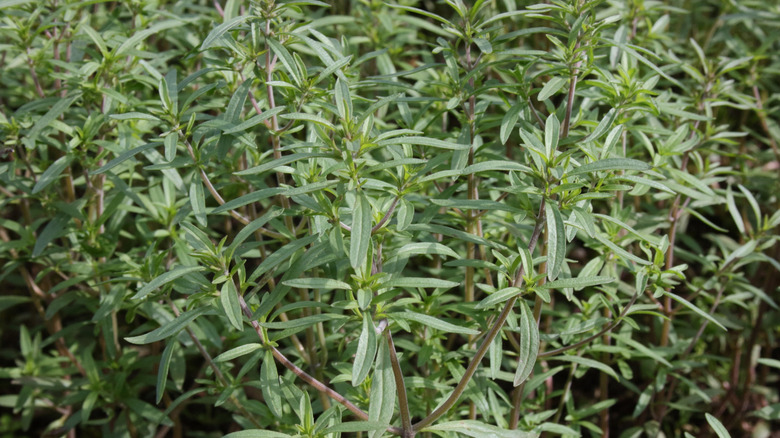
There are three different types of savory, summer, winter, and creeping. My favorite is probably summer savory (Satureja hortensis) because it has a milder and, in my opinion, better flavor. Summer savory is an annual so you sow it in spring and harvest it from summer through to the first frosts. It's another herb that has fallen out of popular use and isn't widely available at the grocery store, even though summer savory is genuinely delicious. Well known for its use in flavoring bean and legume dishes as well as stews, the flavor is interesting, peppery, and warming. A little bit like a cross between thyme and oregano, but not quite. Summer savory is traditionally grown alongside beans, and its German name, Bonnenkraut, actually means bean herb.
I also like summer savory with roasted vegetables, and I use it to season slow-cooked pork. It's extraordinarily easy to grow from seed. After the last frost, you can just scatter the seeds in full sun and well-drained soil and cover them very lightly. Water them in and wait, and they'll pop up and grow with no real maintenance from you. Harvest summer savory just before the flower buds open for maximum flavor, as this is when the essential oils are the most concentrated. You can cut the plant back hard a couple of times through the growing season, and it will come back with another flush.
Shiso (Perilla) brightens rice and noodle dishes
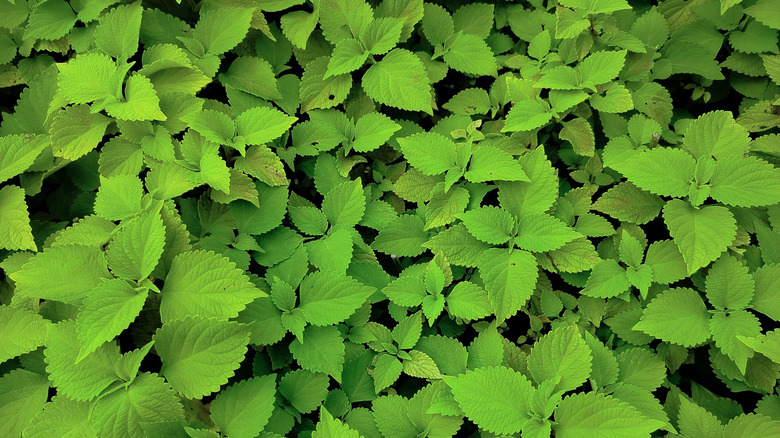
My brother is a Michelin-starred chef and it was him who, many years ago, introduced me to shiso (Perilla frutescens). This herb is common in Japanese, Korean, and South Asian cooking but it's not so common elsewhere. However, the flavor is fabulous. It's really aromatic and is like a combination of anise, mint, and basil. Green shiso is the common culinary form, and I really like this shredded into rice and noodle dishes. You can also get red or purple shiso, but these are usually a little more bitter and are used as seasonings or colorings for things like pickles and preserved foods.
Although it's not terribly common in the U.S., shiso can grow as an annual in Zones 2 through 9, and is winter hard in Zones 10 and 11. It's sometimes referred to as Japanese mint, which hints at how quickly this plant can spread if you don't keep on top of it. Plant the seeds after the last frost, in full to partial sun, using a good quality potting mix. The plants germinate fairly quickly and once they pop up, grow rapidly. It's a good idea to pinch the flower heads out as they appear while plants are still young: This prevents bolting and keeps leaf production going through the season. After the first year expect shiso to self-sow pretty aggressively. Nip off the flower heads before they seed if you don't want to have a lot of shiso plants popping up. Note: Shiso is on invasive lists in Midwest and Appalacian states including Missouri, North Carolina, Virginia, West Virginia, Tennessee, and Kentucky and shouldn't be planted it in these areas.
Anise hyssop serves as a multipurpose plant
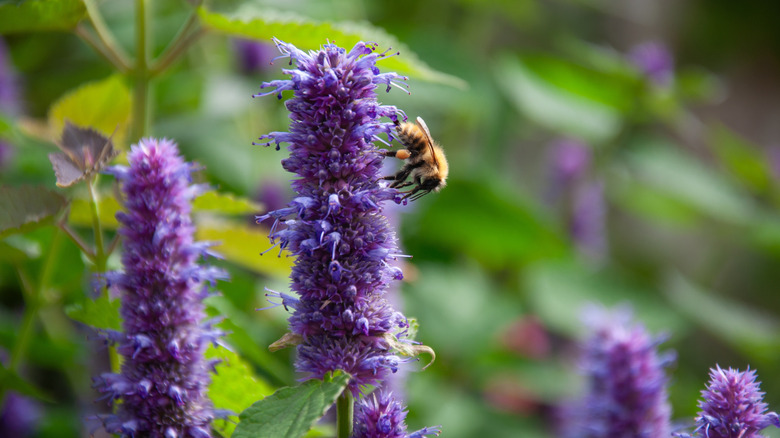
Anise hyssop is a fantastic all-rounder, and I wish more people cultivated it. As a permaculture specialist, I like a plant that does more than one thing and can pull its weight in different ways. Anise hyssop fits this bill beautifully. In the kitchen, it's fantastic in herbal tea, and has a delightful licorice flavour that brings a new dimension. The leaves dry and store easily, so you can have them all through the year. You can also grind and use the dried leaves in baked goods for an earthy licorice background note. The flowers are pretty and edible, and they can be used as a garnish, or you can decorate the top of frosted sugar cookies with them. As an ornamental plant, anise hyssop produces these fantastic tall spikes of lavender-purple flowers. They last for weeks and provide lovely late-season color, long after most plants are done for the year. Plus, anise hyssop is deer-resistant. For those who want to encourage pollinators, there's very little that beats anise hyssop when it comes to attracting bees, butterflies, and hummingbirds in large numbers.
This plant is native to the prairies and open woodlands of the Upper Midwest and Great Plains regions, and it's tough. Anise Hyssop is one of those low-maintenance perennial plants that hardly need any attention to thrive. Hardy in Zones 3 to 8, anise hyssop is drought-tolerant once established. It'll grow in poor, thin soil as long as there's good drainage, and self-sows freely enough that you'll quickly develop a self-sustaining colony after the first year. This herbaceous perennial does best in full sun, but also handles partial shade, although it won't be as prolific. It does not like having constantly wet roots, so avoid heavy clay soil, low spots, or wet, compacted areas.
Borage is a great companion plant
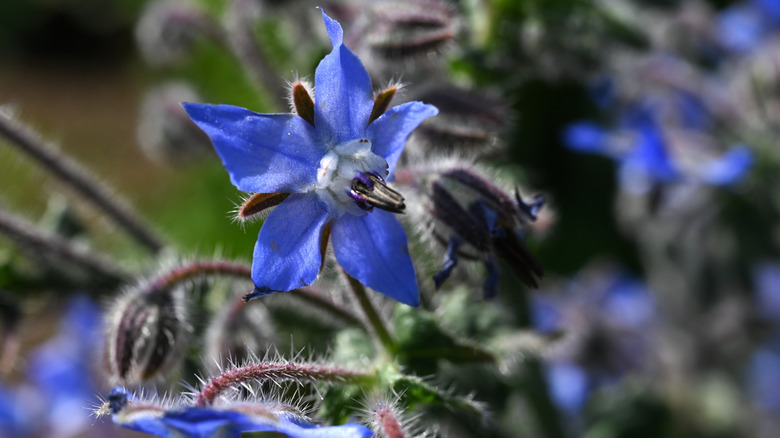
I have borage growing everywhere. I love its true, vivid blue, star-shaped flowers, and it produces so many of them. If you have a bit of an unkempt cottage-type garden, you've probably got borage growing freely in it, maybe without realizing exactly what you're looking at. It tastes a little cucumber-y, and the flowers make a lovely touch floating in cold drinks or ice cubes or scattered across salads for a bit of extra color and flavor. The young leaves also have that same clean cucumber flavor. However, as they mature, they get a kind of prickly fuzz that does not feel good in the mouth, so focus on using either the very young leaves or just the flowers.
My reason for letting this plant grow is that borage is an amazing companion species, and it's related to comfrey, so its leaves make a valuable compost or fertilizer. Borage will benefit pretty much any garden because it attracts pollinators and repels a whole host of pests, including tomato hornworm. Many seasoned organic growers will tell you that they deliberately plant borage, especially near field beans, strawberries, and tomatoes, because it enhances crop yield and flavor, particularly of strawberries. It also attracts predatory insects such as parasitic and predatory wasps, as well as lacewings and hoverflies that consume various pests.
French sorrel gives a bright, lemony flavor
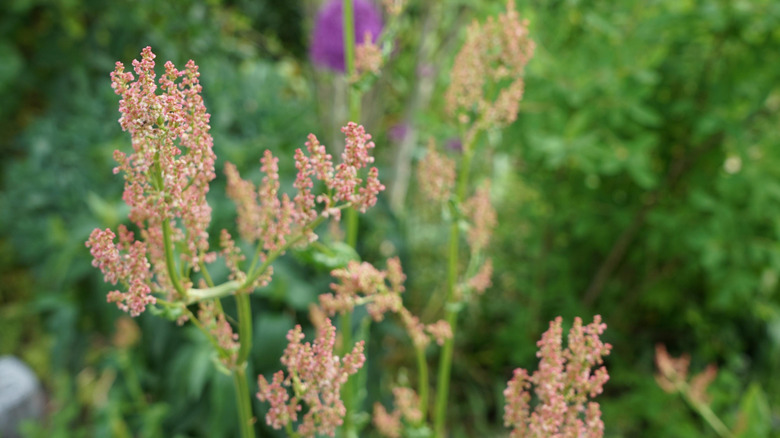
French sorrel has an intensely sharp and lemony flavour because of its high concentration of oxalic acid. It's used quite a lot in French cooking but has not been common in home kitchens for many years. This is a cut-and-come-again perennial that grows in Zones 4 to 9. You plant it once and can harvest from it for years to come. French sorrel will die down in fall and grow back reliably and vigorously in early spring. It's usually up and ready to be used before almost anything else in the garden. French sorrel is one of those lovely culinary plants that fill in the hungry gap when the garden is still waking up.
For the best flavor, you want to harvest the young, tender leaves. Do note that sorrel has a tendency to bolt in the height of summer, in which case the leaves get more bitter. If it does bolt, you can cut it back hard and the plant will produce a new flush of milder growth in fall. This is one of the most easy-to-grow herbs, and once established, it really doesn't need much help. It will just grow, die off, and come right back in the spring every year.
Lovage leaves, stems, roots, and seeds are edible
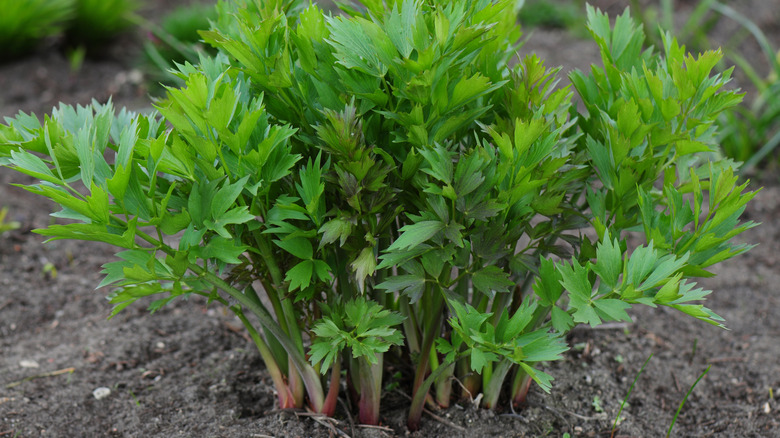
Lovage is an interesting herb. It's big and imposing, reaching up to 6 feet tall in good soil. It's also a member of the carrot family, even though it has bold, glossy, celery-like foliage. It kind of tastes like celery too, but it's richer and deeper, with a slight anise undertone. Every part of a lovage plant is usable. You can utilize the hollow stems just like celery stalks, and the leaves work well in stocks, soups, salads, and sauces. You can also dry the seeds and use them in place of celery salt, especially once you grind them up. You can also cook lovage roots as a vegetable, harvesting them from mid-fall.
This old-fashioned underrated herb grows vigorously and is hardy in Zones 4 to 9. It dies back each winter and comes back every spring bigger and bulkier than the year before, and it will last for decades with minimal intervention. If you want to grow lovage, position it in full sun. It tolerates partial shade but prefers plenty of sunlight. Lovage needs consistently moist, reasonably fertile soil and isn't as drought-tolerant or forgiving of thin soils as many Mediterranean herbs. It also needs a fair bit of space as, when mature, the plant can spread up to 3 feet wide. Given its height, it's a good idea to set it at the back of a bed.
Mexican tarragon copes with hot, humid conditions
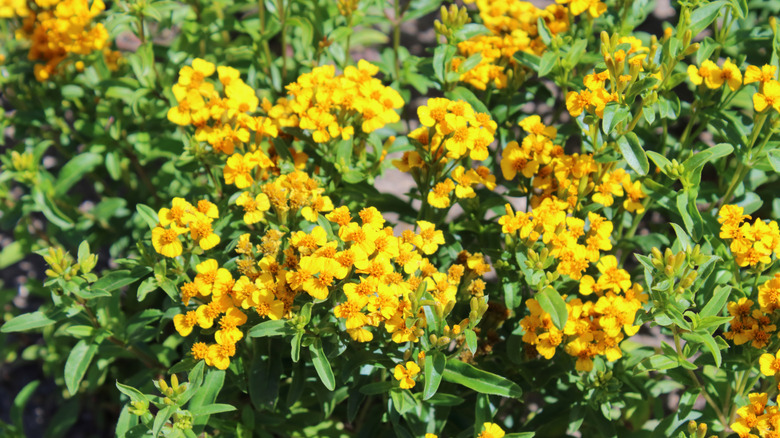
Looking for easy-to-grow herbs that can handle the heat? Unlike French tarragon, Mexican tarragon (Tagetes lucida), sometimes called Texas tarragon, copes very well with hot, humid summers. It's got an intense flavor that's pretty much indistinguishable from French tarragon in the kitchen. Unless you have a particularly refined palate, which I do not. So I'm happy to use it anywhere I would use French tarragon, such as bearnaise sauce, chicken dishes, potato salads, and herb vinegars. I like Mexican tarragon because the flavor holds well, even when you dry it.
In Zones 8 and above, Mexican tarragon grows as a perennial, but in colder regions it behaves as an annual, and needs to be started from seed or cuttings each spring. It's not widely available at standard nurseries, so you will probably need to order seed online. You can then either let some of the plants run to seed and save your own or take cuttings in fall before the plant goes dormant and root them in water indoors, so that you've got plants ready to go outside the following spring.
Lemon verbena repels aphids and whiteflies
Lemon verbena is lovely and has an intensely lemony scent even when you brush against it. It's not lightly lemony like lemon thyme, and it's not just a little bit citrusy like lemon balm. It is almost overwhelmingly lemony. I really like the fresh or dried leaves steeped in hot water for herbal tea with a dash of honey. You can also fairly easily infuse it into cream or custard for a nice lemony twist to a fancy dessert.
This is a tender shrub that grows as a perennial in Zones 8 to 10, and as an annual elsewhere. In colder climates, it does best in a large container in full sun that you can bring indoors before the first frost. It will rebound in spring, and after the last frost you can set it back outside. You can also grow lemon verbena as an effective companion plant that helps to repel particularly problematic pests like aphids and whiteflies. It's also pretty good for deterring mosquitoes thanks to its lemony aromatic oils.
Holy basil (Tulsi) attracts pollinators and copes with humidity
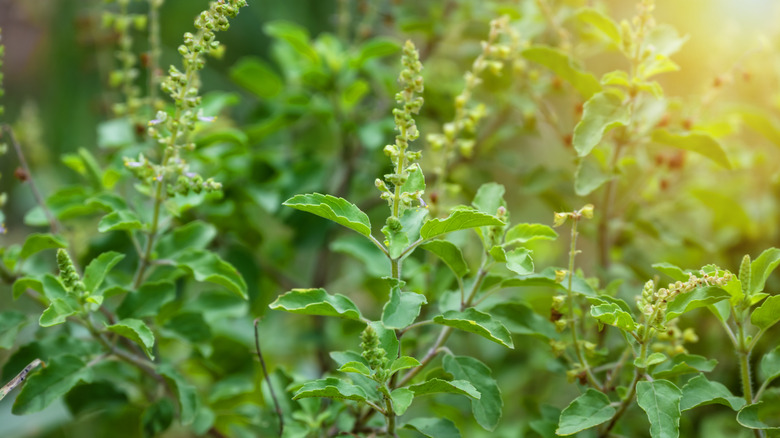
Spicier, more peppery, and with a clove-like flavor, holy basil (Ocimum tenuiflorum) is arguably a little more interesting than sweet basil. It's commonly used in Thai cuisine in stir-fries, curries, and things like Pad Kra Pao Gai. I like Tulsi because it attracts bees and butterflies. They flock to this plant when it's in flower.
Holy basil needs the same treatment as sweet basil: It prefers warm soil and full sun and requires regular harvesting to prevent bolting. It's easy to grow from seed and matures rapidly. If you struggle to grow sweet basil because of heat and humidity, then holy basil is a good substitute, as it is better able to cope with warmer and more humid conditions, and can tolerate some periods of drought. It is, however, only hardy down to Zone 9.
Salad burnet grows fast in sun or shade
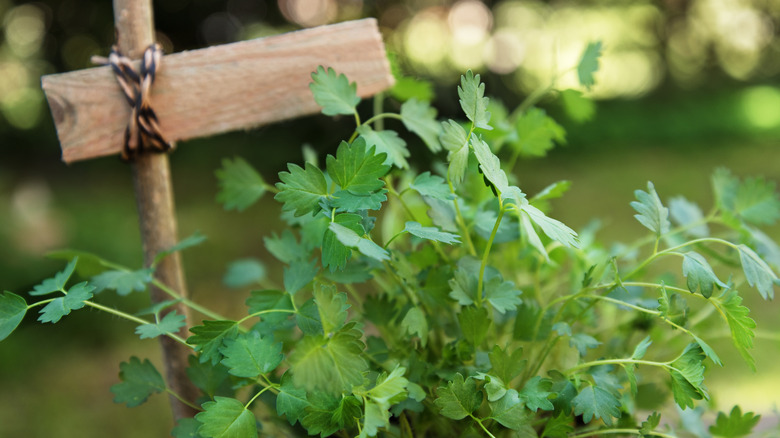
I'm a fan of this tasty perennial because you can harvest from it almost all year in warmer climates. In cooler areas, you can harvest from spring to fall. Salad burnet has a lovely, clean cucumbery flavor that is stronger and more enjoyable in the younger tender leaves, which are at the center of each frond. This wildly under-utilized herb goes so well in green salads and even stirred through yogurt and used instead of or alongside chives as a finely chopped finishing herb.
Salad burnet grows in full sun or partial shade as long as the soil is well-drained, and is hardy in Zones 4-8. You can limit how much it spreads by nipping off the seed heads before they release the contents. I also really like the look of this plant: It has these lovely low-arching rosettes with distinctive feathery leaflets. In short, salad burnet makes a fabulous dual-purpose ornamental and culinary herb.
Caraway is biennial and gives flavorsome seeds
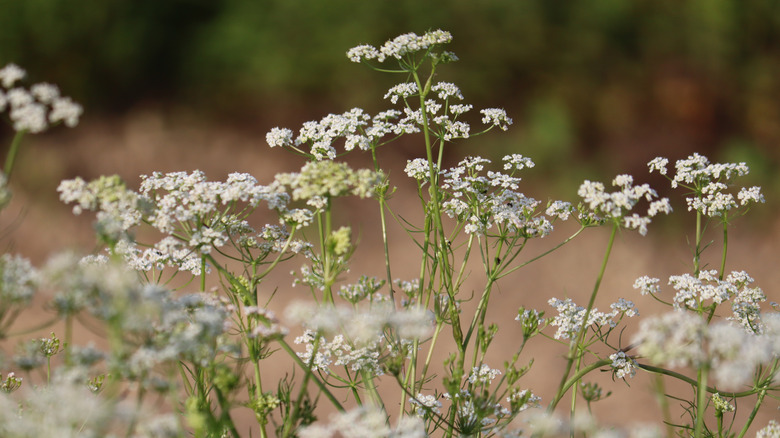
Caraway seeds are delicious, and the ones in the grocery store spice rack simply cannot compete with the flavor of fresh caraway seeds from your garden. I find the ones I dry myself hold their flavor longer and overall have a better taste even once they've been stored for a while. I use caraway seeds to give a distinctive spicy warm note to my rye bread and to all kinds of soup and meat dishes, including my family's favorite pork roasts. You can also use the young first-year foliage, chopped up in salads or added to soups.
This is an interesting herb because it's a biennial, so it produces foliage in its first year and then sets seed the next, much like its carrot cousins. If you want to grow your own caraway from seed, this is one of the herbs that are perfect for planting in fall — but early spring is also a good time. Sow the seeds directly in the ground where you want them to grow. They need full sun and good drainage. Then collect seeds from the umbel heads after the second year of growth. Once you've got a caraway patch established, it will self-sow, and you'll have an ongoing supply of first-year and second-year caraway plants. You'll eventually be able to essentially harvest each year from different plants. Caraway is hardy in Zones 4-10.
Bronze fennel is tall, dramatic, and feathery
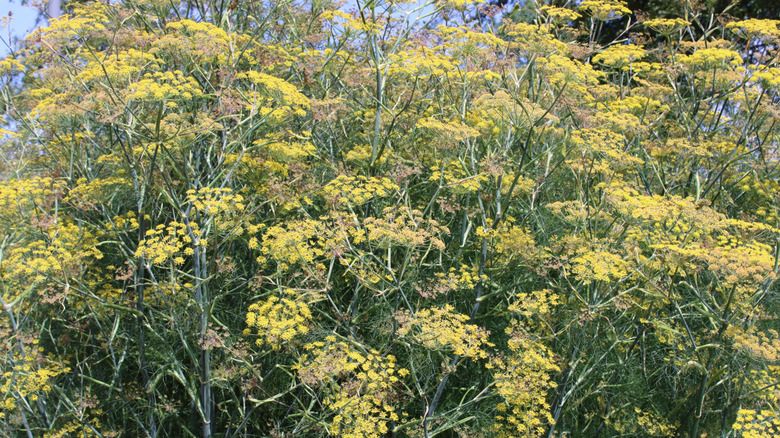
Reaching up to 6 feet tall, mature bronze fennel plants have a truly stunning deep smoky copper-purple coloring and feathery cloud-like foliage. It's a great multi-purpose herb: You can enjoy its flavor and also utilize it as a textural, tall, back-of-the-border ornamental. It tastes just like green fennel, so you can use it in all of the same dishes where you want that distinctive anise flavor.
One reason fennel isn't regularly grown in home gardens is that it's allelopathic. Fennel releases compounds into the soil around its roots that inhibit the germination of other plants. If you want to grow bronze fennel, it's a good idea to grow it in a raised bed all on its own or mix it into an ornamental bed with mature perennials, as established perennials are unbothered by bronze fennel's attempts to slow them down. Do note, however, that it seeds aggressively and is invasive in Washington, Oregon, California, and West Virginia.