

17 Types Of Bees Ranked By Danger That You Might See In Your Yard
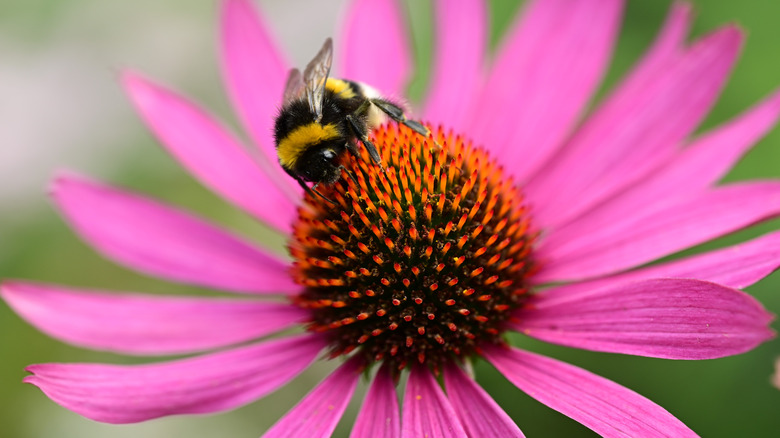
Bees are super important — and it's not just the honeybees. While often overlooked, native bees pollinate the vast majority of flowering plants globally, whether in your garden or out in the wild. Despite their invaluable contribution to the planet, most people still prefer to keep a safe distance from stinging insects. The truth is, you don't need to be jumpy around every bee you cross paths with. For starters, male bees can't sting at all. It's female bees that have the stingers, and they're the insects you should be more cautious about. Of course, it's really hard to tell the difference between male and female bees based on appearance alone. Judging danger really comes down to behavior.
Compared to hornets and wasps, most bees are way more chill and tolerant of people. The majority of bees in your yard are solitary bees. That means they have no hive, few friends, and no reason to come after you. Leafcutter and mason bees focus on one thing: collecting pollen. They're not guarding a nest, and they're not interested in you unless you interfere with their activities. These solitary bees make up most of the low-danger category. Once there's a bee colony, the rules change. Social bees are hardwired to defend their space. One honeybee is manageable, but if you see a big swarm of honeybees in your yard, that's when the risk increases. In other words, knowing which bees you can ignore, which need a little space, and which situations to avoid is helpful. In most cases, the problem doesn't lie with the bees — it lies with you encroaching on their space without realizing it.
Yellow-faced bees
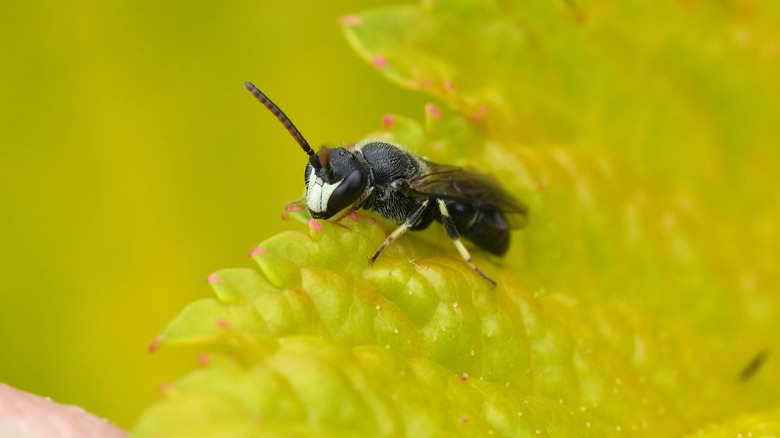
Yellow-faced bees (Hylaeus hyalinatus) are native to Europe, though they have become established in North America over the past few decades — particularly in Illinois, Ohio and New York. There are also a number of native yellow-faced bee species (Hylaeus spp.) in Hawaii. These gentle solitary bees do their best to keep a low profile; they don't like drawing attention to themselves. Although they're equipped with a stinger, they only use it when seriously provoked. Even if you inadvertently bother one and it does sting you, the sting will feel far less painful than a honeybee sting.
Mason bees
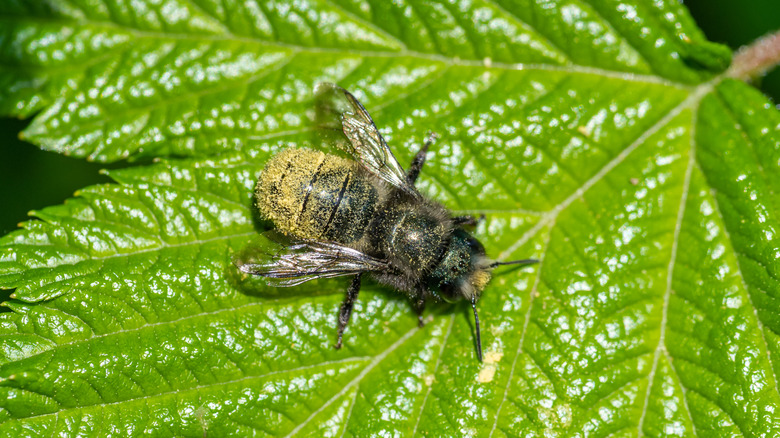
Mason bees (Osmia spp.) are visiting flying insects you'll actually want to see in your garden more often. They mostly emerge from hibernation in early spring, before other pollinators appear, and can out-pollinate both honey and bumble bees. They skip the hive drama and prefer a solitary existence, nesting in small holes and living an independent life without a queen. Since they don't have a large nest to defend, mason bees won't bother you if you don't bother them. Only the females sting, and they'll only do so if handled roughly or trapped.
Oil-collecting bees
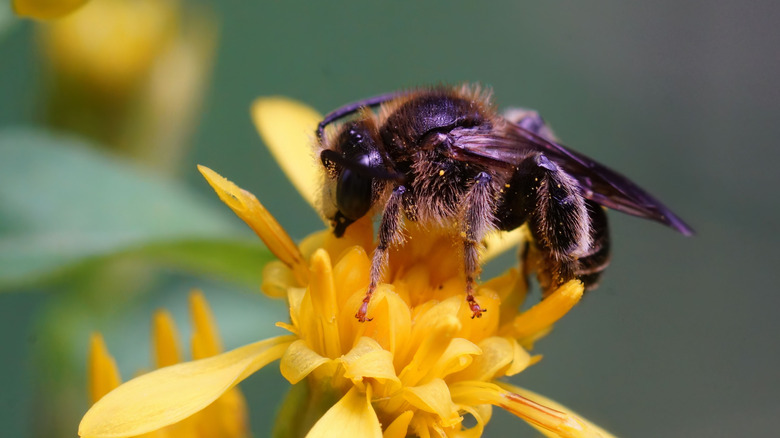
Oil-collecting bees (Macropis spp.) don't pop up very frequently. But if you live near U.S. wetlands and where their favorite yellow flower, the loosestrife (Lysimachia) grows, then you're in luck. These solitary bees have hairs on their back legs to soak up oils from flowers, in addition to nectar. Oil-collecting bees are quiet and non-aggressive, and since they're not common, they fall into the least dangerous category.
Leafcutter bees
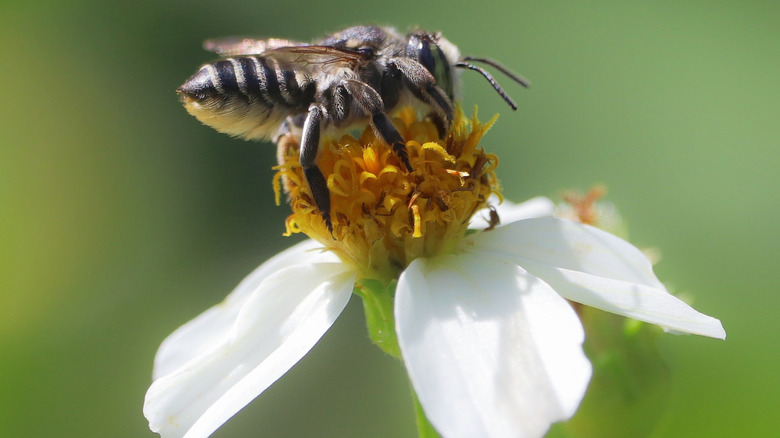
Leafcutter bees (Megachile spp.) do just what their name suggests: they cut pieces from leaves and flower petals, which they use to line their nests inside hollow plant stems, holes in wood, and other tiny crevices. Leafcutter bees are solitary and, like mason bees, are decidedly chill critters. They prefer not to sting unless handled roughly. While leafcutter bees may take tiny chunks out of your plants' foliage, these native bees are worth having around because they're excellent pollinators. They're far more helpful than harmful in a garden.
Squash bees
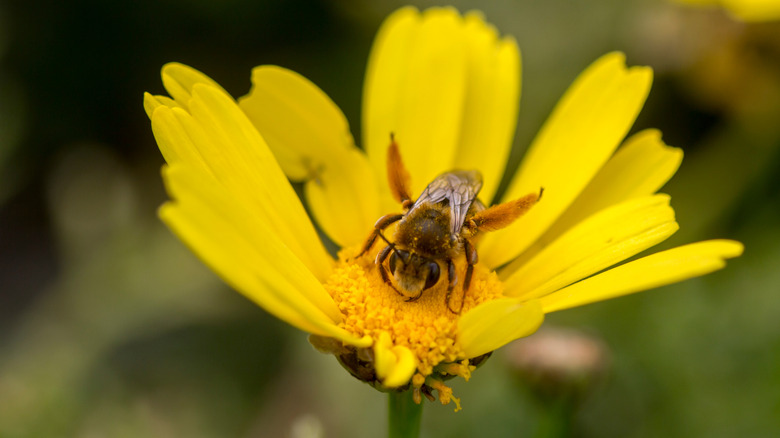
Squash bees (Peponapis pruinosa) are special little pollinators you'll usually find lingering around vegetable gardens. They're early risers, starting their day at sunrise when flowers are first opening. They're especially partial to squash blossoms (Cucurbita spp.), and don't be surprised if you catch one napping inside a closed one. Females, however, prefer to nest underground. Squash bees are usually gentle and rarely sting unless you decide you can't keep your hands off them.
Southeastern blueberry bees
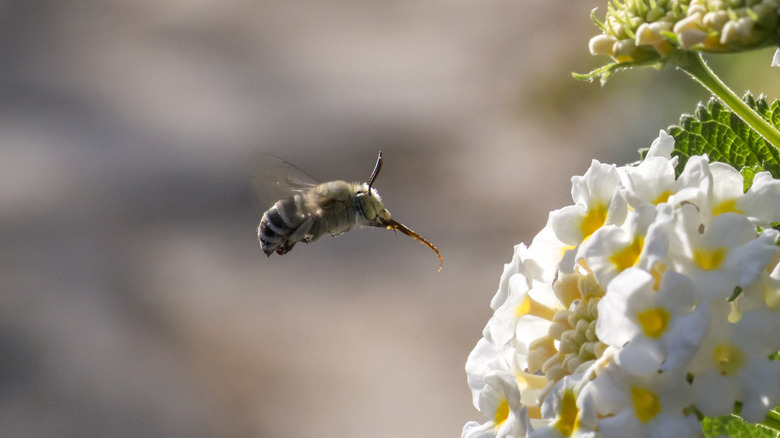
Southeastern blueberry bees (Habropoda laboriosa) are fuzzy, medium-sized bees that make their nests in sandy locations. They time their late winter to early spring appearances to coincide with blueberry shrub flowering across the Southeast. They're the powerhouse pollinators you can thank for a delicious blueberry harvest. These solitary bees spend their days foraging for nectar and pollen and are easy to coexist with. They will work right alongside you in the garden without paying any attention to what you're doing.
Cuckoo bees
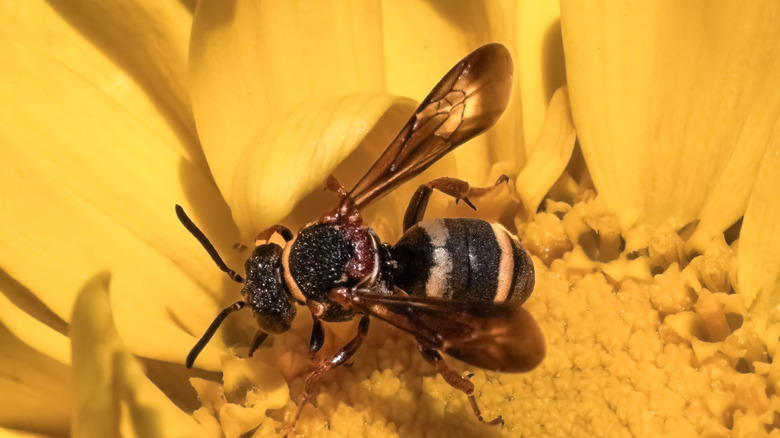
Sometimes mistaken for wasps or cuckoo bumble bees, cuckoo bees (Triepeolus spp.) are unlike most bees. For starters, instead of collecting pollen, cuckoo bees visit specific flowering plants, such as sunflowers (Helianthus spp.) and frogfruit (Phyla nodiflora), for nectar. In addition, they lay their eggs in the nests of other bees rather than building their own — hence their common name. Despite their intrusive behavior, cuckoo bees aren't typically aggressive toward people and rarely sting. Plus, if you do get stung, it's unlikely to hurt much, if at all.
Long-horned bees
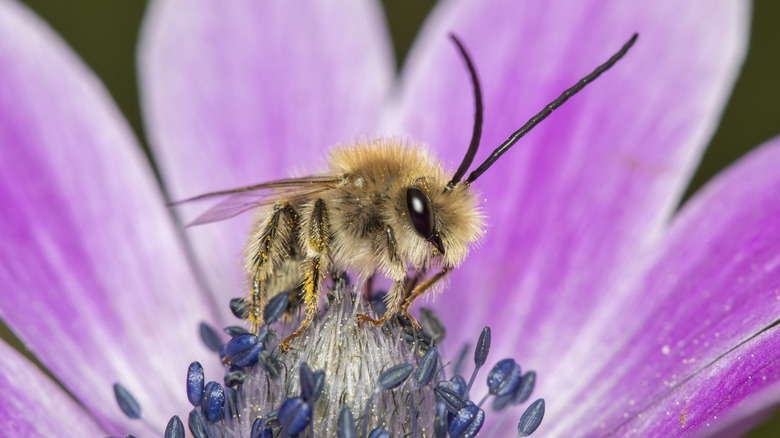
Male long-horned bees are undeniably the cutest-looking bees out there. They have no stinger and extra-long antennae — at times, the antennae are longer than their bodies. Long-horned bees are frequent visitors to wildflower prairies, so it may be beneficial to look into the prairie garden trend for your yard if you want more of them around. Despite their generally solitary nature, they congregate around flowers in large numbers. As long as you leave these passive Eucerini bees well alone, the females (which possess a stinger) are highly unlikely to be aggressive toward you.
Green orchid bees
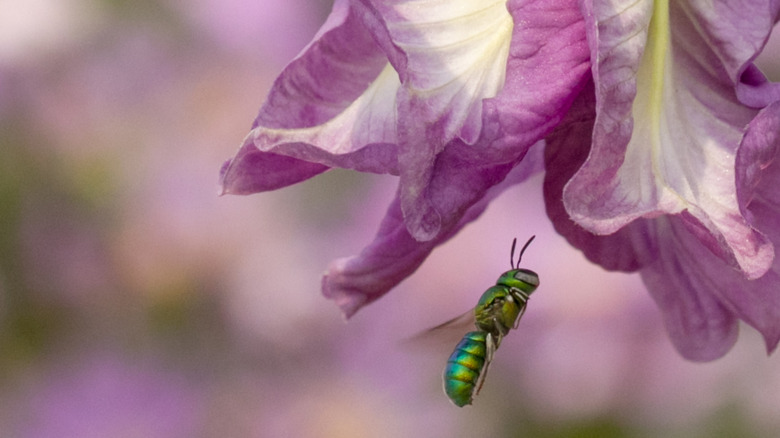
Green orchid bees (Euglossa dilemma) are one of the prettiest bees in the U.S., thanks to their exotic, dark-green, jewel-like bodies. While most orchid bees are native to tropical regions in the Americas, such as Mexico and southeastern Brazil, a few species have made their way to Florida and are continuing to expand into other areas from there. These dainty, glittery bees have a timid temperament but can sting repeatedly if they see you as a threat.
Plasterer bees
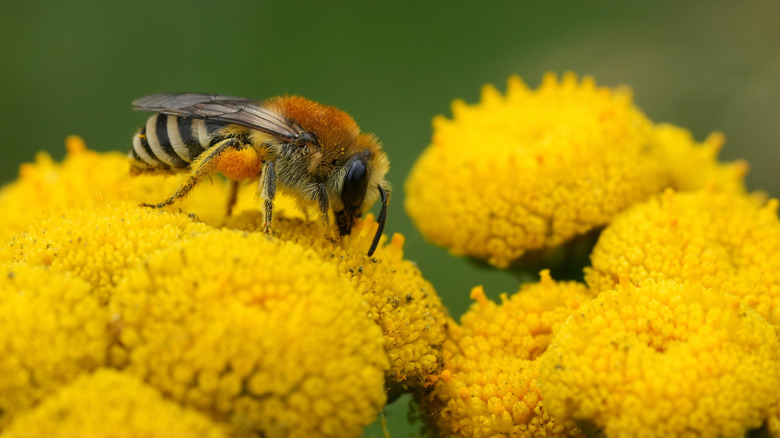
Plasterer bees (in the family Colletidae) are quiet ground nesters that go about their work without much fuss at all. While they aren't super picky about which flowers they frequent, you'll often find them buzzing around flowering plants in the genus Aster. These bees are not aggressive and almost never sting unless you make the bad decision to handle them. They are active for only a short time in spring or early summer, quietly helping with pollination in gardens and natural areas. They're both helpful and easy to coexist with.
Ground bees
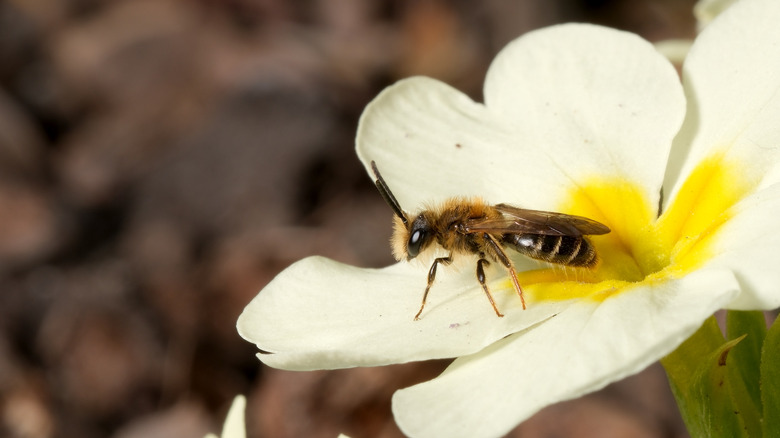
Around 70% of the world's bees live underground. One type is ground bees, also called miner bees. They'll begin climbing out of their slumber in early spring. They're usually calm little creatures and rarely sting unless you try to grab one or accidentally step on one. Ground bees don't live long, but in their short time, they're highly beneficial, helping pollinate flowers, trees, and garden plants as the growing season begins.
Furrow bees
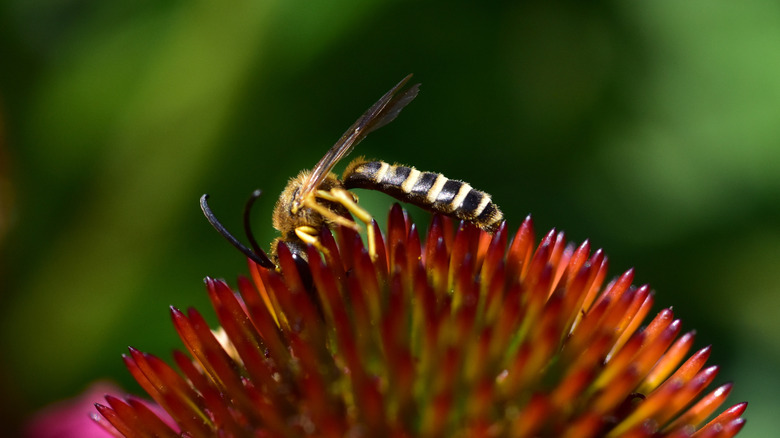
Furrow bees or sweat bees (Halictus spp.) are small, ground-nesting insects that live in your lawn, garden beds, or rotting wood. They love sodium, so if you're outside sweating, don't be surprised if a furrow bee lands on you. Don't worry — they aren't aggressive. As long as you don't get between them and any source of salt they're scoping out — or you vibrate or shade their underground nest — furrow bees won't pay you any attention. If you handle one of these bees, they may sting you, but it's slightly annoying rather than painful because their stingers are tiny.
Wool carder bees
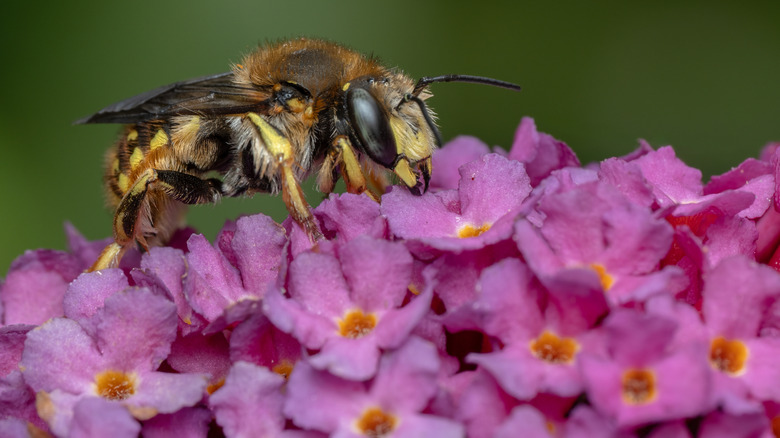
Male wool carder bees (Anthidium spp.) are highly driven by their desire to reproduce and will become aggressive toward other male bees who invade their chosen territory. They pick a flower and wait for up to 21 days for the chance to mate, spending most of their time chasing away the competition. Sometimes, wool carder bees are mistaken for yellow jackets, particularly because they can both be bullies. However, they're usually only threatening toward other insects — unless you disturb their mating space. Expect some retaliation in that case.
Carpenter bees
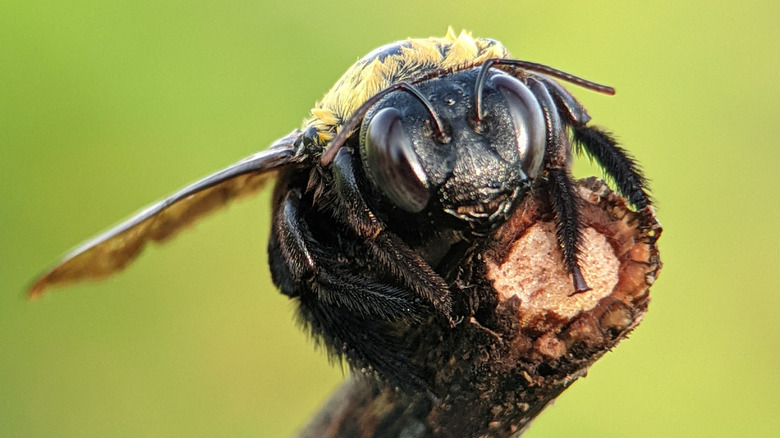
If you see an intimidating-looking bee buzzing around a wooden structure, it's most likely a carpenter bee (Xylocopa spp.) that wants to create a hole in it — hence the common name. These insects are mostly found in the eastern U.S. and are distinguishable by their black, hairless bodies. Male carpenter bees have yellow heads and can't sting. They can, however, become defensive if they think danger is imminent. On the other hand, the all-black females can sting multiple times if they're threatened, which makes them a little more dangerous. They rarely resort to such drastic means, though.
Bumble bees
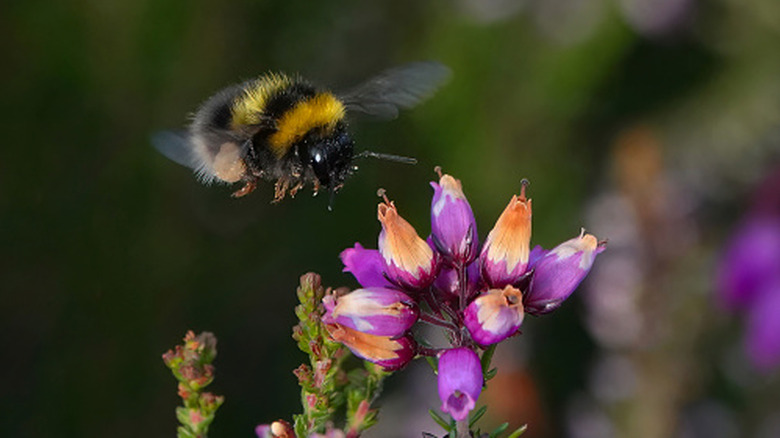
Known for their bulbous, fuzzy bodies and loud buzzing, bumble bees (of the genus Bombus) are some of the most recognizable bees, with 45 known species in North America. They're generally chill and nonaggressive, but the thing that puts them in the more dangerous category is that they can sting repeatedly — as opposed to the one-and-done sting of a honeybee. However, only worker and queen bumble bees sting. Bumble bees won't pick a fight with you as long as you steer clear of their nests. Avoid wildly waving your arms in the air if you do come across one.
Honeybees
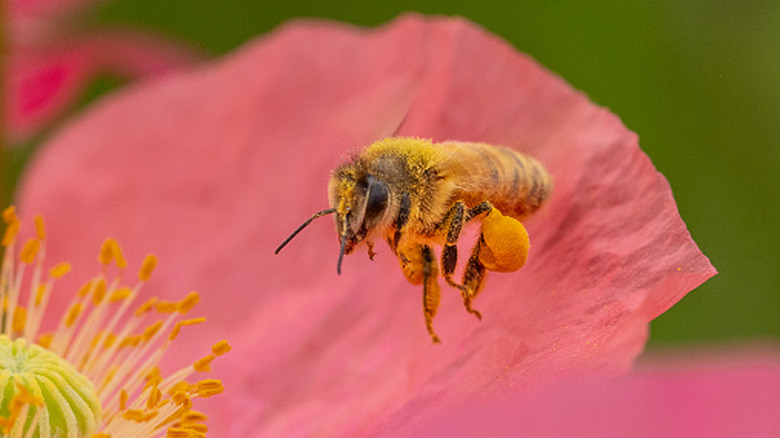
Honeybees (Apis mellifera) play a major role in pollinating crops, flowers, and fruit trees. They're generally calm when looking for food, but can become defensive if their hive is threatened. Honeybees can only sting once with a barbed stinger that is left behind in the skin. When a honeybee stings you and pulls away, the action tears its body apart, causing death in almost all cases. Perhaps because of this, they're generally not too excited to attack people, and the value they bring via pollination — and honey — usually far outweighs the potential risks.
Africanized honey bees
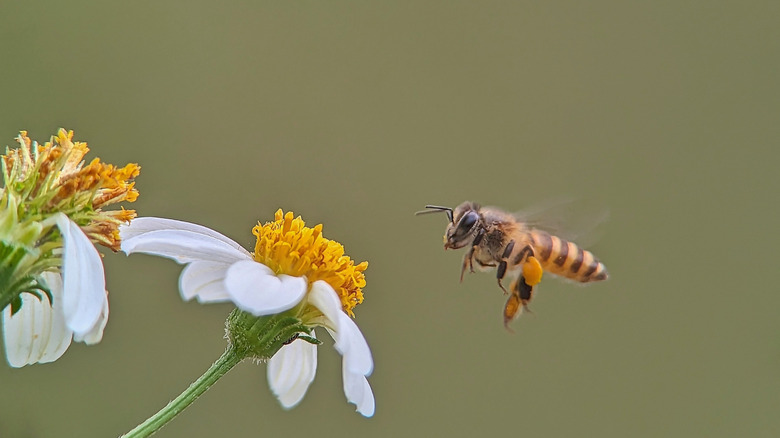
Africanized honey bees, an Apis mellifera hybrid, are colloquially called killer bees and are persnickety to say the least. Found mostly in Texas, California, New Mexico, Arizona, and Nevada, these aggressive insects will attack at the slightest disturbance, often in large swarms, making them the most dangerous bees in the U.S. They've been known to chase people down who disturb their peace. Africanized honey bees look like regular honeybees, only a bit smaller, and build their nests close to human habitation — think trees, utility boxes, empty flower pots, and mailboxes, to name but a few common places.