

The Low-Maintenance Tree That Attracts Hummingbirds & Butterflies To Your Yard
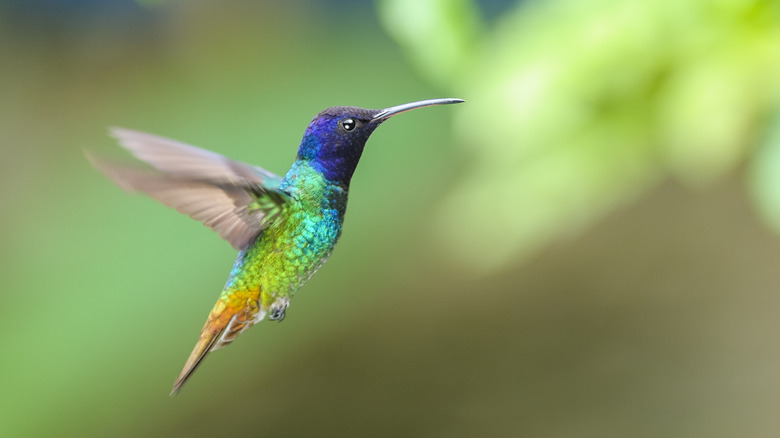
When you start a new gardening project to attract pollinators to your yard, you might reach for some of the best standby perennials for this purpose, such as milkweed (Asclepias spp.) and coneflowers (Echinacea spp.). Those are certainly excellent choices for attracting beneficial insects and beautiful hummingbirds to your yard, but if you have the room, you can grow a plant that will, over time, grow to have an even larger impact on your garden. Take Ohio buckeye (Aesculus glabra), for instance, a low maintenance tree with flowers that will transform your space into a haven for hummingbirds and butterflies.
Ohio buckeye is a cold-tolerant, deciduous tree that's native to the central and eastern United States. In spring, it bears upright clusters of yellow to green blooms that are attractive to the pollinators in your yard. These are followed by large, inedible, nut-like fruits known as buckeyes. In the landscape, this small- to medium-sized tree has an oval or rounded shape and reaches 20 to 40 feet tall and high. It has palm-shaped, compound leaves which turn beautiful shades of gold, orange, or red in fall.
Tips for growing Ohio buckeye to attract pollinators
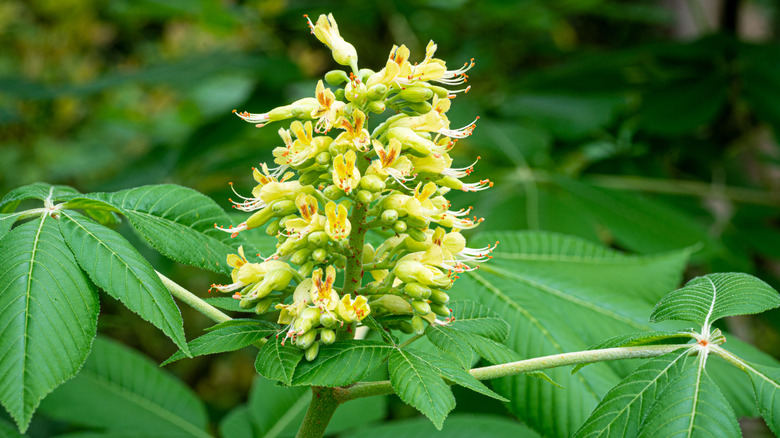
Those wishing to grow Ohio buckeye to attract pollinators to their yards should make sure they live in USDA Hardiness Zones 3 to 7 and have acidic, well-drained, moist soil. This species may be among the beautiful trees you can grow to naturally invite hummingbirds to your yard, but it needs either full sun or part shade to produce its pollinator-friendly blooms. It's best to grow these trees from seed because they don't transplant well. When sowing, make sure to allow at least a 24 foot space for the plant to spread.
Ohio buckeye is one of the fast-growing trees that can quickly transform your landscape. It can serve a dual purpose as a shade tree that happens to produce flowers which attract butterflies and hummingbirds. However, before you plant this low maintenance species in your yard, you should know that one of its common names is fetid buckeye due to the tree's unpleasant odor when bruised. For this reason, it would be best reserved for use at the back of your property or in a distant natural area where you can enjoy it from afar.