

What's The Average Lifespan Of A Vacuum Cleaner?

It would be nice if the items we buy once lasted forever. Unfortunately, that's just not possible, especially with appliances we use regularly. Vacuums, for example, don't last nearly as long as most people would like and often seem to fail at the worst possible time. The average lifespan of a mid-range vacuum cleaner — generally considered one around $200 to $500 – is roughly six to eight years.
However, if you've bought a vacuum recently, you might have noticed yours died much faster than average. That's because lifespan depends heavily on the type of vacuum you buy, along with several other factors. For example, robot and cordless stick vacuums tend to have much a shorter lifespan and may live no more than two to five years. Canister vacuums can last closer to eight to ten years on average, and the same goes for the classic corded upright vacuums.
Other factors also affect vacuum lifespan. Using the wrong kind of vacuum on your floor is one of the mistakes everyone makes when vacuuming, but by picking the right one, you can help to increase the vacuum cleaner's lifespan. Of course, how you treat your vacuum also plays a role in longevity. One regularly cleaned and maintained is going to last longer than one that isn't taken care of and has to work harder around the grime.
How to take care of your vacuum to improve its lifespan
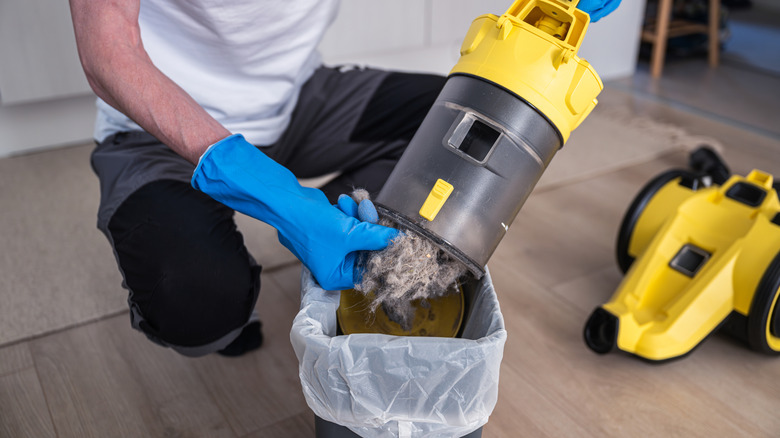
With proper care, you can extend the life of your vacuum. Emptying canisters and bags, replacing or washing filters, and removing hair and string from the bristles are all maintenance tasks that should be done regularly. Some parts, like hoses, may need to be replaced when they are around four years old. Others you may want to look at replacing throughout the life of your vacuum include batteries. However, a few of the bigger pieces, like the motor, can cost just as much to replace as buying a new vacuum. If your appliance is already several years old, replacing expensive internal parts may not be worth the cost.
Additionally, the type of debris you vacuum up and how often you do so may also affect the lifespan of your appliance. For example, lots of dust, pet hair, or damp objects can shorten its life if vacuumed up regularly, especially if you didn't pick one with this specific purpose in mind. You also have to know what each type of machine is good at cleaning. For example, ones with bags and thin, bendable hoses are two vacuum types you should never use on broken glass. The shards can puncture the thinner material, making it wear out much faster than normal.
How to know when it's time to replace your vacuum

If you've done regular maintenance and your vacuum is still not working properly, then it may be a sign that it's wearing out, and it's time for a replacement. The same is true if you're starting to notice new smells or sounds even after cleaning out your vacuum, as it may signal that something is failing. The motor or the belt is the most likely failure in this case.
Finally, inspect the vacuum for any physical damage. If you see broken parts or cracks, especially around the electrical components, then it is probably time to retire your vacuum before it causes serious problems. You may want to maximize your vacuum's lifespan, but damaged electrical components should always be taken seriously. Any sign of damage to the cord or battery should be addressed immediately through repair or replacement.
If you want a vacuum that lasts longer, corded upright and canister models are typically better long-term options. Additionally, you may want to look at spending more initially to increase the lifespan. Better brands have sturdier parts and will last longer, like the most popular vacuum brand, Dyson.