

What To Do If You Find Owl Pellets In Your Yard
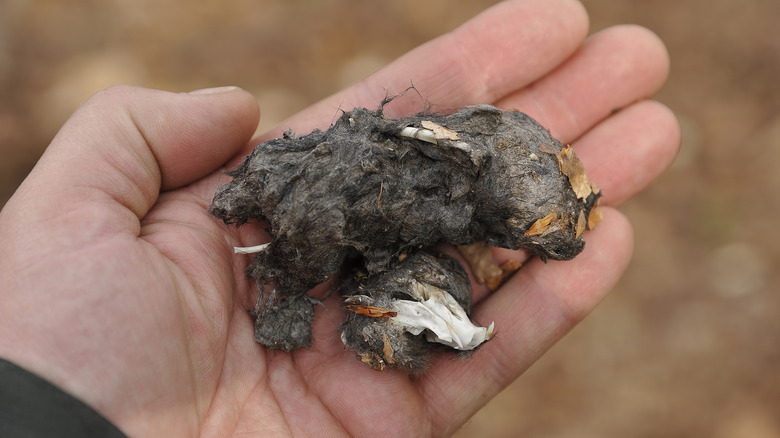
You're getting set to mow your yard one day, when under a nearby tree, you notice what looks to be a big ball of something undesirable. Upon closer look, you realize that it's a tightly-wadded bundle of fur and bones. Congratulations — you've found an owl pellet. This is a sign that these predatory animals have been roosting in your yard. Depending on how you feel about owls, you may need to take steps to deter them, such as using loud noises and spikes to encourage them to look for a home somewhere else. Otherwise, you may take steps to help them feel even more comfortable, such as choosing a nesting box to attract owls to your yard.
Owl pellets are made up of materials that these birds can't digest from their prey, like bones, fur, and feathers. Their gizzard helps to push all of the items together, creating a clump that gets regurgitated later. While they are certainly neat, you may be wondering what this means for your yard. Owls most often throw pellets up when they are roosting, and they can return to the same place repeatedly.
While you're trying to figure out what to do about your owl, you need to do something with the pellet. You may consider researching your state to see if there's anywhere you can send them. For example, Maine has an Owl Pellet Project where citizen scientists can mail pellets so teams can study the diet of certain species.
What to do about the owl leaving pellets in your yard
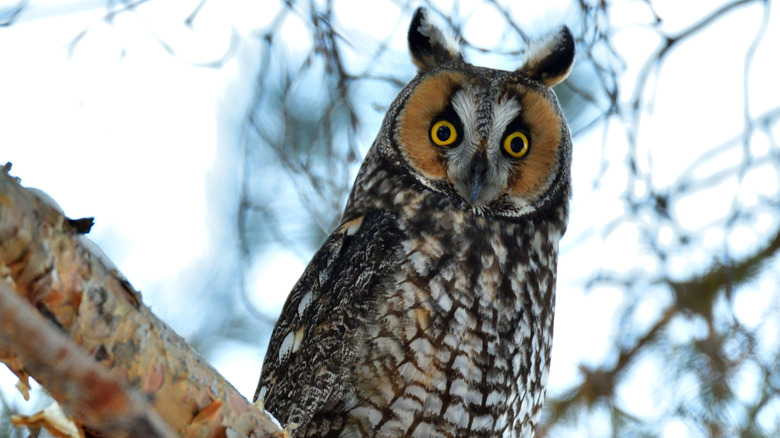
You don't need to do anything in particular just because you have an owl nearby. There are many benefits that come from attracting owls to your yard, including taking care of rodent populations. If you've been fighting with pests like squirrels or mice, owl visitors can help you out. Plus, giving them a place to shelter helps protect these important and vulnerable species. Though you may not always be able to catch sight of your feathered friend, you can tell they're still nearby, as they will usually leave a pellet a day in the same spot.
Of course, there are times when you may not want owls in your yard. If your neighborhood isn't safe because of angry neighbors, a high amount of chemicals, or aggressive pets, then you may not want them to try to set up shop near you. Or, you may have small pets or visiting birds in your yard that you're worried about owls harming. Either way, using shiny objects, loud noises, and some good rodent control techniques are all ways to deter owls from staying. Using spikes and blocking common nesting areas, especially on structures like barns, can also help. Having lights on at night is considered a mistake that keeps owls away from your yard, but in this case, it may be just what you need to get these visitors moving to somewhere else.