

The Easy Solution To Keep Grass From Sticking To Your Lawn Mower Tires
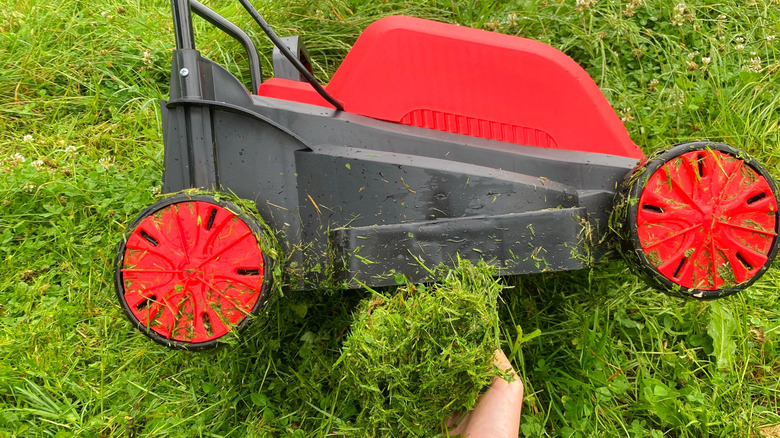
Once snow and ice melt and thaw, dead grass seems to reawaken with a vengeance. After hibernating like the rest of nature during colder seasons, lawns go from yellow and patchy to overgrown and thick seemingly within hours. Mowing and edging your lawns are essential maintenance tasks that prevent yards from growing into a dense field of weeds and tall grass. In some cities, you could even get fined if your lawn has grown to a certain length. Hauling out your mower and bagging the trimmings can be a hassle in itself, but having to wipe down your lawn mower's tires to prevent grass from sticking to them can make the household chore even more unbearable. Luckily, there is an easy solution to keep grass from sticking to your lawn mower tires. To avoid the annoyance of sticky grass clippings, aim to mow your lawns on warm, dry days.
Not only will you get to enjoy some time in the sun, but scheduling your mowing days on cloudless, blue-skied days also allows grass to dry out, so it is less likely to clump and stick to your mower tires. Of course, this is only beneficial if your region had a dry spell for a few days prior. If you had a few rainy days leading up to your designated mow day, grass could still retain moisture from the rain, especially if it's thick and overgrown. If you absolutely must mow your lawn after experiencing rainy, stormy weather, ensuring your mower blades are as sharp as they can be can help reduce the amount of grass clumping and sticking to any surface on your lawn mower.
Why grass clippings are sticky and how to make them less so
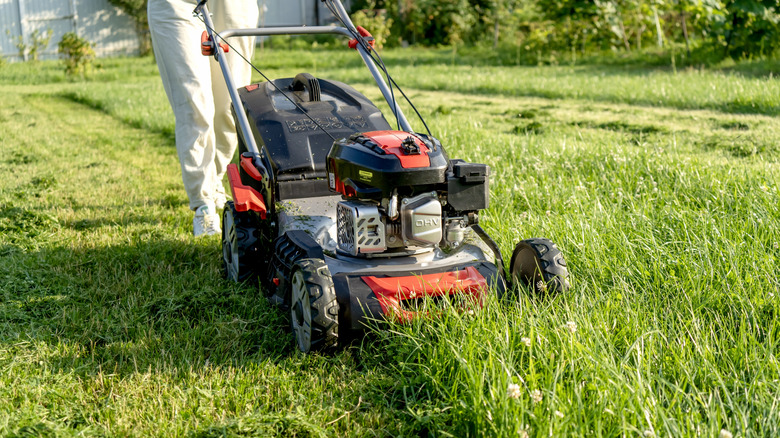
Even on dry days, with the grass being completely dry, clippings can still build up inside your mower deck, and you may even find some blades caught on your wheels. This is due to the grass retaining moisture from morning dew or rain. Freshly cut and damp grass can also excrete sap, making it even stickier. If you have an overgrown lawn that's also littered with varying weeds, those can also contribute to the adhesive nature of grass clippings because they, too, retain moisture and release sap when cut. Since this is just the way of nature, you can't really do anything to the greenery itself. Instead, you can create a frequent mowing schedule and ensure your mower is in tip-top shape by doing lawn mower maintenance tasks that include checking on blades, cleaning the deck, and cleaning the filter after every mow.
Creating a regular mowing schedule can help reduce the amount of sticky grass clumps you may encounter while cutting your lawn. Mowing your lawn at least once a week (and on warm, dry days) prevents grass clippings from growing out to lengths that can tangle, clump, and stick to your mower wheels and deck. Shorter grass clippings are more manageable and can even be repurposed to help promote a healthier yard and garden. On top of frequent mowing, making sure your mower's blades are sharp and in good shape helps make for crisper cuts instead of shreds and tears, which can also make grass clippings an overall mess to deal with both on your mower and lawn.