

The Valuable Storage Trinket You'd Be Thrilled To Find At The Thrift Store

The history of plastics is probably a lot more interesting than most people would think, and many may not even realize how long ago the first plastic household items were created. The earliest type of plastic was known as celluloid, first invented in 1869 by John Wesley Hyatt. This plastic would go on to be used in a variety of items for the home and was quite popular in the manufacturing of decorative vanity boxes, tie boxes, glove boxes, and much more until around the 1940s. Finding a turn-of-the-century vanity box made from celluloid at the thrift store could not only be a unique piece of decor for your home, but it could also be worth more than you expect — many of these boxes sell for hundreds of dollars online.
Beyond being made of the original form of plastic, celluloid trinket boxes make for a stunning vintage thrift store find. These boxes came in many shapes and sizes featuring intricate designs, and often the colors imitated tortoiseshell, ivory, or horn. While there were many different boxes made from celluloid, some of the most interesting were the women's vanity boxes. They could be a simple box to store an assortment of items in, or they could be an entire kit. Often the vanity kits varied in their contents, including jewelry boxes, nail-care kits, makeup storage, or even a sewing kit. Today, any of these different celluloid boxes would be perfect to store your valuable vintage trinkets in.
How to identify and utilize vintage thrift store celluloid vanity boxes
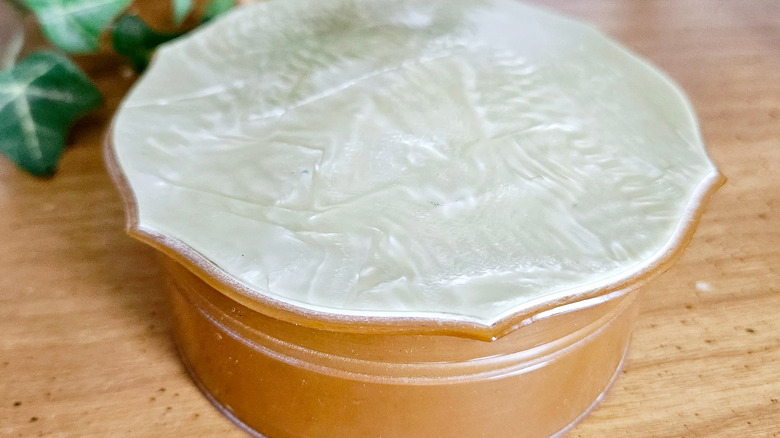
It can often be difficult to identify vintage celluloid boxes because other types of plastic items of the time looked very similar. The one main difference between celluloid and other plastics, like Bakelite, is that it is lighter, thinner, and more brittle. There are ways to test if a vanity box is made of celluloid, some safer than others. Many people have used a hot pin test because celluloid emits camphor when it is heated, but this is dangerous because celluloid plastic is also very flammable. This is also the reason it's not recommended to keep celluloid items near direct heat or sunlight. Depending on the item, you can run it under warm water to test for camphor odor, but this could damage other parts of the box. The safest method would be to rub it briskly to create friction that would produce a camphor odor if it were authentic.
Celluloid vanity boxes not only make great storage for your trinkets, but they're the perfect vintage item you can upcycle for jewelry storage. These vintage boxes are also a perfect fit for those wanting to decorate their home in trendy grandma-chic decor trend. Try styling a shelf with your thrifted celluloid vanity box and another vintage thrift store find: a framed embroidery sampler. You could even use a vintage doily or lace table runner underneath to create the perfect curated cottage look. However you choose to decorate with your celluloid vanity box, it's sure to be a treasured heirloom and conversation piece for years to come that will only increase in worth (either sentimental or possibly monetarily).