

Nope, Not Crabgrass: How To Remove This Fast-Spreading Look-Alike For Good
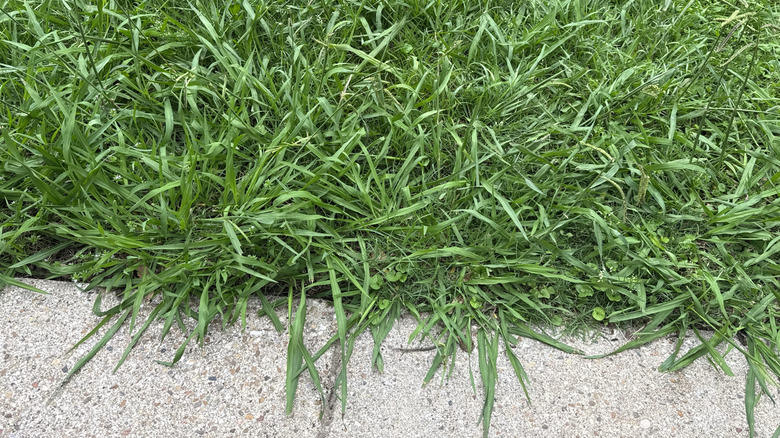
Crabgrass (Digitaria sanguinalis) is a common weed of turf and lawns. Thankfully, though, there are many tip and tricks to kill crabgrass in a lawn. The problem, however, is that there are many crabgrass look-alikes, and a mistaken identity can send you into the wrong treatment plan, wasting both time and money. Take, for instance, annual bluegrass (Poa annua). It is also a very common weed in lawns and turf, and if not removed, it can spread very quickly. Controlling it usually requires a careful mix of hand-pulling, herbicides, and solid lawn care. However, before anything else, you must make sure you know how to tell it apart from crabgrass.
Crabgrass and annual bluegrass have many differences — for instance, their color. Where crabgrass looks light green to yellow, annual bluegrass, as its name suggests, has a blue tint to its green color. Similarly, the leaves of the annual bluegrass have a fine texture, whereas the crabgrass is coarse. Plus, the leaf tips of annual bluegrass have a very specific boat-like appearance.
They both have differences in the timing of their emergence as well. Crabgrass is a summer weed, whereas annual bluegrass is a winter one. The latter's seeds sprout from late summer to early fall, and it stays in the lawn until the temperatures get too hot. Then, as heat builds in late spring and early summer, annual bluegrass dies, leaving behind empty patches on the turf.
Remove annual bluegrass by hand or herbicide
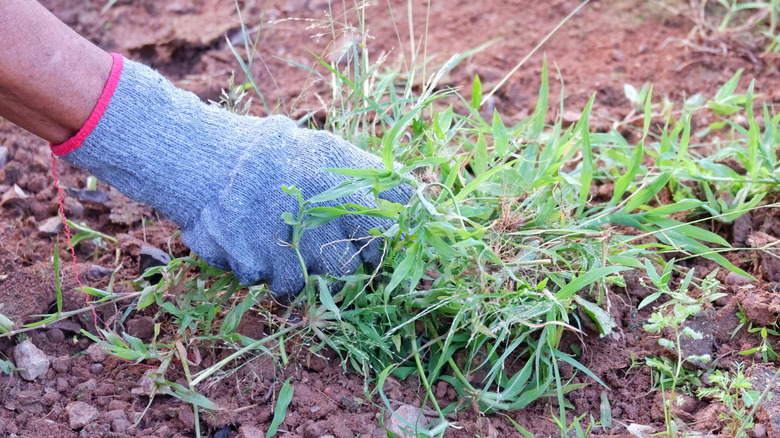
One of the easiest ways to get rid of annual bluegrass is to pull it out by hand. Annual bluegrass has shallow roots, which makes pulling it out quite easy, especially if the soil is moist and soft. The problem, though, is that hand-pulling is only effective when the infestation is small, and you are dealing with a small number of annual bluegrass plants. If the infestation is large or you are dealing with a large infested turf, it becomes really hard to control annual bluegrass manually.
That is where herbicides come in. Now, when it comes to removing or killing annual bluegrass by herbicides, there are two types of weed killers available commercially: selective and non-selective. As the names suggest, non-selective herbicides will kill everything, including both annual bluegrass and the desired turf grass. They should only be used when you have no other options or when you are planning to resod or reseed the lawn anyway.
If, however, you plan to use herbicides in an existing turf and do not want to start over, go with selective herbicides. Just keep in mind that it works slowly and takes about two to three weeks to show results. However, no matter what herbicide you are using, always make sure to follow the label instructions and do not use more than the recommended quantities.
Keeping annual bluegrass from taking over
Even if you have successfully removed bluegrass from your lawn, there is no guarantee that it won't come back. Its seeds can remain viable in the soil for almost six years, and if they get the right conditions, they will sprout once again. So, how do you keep it from coming back? Well, maintain a healthy and dense lawn. It is the biggest defense against weeds like annual bluegrass. Maintaining a healthy lawn involves fertilizing the grass on time and appropriately, as well as fixing patchy or thin areas in the yard.
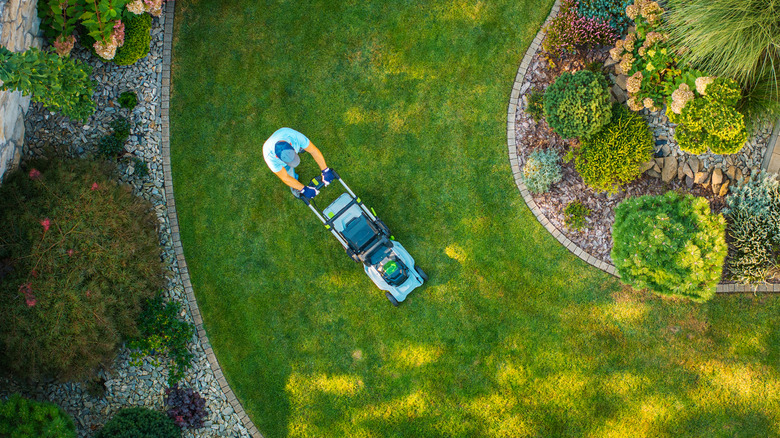
Other than that, learn what is the right length to mow your lawn at. Mowing the grass at the wrong height puts it under stress, making it weak and prone to weeds like annual bluegrass. Similarly, overwatering and soil compaction can also make the grass weak. So, make sure that you aerate your lawn from time to time and water properly. Plus, if there are any drainage issues, fix them, as annual bluegrass loves wet soils.
And lastly, keep an eye out. It is a winter annual weed and has a way of hiding in plain sight, especially among cool-season grasses such as perennial ryegrass (Lolium perenne) and tall fescue (Lolium arundinaceum). If you fail to detect it on time, it can set seeds. And once it sets seeds, there is always a chance that it could come back next winter.