

Add Warmth To Plain Walls With A Design Trend From The '60s That's Coming Back
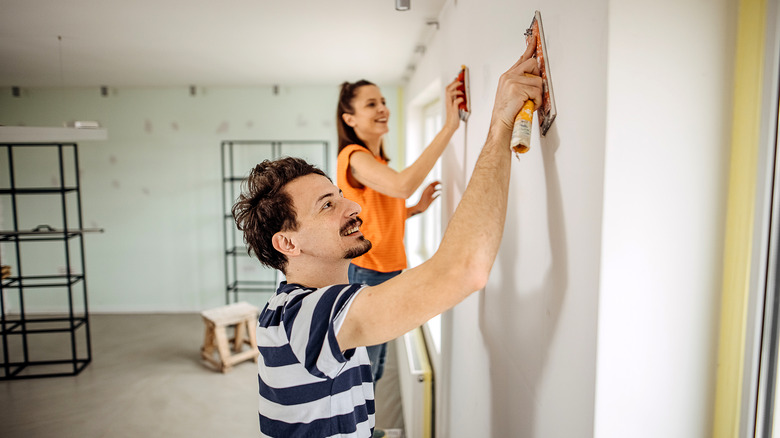
Lived-in, warm texture layered throughout a space is more popular than ever. This is translating into even the most permanent, structural elements of a home too. Many of these warm, textural details trace their roots back to trends we know and love from the 1960s. Wood-paneled walls are one iconic design element of the era seeing an uptick in popularity once again. This classic interior feature offers the perfect avenue to turn a plain white wall into a mid-century masterpiece.
The general consensus among designers is that their clients seem to be growing tired of disposable trends, craving something a bit more substantive. Madelynn Hudson of M.H. Interiors explained to Vogue, "I think we're seeing a return to architectural detail in general. After a decade of minimal, white-box spaces, people are craving warmth, craftsmanship, and character. Wood paneling provides all of it. It adds an instant sense of permanence and history, even in newer builds." Wood paneling infuses a space with a much needed dose of warmth, elevating a plain wall into something much more storied. With a careful hand and discerning eye, this design element can look right at home in your modern interior design, though the color, finish, and scale of your wood paneling will largely dictate how well it will blend into your overall design.
Wood paneling brings warmth to a modern home
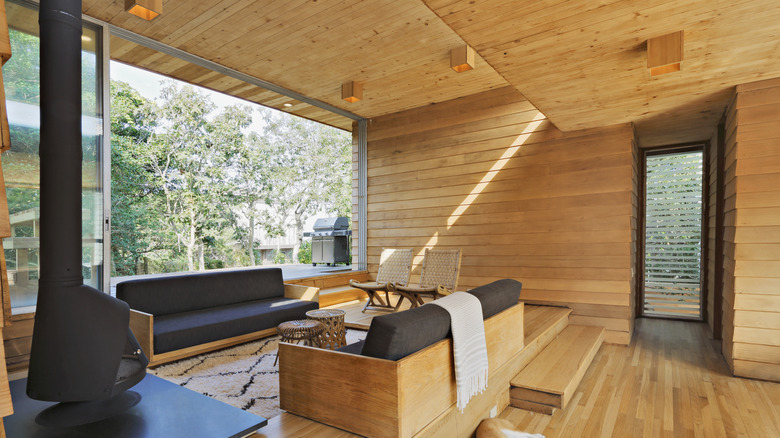
Whether you prefer a moodier palette or a more airy design, wood paneling can be a great layer to your design when done with intention. If you're installing wood paneling on a plain wall, the first order of business will be to decide what style of paneling will look best in your space. There are a variety of options to choose from including traditional profiles, flat panels, beadboard, raised panels, or tongue-and-groove. Wood square panels and skinny slats are two great options for covering an accent wall. All of these can add cozy depth to your space, and you can even create more dimension by mixing up your wood-paneling's orientation and widths throughout the design. Carry the paneling into other design elements on your wall too, like built-in shelving or inlays. If you already have old-school paneling in your home, you can give your wood paneling a more natural, rustic look by sanding it down and tapping it with nails or chains to give the surface some variation.
The more you stay true to the natural essence of the wood, the easier it will be to seamlessly incorporate a wood panel wall into your home. This feature can verge into looking dated when it's too glossy, dark, or overly styled with other "outdated" decor. In some cases, wood-paneled homes actually look better with less decor. With such a standout architectural feature, minimal touches will allow it to shine. But if you're hoping for a more robust design, you can still work in plenty of deep earth tones and rich colors to complement the wood.