

Everyone Owned It In The 60s — The Retro Bedroom Appliance We Want To Make A Comeback
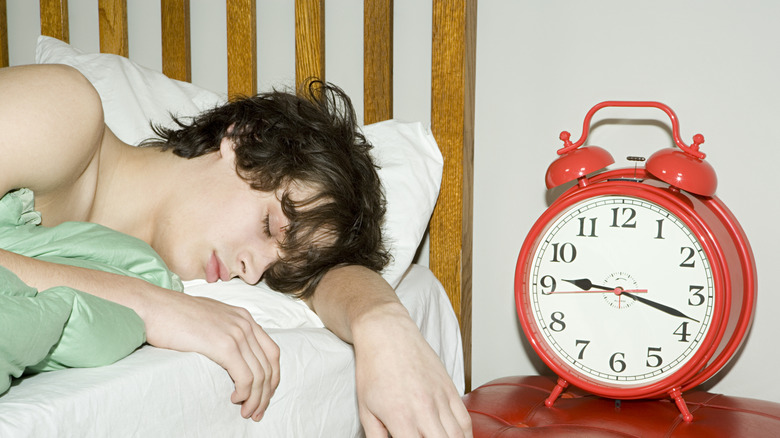
If you're struggling to get that recommended seven to nine hours of shut-eye each evening, don't sleep on one seemingly outdated gadget. An analog alarm clock — as in the no-frills set-up with the bells on top —might seem like a relic of the past now that we have smartphones that can rouse us from our sleep in any number of ways. And yet, there are reasons that this retro appliance should make a comeback. Clocking in again means you can actually follow scientists' advice to ditch your phone from your bedroom; studies show that using a smartphone in bed can disrupt the quantity and quality of your rest.
And since everything old is eventually made new again, the alarm clock of your (or your parents') youth is now seen as delightfully retro. You could even scour antique shops or thrift stores for a unique and trendy vintage find: a vomit clock. These throwbacks are sometimes encased in seashells, glitter, or other accoutrements. But if you're in the market for something a bit more standard, it's just a few clicks away. Today's options range from those that will gently wake you with sounds of nature to, yes, that classic metal bell alarm clock with the unmistakable jar-you-from-a-deep-sleep ring.
The sleep benefits of an analog alarm clock

There are a lot of upsides to unplugging from your smartphone at night. That blue light your screen emits can suppress your production of melatonin, which is the hormone that influences your circadian rhythm, or your body's internal clock. And when your phone — which pretty much contains access to your entire universe, plus endless entertainment — is within arm's reach, it can be tempting to scroll instead of snooze.
Not only does that mean blowing past your designated bedtime, but studies have shown that people who engage in excessive nighttime phone usage could take longer to fall asleep and log far less of that rest in total. "Checking your phone stimulates your brain," sleep medicine expert Michelle Drerup, PsyD, DBSM explained in an article for the Cleveland Clinic. "You're more active and awake. Even just a quick check can engage your brain and delay sleep." Not to mention that there's a chance that late-night notifications could come through and disrupt that crucial shut-eye.
How an analog alarm clock can improve your morning
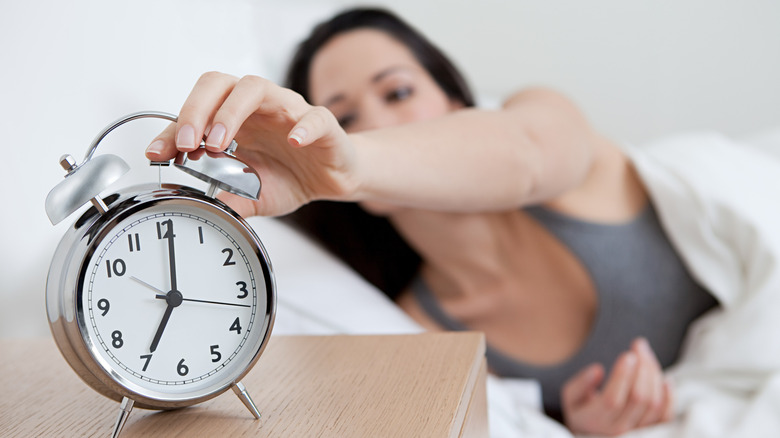
Those pings and vibrations on your phone don't just affect you as you attempt to fall asleep. They can be jarring when your body is waking up as well. If your phone is the first thing you reach for in the morning, it can mean you start your day at a sprint, reading emails and responding to texts. "When you wake up first thing, the ideal is to wake up and spend a little bit of time within your own mind before you're bombarded with everything else in the world that's going on," mental health and wellbeing coach Lily Silverton explained to CNN. "Historically we're not used to having our attention taken away as much as it is today."
So it makes sense that Dr. Emma Lin, a board-certified pulmonologist and sleep medicine specialist, reported that her clients who made the change to an analog clock were able to ease into the day a bit before they seize it. "Patients who switch to a manual alarm clock often fall asleep faster, wake less during the night, and feel calmer and more refreshed in the morning," she told Real Simple. "My patients have told me they feel more refreshed and less hurried. These are signs of enhanced restorative sleep."