

Skip Hydrangeas: The Alternative With Pretty Blue Flowers That Butterflies Love
The stunning beauty of blue hydrangea flowers is an enchanting sight in summer. But, these beautiful shrubs do need somewhat specific growing conditions. Broadleaf hydrangeas do best in USDA Zones 5-9, with some hardy in Zones 6-9 (like 'Nikko Blue'), and some in Zones 4-8 (like 'Bloomstruck'). Even in the right zone, broadleaf hydrangeas' blooming potential is affected by weather conditions. Freezing winter temperatures may kill buds, and during hot summers, the flowers may droop or get scorched. There's a low-maintenance, blue-flowering shrub that not only looks a lot like a hydrangea, but thrives in warmer growing regions, and also attracts butterflies.
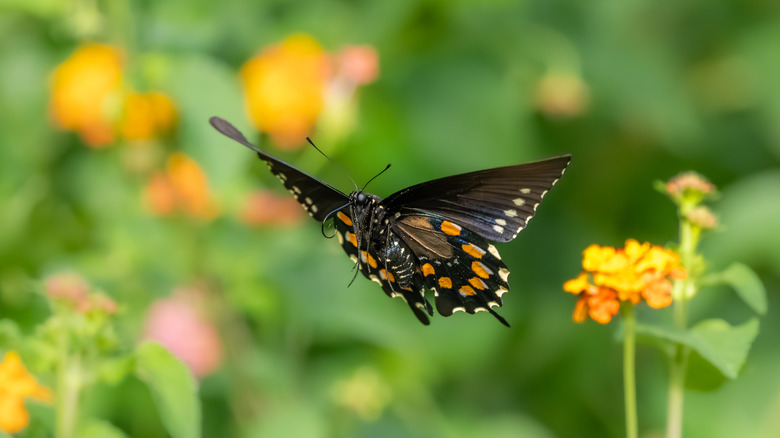
The California lilac (Ceanothus) is native to various parts of the United States, though mainly found on the West Coast (hence its common name). Similar to broadleaf hydrangeas (Hydrangea macrophylla), the California lilac produces bloom clusters in shades of blue and lavender. But this shrub is much more suitable for warmer zones, specifically USDA 8-11. Ceanothus is recommended for its excellent drought tolerance: "California lilac doesn't just survive droughts—it thrives in poor soil and dry conditions," says Megan McConnell, a horticulturist and plant information director for Monrovia (per Martha Stewart). If you live in USDA Zone 8 or higher, a California lilac is a great choice for your yard. A bonus to this hydrangea alternative: lots of butterflies! California lilac attracts many butterfly species, including pale swallowtail, brown elfin, echo blue, and others.
Growing and caring for California lilac
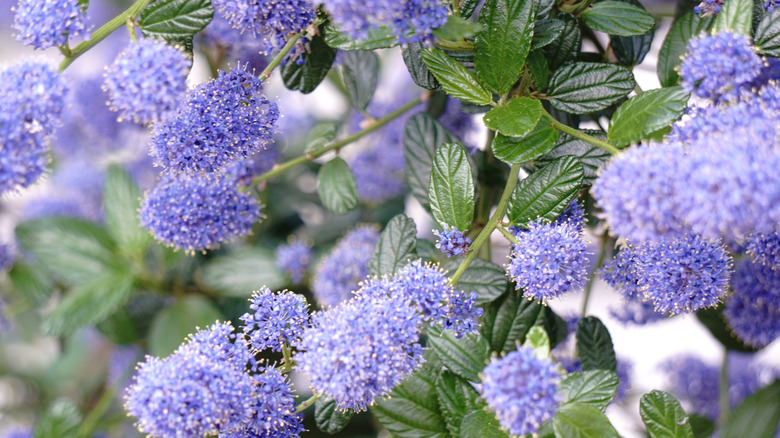
An important thing to know is that, in terms of size, the California lilac is actually closer to a lilac bush than a hydrangea. Though planted as a shrub, some varieties can grow to the height of a small tree in ideal conditions, as tall as 30 feet! So, when selecting a California lilac, be sure to check out the mature size range of your chosen cultivar to make sure it's a good fit for your space. There are a number of smaller cultivars available. The 'Dark Star' cultivar has royal blue flowers and grows to a mature size of 8 feet tall and 6 feet wide. 'Skylark' has dark blue flowers and grows up to 6 feet tall and 5 feet wide.
This shrub can grow in poor soil and, once established, is a very drought-tolerant and deer-resistant garden plant. It can also grow in partial or full sun, giving you some flexibility with planting locations. In its native growing areas, this plant tolerates a range of habitats, though well-draining soil is always good for new shrub plantings. Avoid heavy pruning or overwatering. Light pruning to shape the plant should be done in spring and again in autumn.
This evergreen shrub has glossy green leaves, and is a good choice as a backdrop in the garden or even grown as a hedge. Depending on the cultivar, they may start blooming in late winter or early spring, and bloom continuously for at least 8 weeks. The 'Blue Jeans' cultivar blooms from April to July, and has attractive violet-blue flowers. Plan your spring and summer perennial garden for colorful blooms alongside this pollinator-friendly shrub.