

11 Invasive Pests Homeowners & Gardeners Are Seeing Everywhere In 2026
Depending on where you live, you may have noticed that spring has been relatively mild this year. According to the National Centers for Environmental Information, the contiguous United States experienced the third warmest April on record. This is a boon for gardeners who relish the opportunity to head outside and start preparing their yards for summer. But when you add it to increasingly mild winters, and according to pest control experts at organizations like Terminix and the National Pest Management Association (NPMA), it also gives some of the nation's most annoying pests a head start on their annual warm-season proceedings.
Below, we've taken a closer look at these organizations' forecasts for 2026, to see which species are most likely to present a problem this year — as well as where. Some are absolutely making hay now that the sun's shining, including a several insects that will have you scratching your head — sometimes literally — as to how to deal with them. Others are ever-present, regardless of the weather. There are also those who, having hitchhiked their way here from far-flung shores, are now capitalizing on a total lack of predators and wreaking havoc on American flora. In one case, two already-problematic household invaders have hybridized. In all, we've unearthed 11 different pests that homeowners are likely to see more of this year. And to help, we've also explored some methods to help rid your home of them.
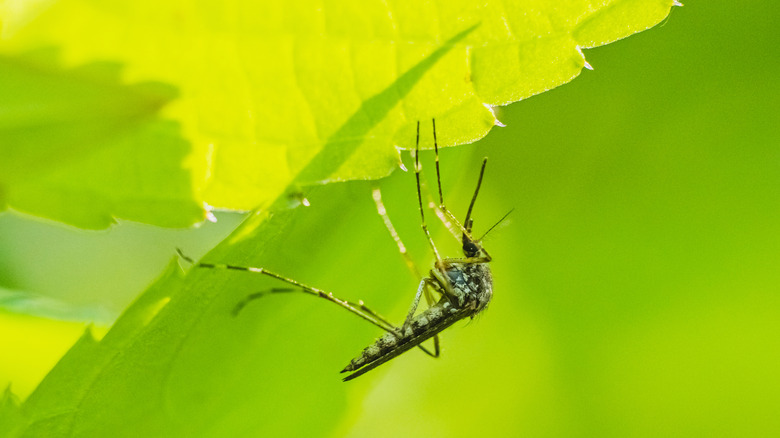
Mosquitoes are benefitting from a mild spring

There are several mistakes that can attract mosquitoes into your yard, like not draining standing water or allowing the shadier spots in your garden to overgrow. However, homeowners around the country are facing an increasingly uphill battle against them this year, thanks to the mild late-winter and early spring. According to Terminix's 2026 Pest Trends and Activity Forecast, these conditions have effectively given mosquitoes a head start. This is because warm and humid conditions — like those after a mild spring-day rain — are ideal for mosquitoes to breed.
To prevent growing populations from settling in your garden, there are a few things you can do. For example, you could plant bee balm (Monarda spp.), an aromatic herb that may help keep mosquitoes clear of your yard. Just know that evidence for such natural repellents is largely anecdotal. Usually, the most effective way to banish them is to discourage their arrival in the first place. Mosquitoes love standing water, and if they find it, they'll take no issue in laying their eggs in it — thus making your problem exponentially worse. So, check your gutters, and look for items that might harbor rainwater, like pots and water troughs. If you have low spots in your yard where rainwater tends to pool, consider aerating any compacted soil, or installing a drainage system.
Ticks are also beneficiaries of the milder winter conditions
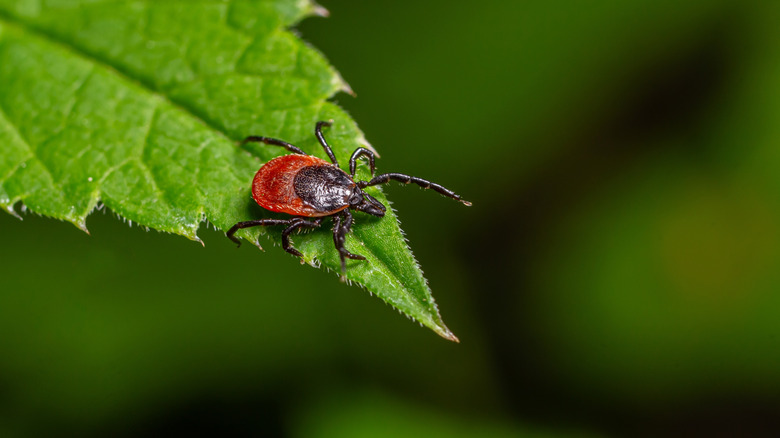
Ticks are another pest expected to rise in numbers this year, according to both Terminix and the NPMA's 2026 Bug Barometer. Again, this is due to earlier-then-usual rise in temperatures. And while many assume that the winter, particularly in snow-prone regions, is a time for tick inactivity, it only takes a couple of days of mild weather to see them re-emerge. Given that the winter has retreated earlier than usual this year, they are rising in numbers more quickly than in the past. And since ticks are known to transmit various human diseases, like Lyme disease, it's more important than ever to be vigilant.
Fortunately, it's fairly easy to protect yourself and your family against ticks. Firstly, be aware of where ticks live. They favor grassy, bushy, or wooded areas, and if you have dogs or cats, you should be on the lookout for any passengers hitching a ride on your pets. The Center for Disease Control (CDC) recommends treating your clothing and gear with products containing 0.5% of the insecticide permethrin. That means boots, trousers, t-shirts, and camping gear. At home, it can also help to keep your grass mowed short.
Asian needle ants are spreading across the Southeast
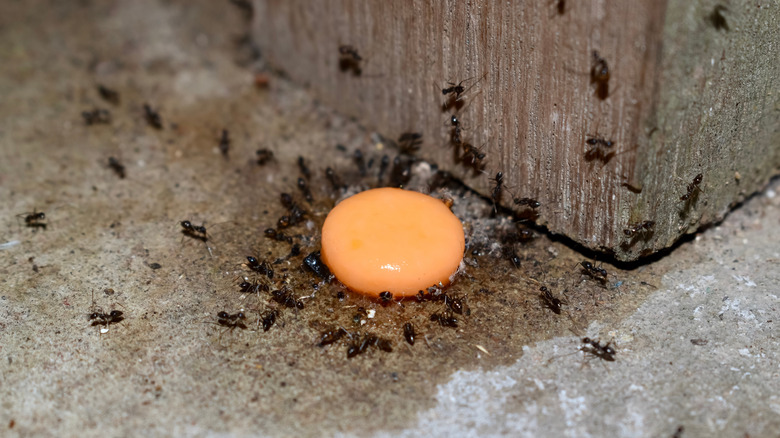
After going unnoticed for a number of years, Asian needle ants are presenting an increasing threat across the Southeast. It's a "stinging" type of ant, which means contact with a colony is ill-advised. The United States Department of Agriculture (USDA) suggests that native ant populations are also being displaced — populations that play a key role in maintaining the natural balance of the land. According to Terminix, Asian needle ants have already started to appear in areas where they were previously absent. In fact, per data tracked by AntMaps.org, the species has been found in the east, from New York all the way down to Florida. There are also reports slightly further west in Wisconsin, as well as one all the way over in Washington. In other words, they don't appear to be going anywhere anytime soon.
As for why they're expected to be seen in greater numbers this year, the NPMA puts it largely down to warm and wet spring weather. This isn't just true of Asian needle ants; most ant species tend to emerge once soil temperatures exceed 50 degrees Fahrenheit. This makes taking preventative measures against ants important to avoid a home invasion. It could also pay to know how to identify which particular ants are living near your home. Per their name, Asian needle ants have quite a serious sting. They're not usually aggressive (like fire ants), however, their stings can affect people in different ways — sometimes leading to anaphylactic shock. Identification and due caution can help prevent conflicts and subsequent health concerns.
The Southeast is seeing increasing numbers of invasive Joro spiders
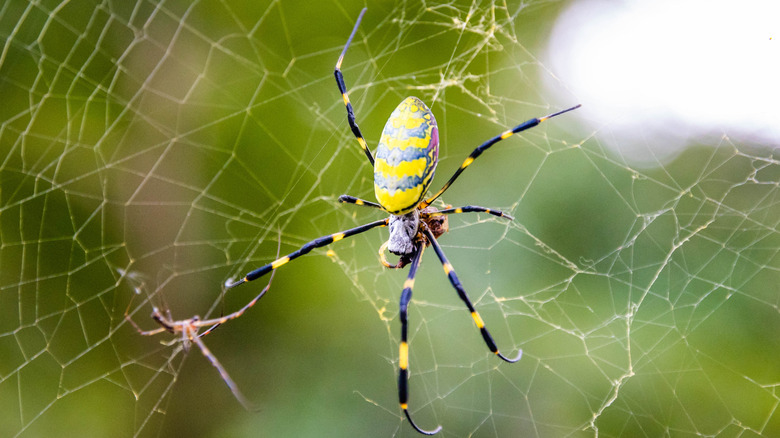
Another species on Terminix's 2026 watchlist, particularly in the Southeast, is the Joro spider. It's another invasive species from Asia, and is easily identifiable by its vibrant, yellow and bluish-black markings on the back and legs. It also has red markings on its belly. Per Terminix, it's especially prevalent in the east of the country, especially around Atlanta, Georgia, North and South Carolina, and the surrounding states. As for its impact on the environment, the jury remains largely out. It's believed that this spider could, eventually, occupy most of the East Coast. However, there's no current evidence to suggest that the species will have a severe detrimental impact on its environment.
Right now, the biggest concern for homeowners is the size of the spider, plus the size of its web — often up to 10 feet across. For those who feel themselves fall to pieces at the sight of a spider may prefer not to come into contact with one, since they can grow up to 3 inches in size. However, even if your disposition with spiders is less than sunny, you can at least rest assured that this particular species won't harm you. It may actually prove beneficial to the other species in your garden. The Joro spider's web is surprisingly strong, and has been recorded supporting the full weight of a perching bird. That means that if you're trying to attract more birds into your yard, they may well thank your resident spider for providing such easy pickings.
Rodents remain a concern around the country
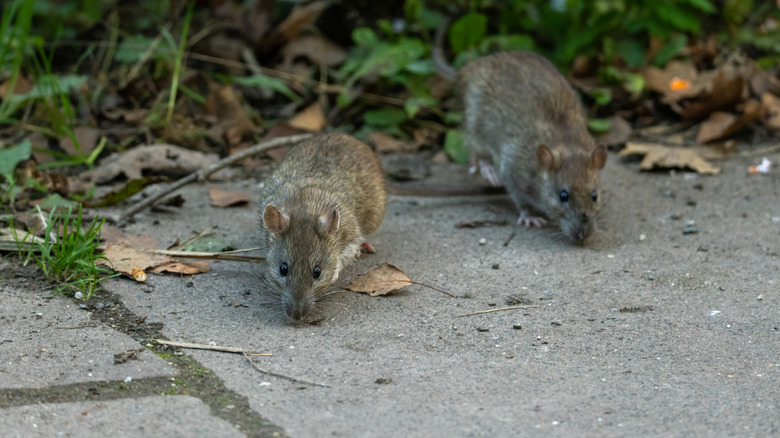
Have you ever heard the saying that you're never more than six feet away from a rat? While it's not technically true (since rat populations are more dense in some areas than others), it's worth bearing in mind in urban areas. Ongoing development of natural spaces pushes populations into new, built-up zones, which naturally leads to more home invasions and infestations. Of course, it's not a problem that's exclusive to towns and cities. Mice, rats, and other rodents are prevalent in most regions across the country. However, they remain one of the most persistent threats in the Northeast, particularly around New York. They're also listed on the NPMA's 2026 Bug Barometer as prevalent across the Northwest, including Washington, Idaho, and Oregon.
If you live there, then pest management is of course important. But wherever you live, not paying attention to certain attractants in and around your home could lead to an invasion. Like other animals, rats and mice favor areas that provide both food and shelter. This makes the warm confines of your attic or crawl space supremely attractive. They are also surprisingly adept at squeezing themselves inside, in fact an adult rat can squeeze through a hole roughly the size of a quarter, For mice, a crevice around the width of a pencil is often sufficient. This makes checking your home's foundations and sealing entry points critical to keeping them out. You should also check for tree branches growing closely to your house, as rodents can climb these and use them to access your attic space.
German cockroaches are persistent in Northeastern homes
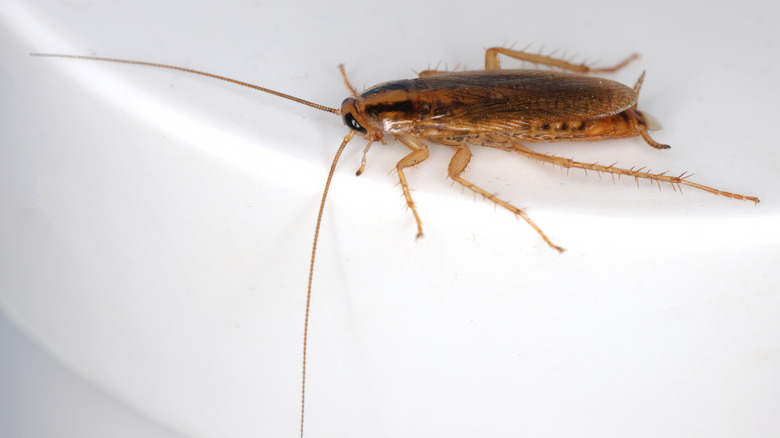
Favoring warm, humid environments, a warm and damp spring is "the dream" as far as German cockroaches are concerned. And if they find food and shelter — like the kind available in your home — their populations can quickly boom. According to the NPMA, cockroaches remain a concern in areas around the country this year, especially given mild winter and comparatively warm temperate spring conditions. Like rats and mice, they're of particular concern in the Northeast, according to Fox5 New York, especially around New York and New Jersey. And since they can find their way into homes in a number of ways, vigilance is now more important than ever.
If you have faults in your home's foundations, then like rodents and insects, cockroaches can exploit these as a way indoors. They can also hitchhike their way across the threshold. They may be hidden inside a box from your latest parcel delivery, or can even hitch a ride inside your shopping bags. The key to keeping them out is to seal your foundations, and check inside your boxes and grocery bags. Look for signs that cockroaches have settled inside, like droppings and smear marks. You should also aim to keep your food sealed in plastic tubs, and vacuum your floors frequently to minimize attractants. While you're at it, clear away any collections of cardboard boxes, since cockroaches favor these for both shelter and, if contaminated with food, sustenance. Finally, if you suspect that they've already settled inside your house, then take steps to remove cockroaches from your home as soon as possible. If there is a large infestation, then it's usually best to hire a pest control specialist.
Spotted lanternflies are on the New York state watch list
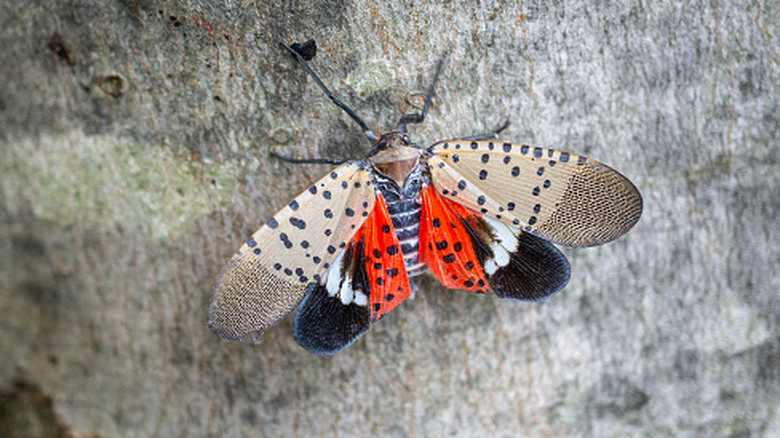
Spotted lanternflies are native to Asia, where they have plenty of natural predators. However, since they were first identified in North America in 2014, numbers have boomed. They're a persistent threat in Pennsylvania, and there was a population surge last year in Maryland, where the species is having a detrimental impact on grape crops. They're also on New York's invasive species watchlist, and are wreaking havoc on both agricultural and residential areas in Delaware.
Now, it's widely thought that these insects kill all plants and trees that they feed from. However, Kelli Hoover, professor of entomology at Penn State University, explains that with the exception of grape crops and the insect's favorite host plant, the tree of heaven (Ailanthus altissama), this isn't strictly true. With that being said, she admits that if a large group feeds on a single plant or tree, that could make it more susceptible to other stressors, like disease. Another issue is that spotted lanternflies leave behind a trail of honeydew as they feed. This can attract various insects, while leading to growth of black sooty mold, which can impact the health of your plants. And, according to the Cornell University College of Agriculture and Life Sciences, there are already more than 100 identified plants this insect will feed on.
If you see spotted lanternflies, you're advised to kill them. Check hard surfaces around your yard (like tree trunks, branches, and your decking) and destroy any egg clutches you find. Failing that, you may need to use insecticide — just make sure to use one that targets the insect at all stages of its life cycle. In any case, if you come across them, it's important that you report it to your home state's authority.
Ash trees in the Northeast are vulnerable to growing numbers of emerald ash borers
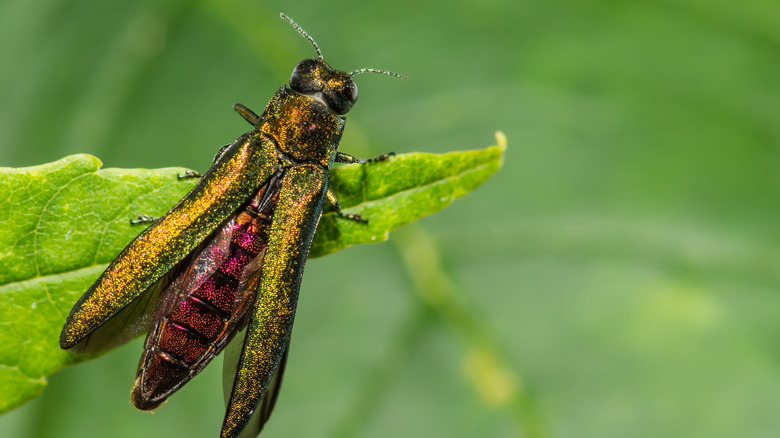
Also native to Asia, emerald ash borer beetles are growing in numbers, especially across the Northeast. There, the species is responsible for killing millions of ash trees, making it one of the most destructive forest pest in U.S. history. Unfortunately, it's not only limited to the Northeast. In fact, the Southern Forest Health's last update on the insects' range (in 2024) cited infestations as far west as Utah, and as far south as Texas. In other words, numbers are growing, making sightings this year increasingly more likely.
Fortunately, a little proactivity with the ash trees in your yard can go a long way to preventing emerald ash borers from causing a problem. You can treat them with insecticide, following your chosen product's guidance on both amount and frequency. As for how, the methods vary. One of the most effective is a method known as trunk injection, whereby a licensed operator literally injects your tree trunk with pesticide. You can also use a soil drench, which causes the roots to absorb the pesticide, thus guarding it against infestations. In extreme cases, tree removal might be necessary. While it sounds drastic, and while you may not want to lose a whole tree from your yard, it's the only surefire way to prevent a serious infestation from spreading.
Asian longhorn beetles continue to wreak havoc on hardwood trees in the Northeast
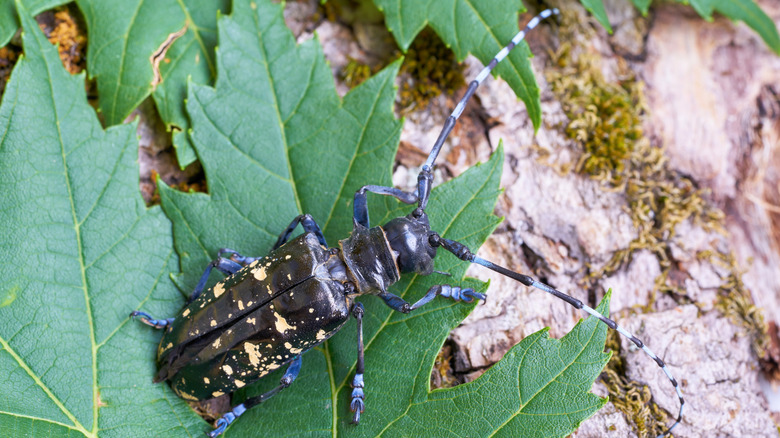
In states like Ohio, New Jersey, and Illinois, successful eradication programmes have enabled residents to finally see the back of the invasive Asian longhorn beetle. However, it continues to be closely monitored in New York, where it was first discovered back in 1996. Per the name, it's another Asian native, and just like the emerald ash borer, it causes significant damage to trees. However, its menu is considerably less limited, in fact, according to the USDA, it favors a variety of hardwood trees, including both maple and birch.
As for what you should do, it depends. In the case of a single tree, insecticides with the active ingredient imidacloprid can be effective when applied the soil. Just make sure to follow the instructions on the label. However, if you have lots of trees, or a forested area, then such treatments are less likely to be effective. In any case, since this is a regulated species, it's usually worth contacting licensed operators to handle the problem for you.
Whatever you do, don't be tempted to take matters into your own hands and lop the afflicted tree down for firewood. Do so, and you may simply spread the problem. You should also report any sightings of this beetle, or any signs of suspicious tree damage, to your local authority. The USDA's ongoing efforts to eradicate this species rely on this valuable information. Signs of damage may include round exit holes (roughly the size of a dime) and chewed "wounds" in the bark. You may also notice frass (or sawdust) on the ground beneath the tree, or branches falling from an otherwise healthy tree.
A new hybrid breed of termite is giving pest control experts cause for concern
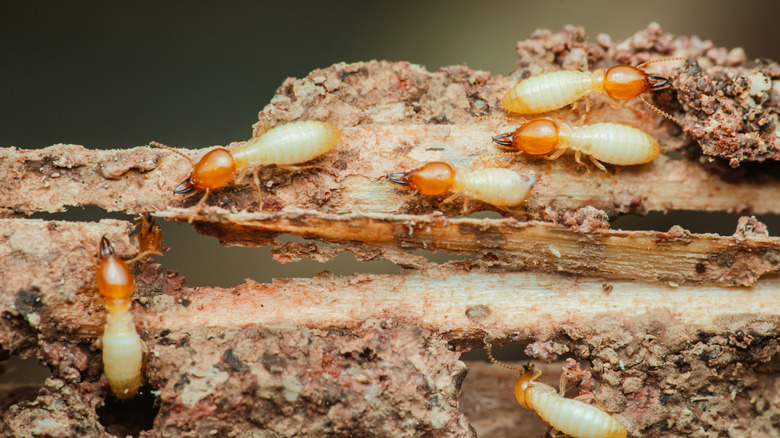
Reading through Terminix's 2026 list of pest trends, one item that stands out is the development of a hybrid species of termite. The species in question are the Formosan termite and the Asian termite, resulting in what it describes as a hybrid that's both hardier and more prolific. The hybridization was confirmed by the University of Florida, in fact swarms of hybrid termites have been documented and confirmed annually since 2021. Thomas Chouvenc, associate professor of urban entomology at the UF/IFAS Fort Lauderdale Research and Education Center, is the lead authority in the university's study. As he said, "This may be a Florida story now, but it likely won't stay just in Florida. Give it time."
Chouvenc goes on to suggest that, if the hybrid offspring take after the Formosan species, then they could spread to a much wider geographic range than either species alone. For this reason, the experts at Terminix suggest being on high alert for signs of a termite infestation, like termite swarmers and dirt tunnels. If you spot them, then it's best to contact a pest control professional and have them address the problem as soon as possible.
Brown marmorated stink bugs are emerging ahead of schedule in the Mid-Atlantic and New England
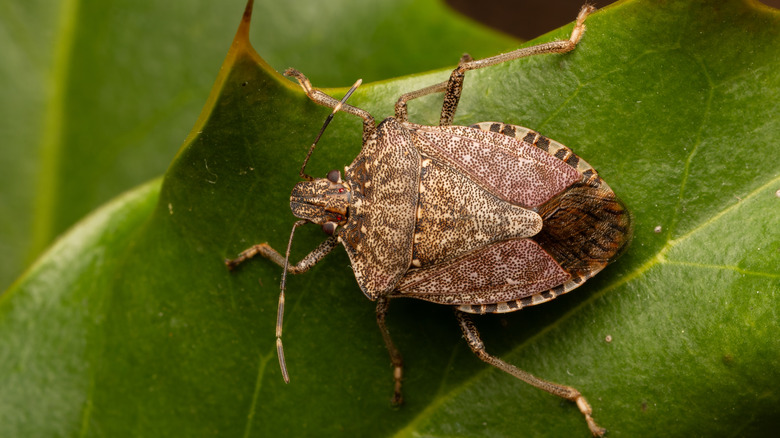
Once again owing their proliferation to mild spring temperatures, brown marmorated stink bugs have come out to play much earlier than usual. They're especially prevalent this year in the Mid-Atlantic and New England, according to the National Pest Management Association's Bug Barometer. Now, it should be noted that their emergence in the spring isn't unusual. In fact, that's usually when they come out of their winter hiding places in order to find host plants. When they do, they tend to feed on whichever plants are available. However, since the species produces more generations per year, depending on the climatic conditions in a given area, a longer warm season could well see their numbers surge even higher.
As for the damage they can cause, they aren't particularly fussy when it comes to food. More than 100 different plants appear on the brown marmorated stink bug's menu, ranging from apples and brassicas to various ornamentals. They can cause severe damage, too, especially in the Mid-Atlantic region, where they're most prevalent. They also smell rather unpleasant, hence the name! To control them, you can try insecticides, although the impact is unlikely to be 100% effective. One of the best ways to combat them is to simply maintain a healthy, bio-diverse garden. If you can attract predators like other insects, birds, and spiders, then they should help to keep populations from getting out of control.