

Here's A Better Solution To Keep Weeds Out Of Driveway Cracks And Gaps
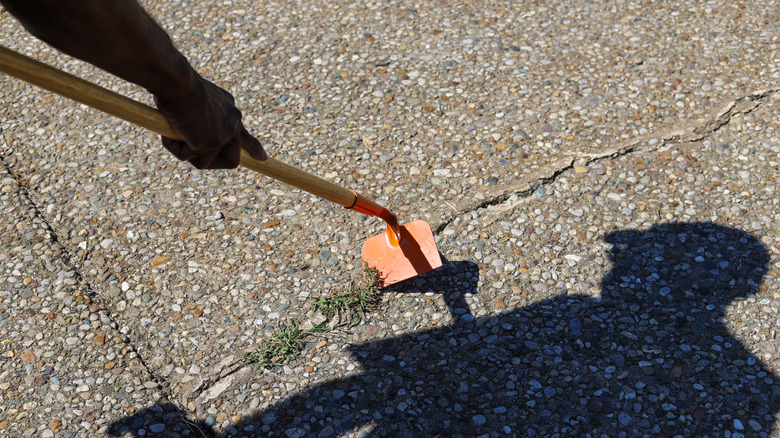
Weeds pushing through the cracks or gaps in your driveway are not only irritating to see, but they also indicate that there is an environment for growth. Driveway gaps naturally collect debris like dust, soil, and organic matter. Once that gets wet, you have the ideal spot for weeds. You can pull them or spray weed killer for a temporary fix. However, they don't last very long. Pulling weeds can leave roots, and they can develop resistance to herbicides over time. There are many ways to get rid of and prevent weeds from growing in your driveway. For a better solution to keep weeds out that's durable and low-maintenance, polymeric sand is one of the more effective options.
Polymeric sand combines coarse-grained sand and water-activated binding properties. It looks like regular sand. However, there's a difference between paver sand and polymeric sand. Traditional joint sand shifts, washes away, and breaks down with time. It'll leave gaps open, and weeds will easily grow once again. When you add water to polymeric sand, it activates. The particles come together and create a hard, durable joint filler for your driveway. It's not recommended to use it on heavily textured driveways.
It acts as a flexible sealant. It's firm enough to lock things into place, but there is still room for movement during temperature changes. That makes it effective for your driveway. It won't wash away like regular sand, resists erosion, and helps to keep the surrounding concrete or asphalt edges from sliding. You can say goodbye to weeds growing between cracks with this one simple fix. You can even get it in different colors to match your driveway.
Steps to apply polymeric sand to your driveway
Using polymeric sand is a simple DIY project. With proper preparation and application, you'll get lasting results. Make sure the driveway material is completely dry before you begin. The first step you want to take is cleaning out all of the weeds, roots, dust, and debris in between the gaps or cracks. Remember that any leftover roots could grow back. You can use a weed tool or a brush to get between the cracks and edges.
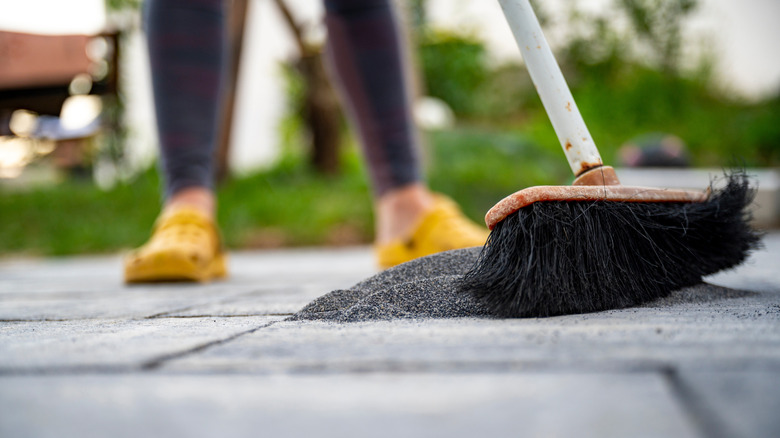
Spread the sand over your driveway, using a push broom to spread it into the cracks and fill the gaps. Press and pack it down so that it settles into the gaps. Then, you can sweep away any excess surface sand. Gently spray it with water to activate the sand. To achieve this, you can put some water into a spray bottle and mist over the parts you want to fill. Be careful not to overwater the sand, since it can shift the sand out or leave the filler soft.
Make sure the sand is where you need it before you spray, so it doesn't get sticky in areas you don't need, like the driveway surface. It hardens as it takes in the moisture. Keep in mind with polymeric sand that it can harden quickly, so ensure you're following instructions closely. Apply it with caution so as not to ruin the driveway. You can always add more or go through the process again if you see weeds or gaps over time. Avoid walking or driving on the surface for at least a day to two days, so that the sand can fully set.