

Ditch The Traditional Tomato Cage For A Space-Saving DIY Solution

We may receive a commission on purchases made from links.
No one can deny that tomatoes are one of the juiciest and most colorful crops from the backyard garden — and it's equally apparent that their vines need lots of support as they grow. However, tomato cages don't always perform as well as we hope they will, and they can be cumbersome between seasons. You can finally ditch those flimsy round cages and replace them with a DIY tomato cage alternative that will support your plants – this solution is made out of cattle panels and is foldable to help you save space.
Tomatoes seem to be everyone's favorite summer harvest, but one of the downsides to using tomato cages is storing them between seasons. Once you bring them home, it seems impossible to easily stack them when not in use. These supports for our backyard nightshade crops become twisted and bent under the weight of the fruits and heavy vines that they help to support summer after summer. Once the cages become bent, they become so awkward to store that some gardeners might give up in frustration and toss them in the trash. Still, there's no doubt that you need to support your tomato plants to keep them happy and healthy, and this improved version of the tomato cage will excel at the task, providing a brilliant DIY solution while taking less room in storage.
Tips for making space-saving tomato cages from cattle panels
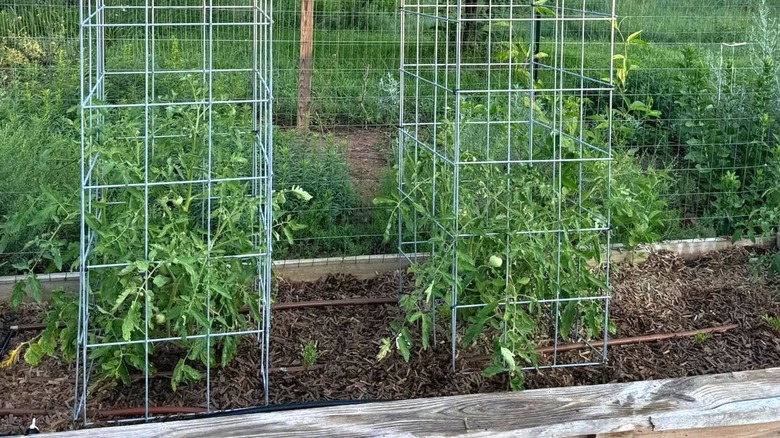
Keep in mind that the cattle panels used in this DIY solution aren't the same thing as welded wire fencing or cattle fencing, which are both sold in rolls. Cattle panels are sold in long, flat sections, typically 16 feet long and 4 feet tall. Because of their size, unless you have a trailer, you'll either need to take your bolt cutters and cut them down to size after purchasing and before loading them into your vehicle — or you could have them delivered. Use bolt cutters to cut the 16-foot panel into smaller, 2-foot sections, which will give you enough to make two tomato cages. The methods you use to connect these smaller sections into a cage is what will help you save space between seasons.
There are different materials you can use to connect the sections together, such as hog rings, wire, or zip ties. Whichever material you choose for connecting the four panels into a cage, leave the connections loose enough so that the cage remains collapsible. Once you have the four panels attached, you can secure them in the ground with 12-Inch J-Hook Rebar Stakes from the Feed Garden Store. You'll notice that this DIY support is much sturdier than tomato cages. Cattle panel is constructed from very thick, 4- or 5-gauge wire, while standard tomato cages are made from much thinner wire. Even heavy-duty cone-shaped cages aren't as sturdy. This space-saving tomato cage alternative will be much stronger, making it better able to withstand the heavy crops you grow in your backyard.