

How To Fix A Leaky Garbage Disposal (Without Calling A Pro)
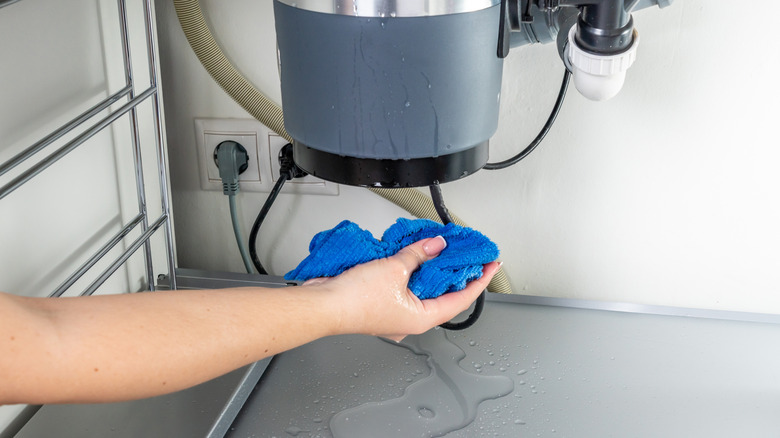
If you suddenly notice that your garbage disposal is leaking, the situation may look worse than it actually is. Before assuming you need a plumber or a full replacement, figure out where the leak is coming from. Once you identify the source of the leak in your disposal, you may just be able to make DIY repairs without calling a professional. In many cases, the problem is as simple as a loose connection or hose clamp, a cracked gasket, or dried-out putty that you can reapply on your own.
It's quite common for garbage disposals to develop leaks. In some cases, the fault behind the leak may stem from a mistake you made when using the unit. In others, wear-and-tear from routine daily use may be the culprit. So, when you see water dripping or pooling beneath your unit, start by examining the device to find the fault. Since you'll be working with electricity and water, your first step should be to switch off the breaker to which the garbage disposal unit is connected. From there, with just a few basic tools and replacement parts, you should be able to get your garbage disposal running smoothly again. Since garbage disposals naturally vibrate when in use and their connections can come loose, it's helpful to periodically check things like clamps and screws to see if they need tightening. Doing this regularly can help prevent future leaks.
Steps for fixing different garbage disposal leaks
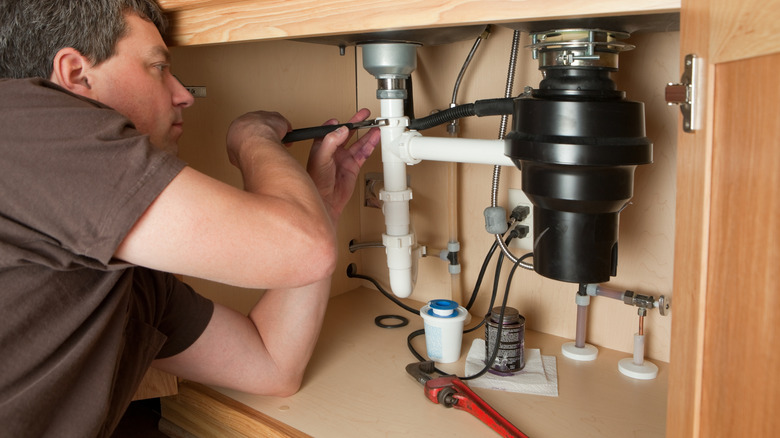
If the leak is coming from the top of the disposal unit, it usually indicates a worn sink flange seal or loose mounting. The vibration from your garbage disposal may have loosened hardware or compromised the dried-out plumber's putty seal. In many situations, all you need to fix this fault is a screwdriver or a wrench and some new putty. First, try tightening the mounting screws underneath the sink, then run the water and see if the unit still leaks. If it does, you'll need to reseal the flange. To do this, disconnect the disposal unit from the mounting ring. Remove the old putty before applying fresh putty around the opening, then reinstall the flange and tighten the mounting hardware. You can also add a layer of silicone over the putty to reinforce the seal against potential leaks.
If the leak is coming from the side connection, the root cause could be a loose metal clamp or a worn gasket. Use a screwdriver to tighten the hose clamp; if it still drips, inspect the gasket and look for cracks. Replacing a worn gasket or a damaged hose is usually inexpensive and simple. Crucially, ensure that the new hose is properly seated on the disposal unit's connection port before tightening the clamp — otherwise you'll end up with a new leak.
If the leak is coming from the drainpipe connection, tighten the screws or fasteners that secure the pipe. If that doesn't work, examine and replace the internal gasket if necessary. Finally, if the leak is coming from the bottom of your disposal, the internal seals or the housing itself have likely failed, and the unit needs replacing. You can look up how to install a garbage disposal without help from the pros.