

Everyone Owned One In The '20s — The Roaringly Popular Houseplant Still Beloved Today

We may receive a commission on purchases made from links.
When you think of the 1920s, your mind probably conjures up images of flapper-style fashion and lavish Art Deco interiors. Houseplants were a huge part of crafting the era's signature elegance indoors. One particularly popular plant made its way into homes across the U.S. — the snake plant (Dracaena spp. trifasciata). These wiry, leathery houseplants were everywhere in the 1920s and into the 1930s in large part because they were sold by the affordable five-and-ten retailer Woolworth. Plus, they look lovely and are about the easiest houseplant to take care of for increasingly busy pre- and post-war families. Indeed, snake plants are central in home decor right up to the present day, cultivated by casual plant lovers and serious houseplant collectors alike. Between December 2023 and November 2024, Americans conducted an astonishing 3.1 million searches for snake plants.
Snake plants are native to Southern Africa, a region with a similar climate to the southern U.S., where you can grow them outdoors. However, where these plants really shine is as a beginner-friendly houseplant. Outside of the common Dracaena trifasciata that was popular in the 1920s, there are quite a few snake plant varieties that are perfect for growing in your home: Dracaena masoniana has wide, whale fin-like leaves, Dracaena hahnii forms a tight spiral, and Dracaena cylindrica resembles a starfish. These hardy plants can thrive in just about any indoor setting, even low light, so long as you allow the soil to dry out between waterings. Root rot is one of the only snake plant issues. If you have pets or small children in the home, reconsider growing snake plants. They are mildly toxic if ingested.
How to love your snake plant like 1920s homeowners did
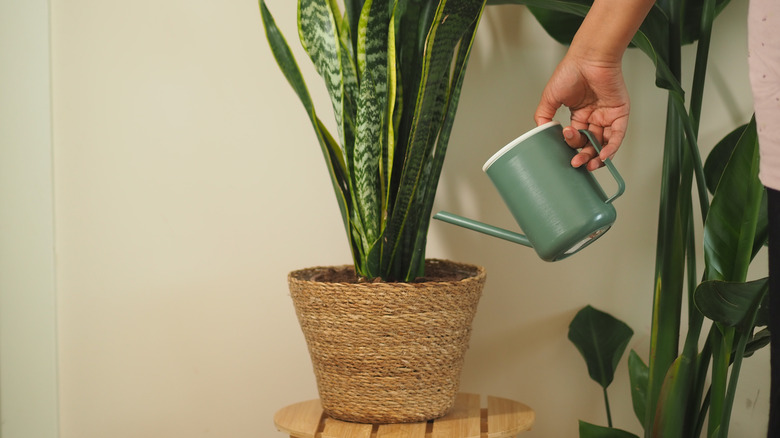
Books on houseplant care existed in the early 20th century, and almost certainly included advice on growing snake plants. Just like back then, new plant parents need to familiarize themselves with the quirks of the Dracaena species. When you bring your snake plant home, transplant it into a terracotta pot with drainage holes. Use a well-draining succulent and cacti soil, like Veryplants Molly's Succulent Mix, to help balance moisture levels.
Snake plants prefer bright, indirect light, but will also grow in low light. If you're moving your plant from one location to another, do it slowly and adjust watering frequency as needed. If you're unsure if your snake plant needs watering, stick your finger a couple inches into the soil. If it's dry, place your plant in a basin of water to hydrate it from below and encourage deep root growth. Dracaenas need less water in the winter when they're not actively growing.
You can keep your snake plant thriving with some clever hacks and care tips. Dust the leaves regularly to aid photosynthesis. For a nutrient boost, apply Purived All-Purpose Liquid Houseplant Fertilizer once a month during the growing season or mix compost into the soil. Divide and repot these rapid growers annually in spring. If growth slows or stalls, or water runs straight through the pot, these are signs that it's time to repot your trusty snake plant. However, you don't have to do it right away — snake plants like tight quarters. In fact, if your plant is slightly root bound, it may produce sweet smelling, green-white flower clusters.