

Keep Flies At Bay With The Help Of A Flavorful Herb
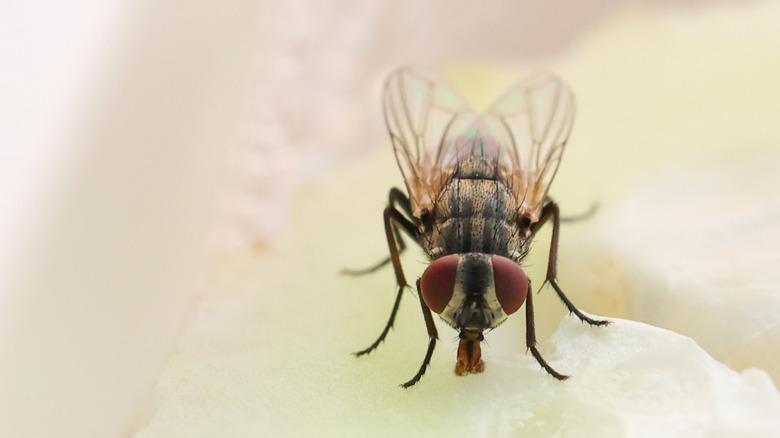
If you're not a fan of the constant buzz of flies around your home, as well as in your garden, then you can repel flies naturally with an essential garden plant they can't stand: chrysanthemums. Instead of, or in addition to, using chemical sprays or sticky traps, you can add this simple plant to your windowsill, shelf, deck, patio, or wherever you would like to create a quiet respite from flies. Chrysanthemums, or mums, are more than just a pretty flower. This hardy perennial is lauded as one of the most colorful and easy-to-grow plants, and it can even help keep flies away from your space. It's a win-win for homeowners who can add a vibrant plant to their home or garden and simultaneously deter flies from the area.
Despite the plant's pretty appearance, chrysanthemums are deadly to insects like flies. Thanks to a natural insecticide produced by the dried heads of chrysanthemums called pyrethrin, these flowers are known to paralyze and kill flies as well as other pests, including aphids, ants, mosquitoes, and spider mites. If you look at the ingredients of your favorite bug spray or lotion, you'll most likely see pyrethrin listed. Whether you simply plant chrysanthemums in your garden or in pots around your home, or you dry the flower heads into a powder and combine them with water to make a spray, these flowers are one of nature's clever ways of keeping flies at bay.
How to use chrysanthemums as a fly deterrent
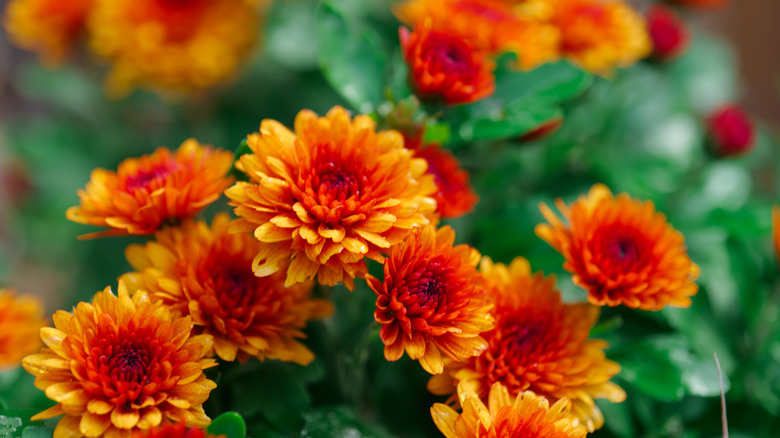
If you want to add chrysanthemum plants to your home or garden as a way to get rid of flies, there are several conditions this plant requires in order to thrive. First, these chrysanthemums should ideally be planted in the early spring. However, you can also plant fully grown chrysanthemums as annuals in the fall. These perennials thrive on lots of hydration, so it's vital to ensure their soil stays moist but not too wet to avoid the risk of root rot. If your mums are planted in containers, you can relocate them around your home and garden depending on where the flies seem to gather, whether it be near a window or on your outdoor patio.
For a more direct approach, you can also create your own pyrethrin spray with a few de-headed chrysanthemums and some water. Allow the flower heads to completely dry before crushing them into a powder. Combine 1 part flower powder with 3 parts water. After that mixture has steeped for three hours, you can remove the flower pieces with a strainer and pour the remaining liquid into a spray bottle. Apply this spray to the areas of your garden with a high fly population, or to your indoor plants.
Not only do chrysanthemums keep away the insects you don't want, but other garden pests like spiders also won't stand a chance against this natural insecticide. Chrysanthemums are also less harmful to the insects you actually want to keep around your yard, like ladybugs and pollinators. However, pyrethrin is toxic to bees, so avoid spraying it on flowers where they frequent.