

Why Are My Hosta Plant Leaves Turning Yellow?
We may receive a commission on purchases made from links.
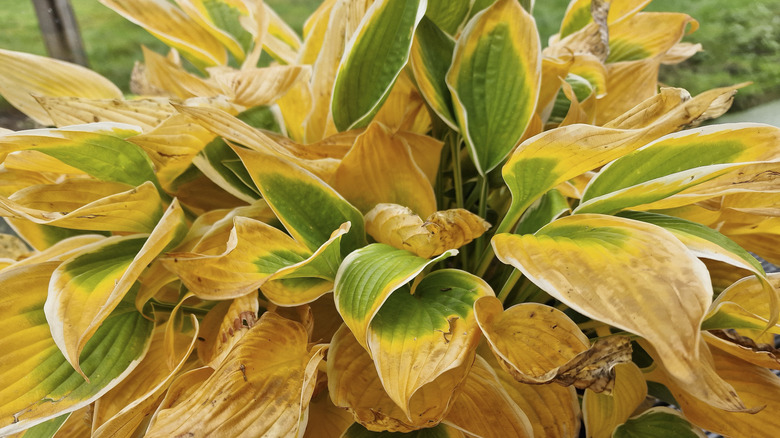
If there's one bright green outdoor plant that you can recognize right off the bat, it's a hosta. These giant-leaved perennials come in multiple varieties, and are an excellent addition to any garden. These herbaceous plants grow well in USDA Hardiness Zones 3 through 9 and are generally easy to care for. However, your hosta will have no issue letting you know if it needs a boost in its care. If you've ever noticed your hosta's leaves turning uncharacteristically yellow, there are a few potential causes. The most common culprit of this unwanted color is thanks to an excessive amount of sunlight, also known as leaf scorch.
Leaf scorch is a condition caused by leaf tissue dying from water evaporation. One of the most common mistakes you want to avoid when growing hostas is risking leaf scorch by planting them in a spot that's too sunny. While hostas are typically able to withstand a good amount of sun, sometimes the light can be detrimental rather than helpful. If the leaves remain yellow after relocating, it may be an issue with disease or hydration. Note that while some hostas are naturally yellow or gold in color, like the 'Coast to Coast' or 'Island Breeze' varieties, we are emphasizing the importance of rejuvenating a green hosta that has started to uncharacteristically fade to yellow.
Saving your yellowing hostas from sun scorch
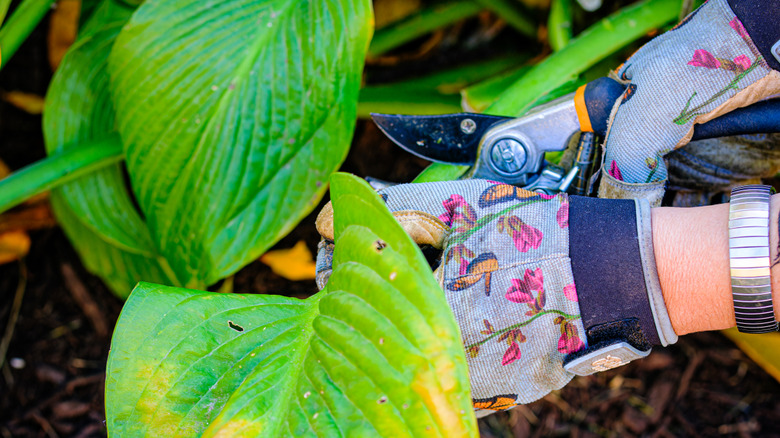
Overexposure to sunlight, high temperatures, and wind can cause hosta leaves start to experience leaf scorch, becoming brittle, yellow, and sometimes even turning brown. There's no need to panic, as a simple case of leaf scorch should not kill your plant. While it can't be reversed, it can be managed, and the plant should be able recover if addressed promptly. Start by pruning away and discarding the dying leaves.
If you have your hostas in containers, try relocating them to an area of your yard that gets less sun. Believe it or not, the thick leaves can actually thrive in dappled or deep shade. If your garden only gets full sun, you may want to opt for a specific hosta variety that is tolerant to sun. For in-ground plants that are starting to scorch, provide a shade source like KJX Garden Shade Kit With Hoops, strategically placed outdoor furniture, or additional plantings of sun-tolerant shrubs and trees.
Leaf scorch can be made worse by weak root systems or insufficient watering. For hostas, the general rule of thumb is deep, infrequent watering, as opposed to constant, light watering to avoid waterlogged roots. Note that if your hostas are planted in containers, they will require more water due to the quick drainage. It might sound counterintuitive, but avoid watering your hostas during hot days when the sun is high. Water droplets on the leaves can magnify sunlight exacerbate the leaf scorch. You can also combat the effects of leaf scorch by adding 3 to 4 inches of mulch around your hostas, as well as fertilizer in the late fall or early spring to help boost the plant's root health. Following these tips will help your plants stay cool and retain moisture, preventing leaf scorch.