

The Crucial Lawn Care Test That Starts In June For Healthy Grass All Summer
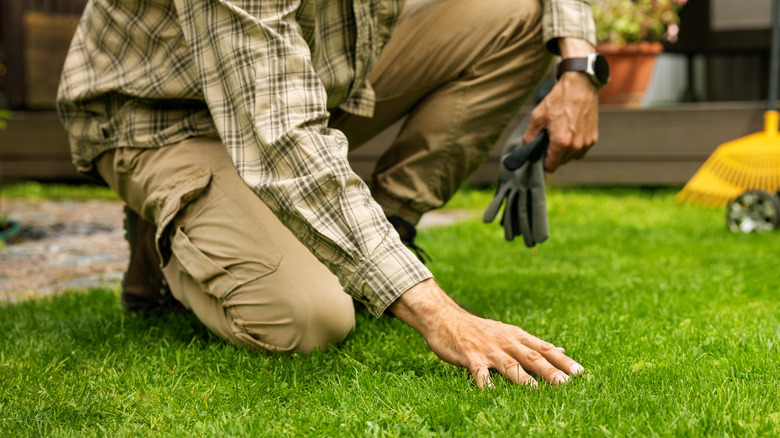
A well-manicured lawn ensures your yard looks attractive. It also provides an area for you and your children to play and relax on that is soft underfoot. However, keeping a lawn looking pristine takes a lot of work. Keeping on top of your lawn care schedule is crucial. In June, temperatures skyrocket as summer takes hold, and you need to prepare your grass so it can handle the heat. The best way to do this is to water deeply. Shallow watering doesn't create a healthy lawn, as it encourages shallow roots over deep roots. This, in turn, leads to weaker grass blades and a sparse lawn. Surprisingly, a screwdriver is the tool you need to test for and prevent this problem.
June is the month to start watering your lawn deeply because it's when the hot and dry weather of summer begins in most areas. There are a lot of guidelines out there, including when the best time is to water your lawn for luscious grass — if you were wondering, it's between 4 a.m. and 10 a.m., depending on where you live. You often have to use a lot more water than you think to saturate the ground. The first few times you water, you'll probably be unsure of the appropriate volume. You can use a screwdriver to test whether you're watering enough. Choose a tool that's at least 6 inches long — you need it to reach further than the ideal moisture infiltration, which is between 4 and 6 inches below surface level.
How to use a screwdriver to test your lawn's moisture levels
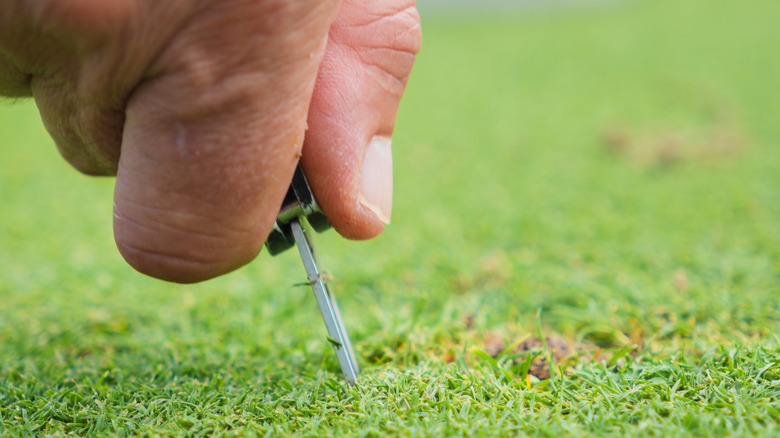
The test itself is simple. Sink the metal end of your screwdriver vertically into any part of your lawn. If you can push it into the soil easily with little force, then your soil is likely perfectly hydrated. As TikToker and mowing pro ope.itsmowtime says: "It should go in just like a butter knife." If it refuses to go into the soil or you have to use all your body weight to drive it down, something's likely wrong with the condition of your lawn.
Essentially, you're conducting a soil compaction test, where compaction is measured by how easy it is to push the screwdriver into the ground. If the process is difficult, your soil is heavily compacted and the moisture content is too low. The conditions are connected. If your soil is compacted, water can't penetrate it. You may need to aerate your soil to allow for better absorption. If compaction is a regular problem, you may have to reestablish your lawn with the best kind of soil for avoiding a compacted yard.
To better understand the condition of your lawn soil, conduct the screwdriver test when your lawn is driest — in late May or early June. Then do it again after watering your turfgrass. Note whether the screwdriver goes deeper into the soil or is easier to insert. If nothing has changed, the screwdriver test suggests your soil is compacted.
Use the cycle-and-soak watering method for more accurate results
There are some problems with the screwdriver test for soil moisture. Aside from compacted soil, there are other reasons your screwdriver won't penetrate deeply. Even if you water your lawn correctly, hidden rocks, roots, and other debris can stop the screwdriver in its tracks. Since overwatering can also damage your lawn, knowing why it stops is vital. Push the screwdriver into different spots around your yard to get a more accurate assessment.
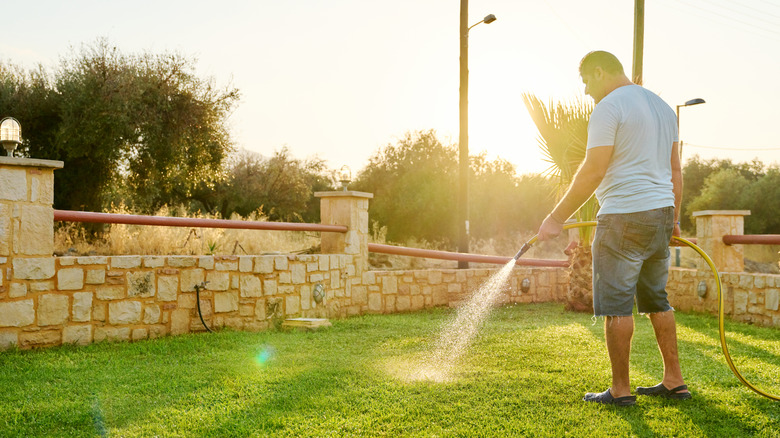
When deep-watering your lawn, don't dump a whole lot of water onto the grass all at once. The cycle-and-soak method helps the soil absorb the water, leading to a healthier lawn. It also gives you more accurate readings from your screwdriver test. Water for about five minutes and pause for at least 30 minutes. Repeat the cycle a few times. To test soil moisture, push the screwdriver into the soil after the 30-minute pause, once the soil has had time to absorb the water. It's a bit more work, but it's a simple way to transform a lackluster lawn into a stunning green oasis.
There's one final issue with the screwdriver test for lawns. You can use it to test whether you've watered your turfgrass deeply enough, but it will not tell you if you've applied too much water. To prevent a soggy lawn, check your lawn after every 30-minute pause in the watering cycle. The minute you approach the right depth, stop watering.