

Not Curtains: Beat The Heat With An Alternative Sliding Glass Door Cover
We may receive a commission on purchases made from links.
Sliding glass doors are brilliant at letting in natural light and views of the garden. Unfortunately, they also let in the heat. Many homeowners put up heat-blocking curtains to keep the temperatures inside their home low. While they can help, there is a far more efficient solution: using exterior shades to beat the heat before it has a chance to warm up your home.
Exterior shades are exactly what they sound like: curtain alternatives that block UV rays and solar glare, mounted on the outside of your sliding glass doors. UV rays and glare are how sunlight heats your home. They soak up all the heat before it infiltrates your home, keeping your interiors cool and reducing your reliance on AC. This alone makes them more reliable than heat-blocking curtains.
While this backyard addition could cut your cooling costs by up to half and decrease glare, exterior shades aren't issue-free. Like other outdoor decor, they can be damaged by the elements, although most exterior shades are weather-resistant. The biggest potential con is price. The cost to install motorized or heavily customized shades can climb to around $5,000. However, you can expect most off-the-shelf shades to set you back far less than that, depending on the size of your door and the shade's style and materials. Plus, it should only take an afternoon to install DIY store-bought shades. Given their potential benefits, they're well worth the price and effort in our book.
How to find the perfect exterior shades for your sliding glass doors
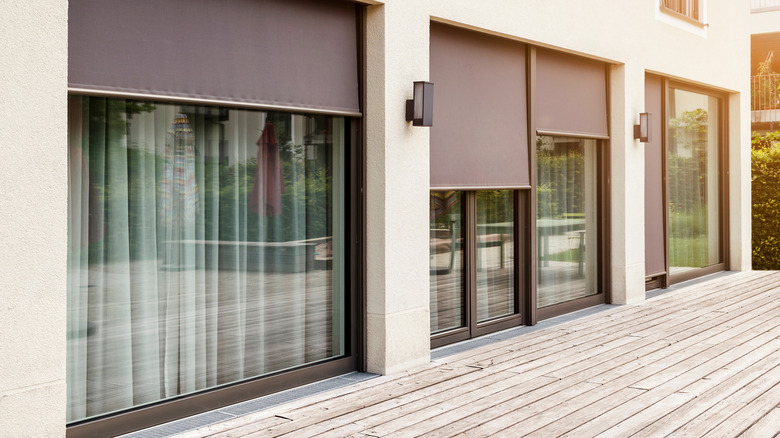
Perhaps the most important factor in selecting the right exterior shade to cover your sliding glass doors is the amount of direct sunlight the door is exposed to. If the doors get direct sunlight for part or all of the day, or the sunlight creates glare, an exterior solar shade that blocks at least 90% UV radiation would be your best option. For example, the Cowvie Dark Gray Outdoor Cordless Sun Shade for about $90 lets in just 5% of UV rays. If you only want to keep the heat out of a room without blocking natural light, an exterior roller shade — like this Windscreen4less Brown Outdoor Roller Shade for around $30 — would work better.
After deciding which type of shade you need, consider the openness factor, which measures the size of the gaps in the shade material's weave as a percentage. The lower the openness factor percentage, the smaller the gaps. This type of shade is the most opaque and lets through the least amount of light. Expect it to block the view out of your sliding doors. On the other hand, shades with a high openness factor percentage have bigger gaps, allowing more light — and potentially heat — through.
No matter which exterior shades you choose, positioning them correctly can help reduce your energy costs at home, among other benefits. If you're hanging the shades the exterior frame of your sliding doors, ensure the entry point for the interior crank or other operation mechanism is well-sealed. If you're attaching your new exterior shades to the eaves of a porch or patio cover, use heavy-duty mounting hardware, especially if you live in a windy area.