

Use Old Milk Jugs To Create A Planter Drip Plate With A Clever DIY
We may receive a commission on purchases made from links.
The cold, hard facts of plastic bottle production, usage, and disposal in the U.S. are harrowing. Here's just one example: Plastic bottles can take up to 500 years to fully decompose. Landfills are full of the stuff. It's vital we stop simply throwing plastic bottles into the trash. The place for plastic bottles is in the recycling bin — where recycling is possible — or your workshop or craft room, where you can repurpose them into useful items for our homes. If you don't consider a 1-gallon milk jug useful once it's empty, think again. In just a few simple steps, you can transform a milk jug into a drip plate for your houseplants. Not only will you keep plastic out of the trash, but you will also help your plants stay healthy and protect your furniture and floors.
Milk — or water — jugs are especially safe for houseplants because they're made from a food-safe plastic called high-density polyethylene (HDPE). In fact, you could use any plastic container marked with the number 2 inside a triangle made of three arrows. Ready to get started on this genius way to repurpose old milk jugs to use around your home? You'll need the aforementioned 1-gallon milk jug, of course, as well as a pair of sharp scissors or an X-acto knife. If you wish, gather together your decorative craft supplies, like non-toxic spray paint, craft acrylics, waterproof and UV-resistant paint pens, vinyl stickers (we like these Soenuhk Cute Daisy Stickers), or even a tub of BOHS Foam Clay. You're really only limited by your imagination with drip plate embellishments.
How to turn a milk jug into a drip plate
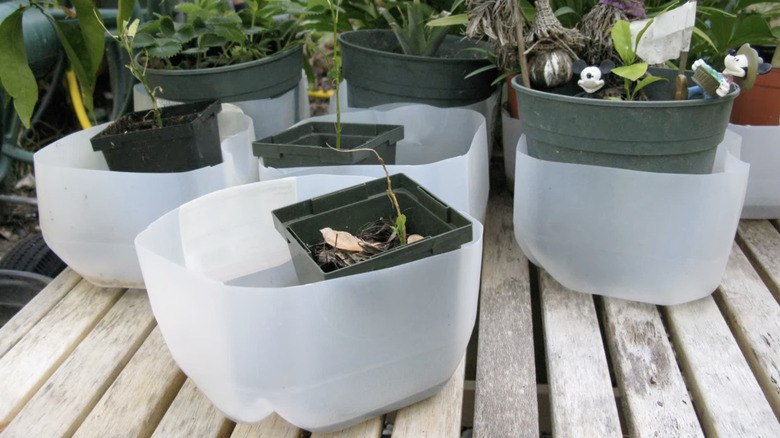
Don't toss that empty milk jug. Reuse it for a clever gardening hack — or at least for your houseplant care. Start with a clean, dry jug. Use your scissors or X-acto knife to make a horizontal cut through the middle of the jug, removing the base from the mouth and handle. How far up the jug you cut will depend on how deep you want your drip plate. You only need the base for this DIY, but don't get rid of the top half of the jug. You can use it as a scoop, a funnel, or any number of useful tools for your indoor garden.
You can start using your new drip plate right away. Tuck it underneath a houseplant pot, start watering, and watch the water pool in the jug base. Wait about 10 to 15 minutes after watering, and then drain the excess water from your drip plate. Standing water can encourage fungal infections, pest infestations, root rot, and foul odors. You can also use your drip plate to bottom-water your houseplants.
Hate the look of unadorned plastic in your home? Decorate your drip plate with a non-toxic, VOC-free paint — for example, Beltco spray paints are virtually solvent-free and odorless — to match your planters or your existing decor. Milk paint or linseed paint would work well, too. Alternatively or in addition, decorate the outside of the drip plate with any other embellishments you gathered earlier. Got leftover plastic jugs? If you only want to make a few drip plates, you could create a hanging succulent planter from a water jug with this super easy DIY, or make plant markers, bowls, bird feeders, and more.