

English Ivy And Spider Plants: Read This Before Planting Them Together
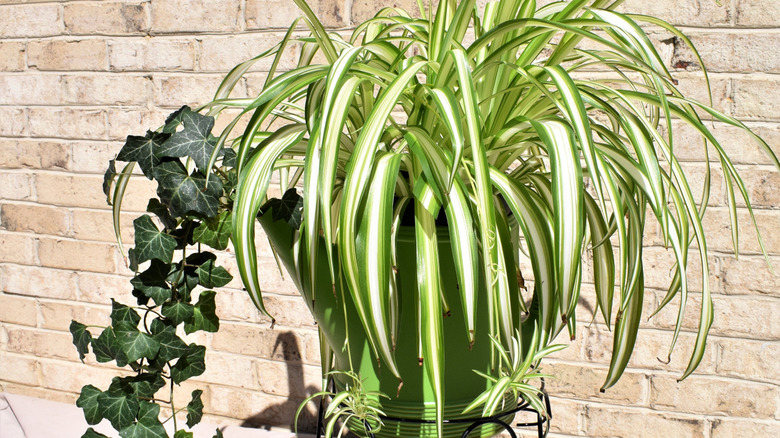
Some houseplants may look lovely side-by-side but that doesn't mean they should be planted together. Unlike outdoor companion planting, indoor combinations are usually more about aesthetics than improving how plants grow, but in some cases, putting two plants together can actually make caring for them more difficult.
That is precisely the issue with planting English ivy (Hedera helix) alongside any of the many varieties of spider plants (Chlorophytum comosum). These are both popular, low-maintenance houseplants, so you probably think they're a natural match. In fact, it is not unusual for people to style them together in an attempt to create a fuller and more textured effect. But as nice as they may look together, even low-maintenance houseplants have their own specific needs, and these two aren't very compatible. So, while companion planting often works, in this example, putting two plants together can actually be at the detriment of one plant.
Why English ivy and spider plant's ideal growing conditions make them a bad match for a single container
When you place two different plants in the same container, they are sharing more than just physical space. It's also soil, nutrients, watering schedule and light exposure that they'll be sharing so in order for them both to thrive, they'll need to have very similar care requirements. For example, both ivy and spider plants do best in bright, indirect light and in fact both are susceptible to burning leaves after too much prolonged direct sun. However, where they differ is in their watering needs.
Watering-wise, growing English ivy successfully will largely depend on if you can keep its soil kept moist most of the time. This is not the same as spider plants who actually prefer it when you let their soil dry out a little – so already you can see the problem if they're in the same container. And then in terms of sheer convenience, planting your houseplants together means you can't adjust each one individually when you need to. It's no longer a case of simply picking a plant up and moving it as you'll always be disturbing both.
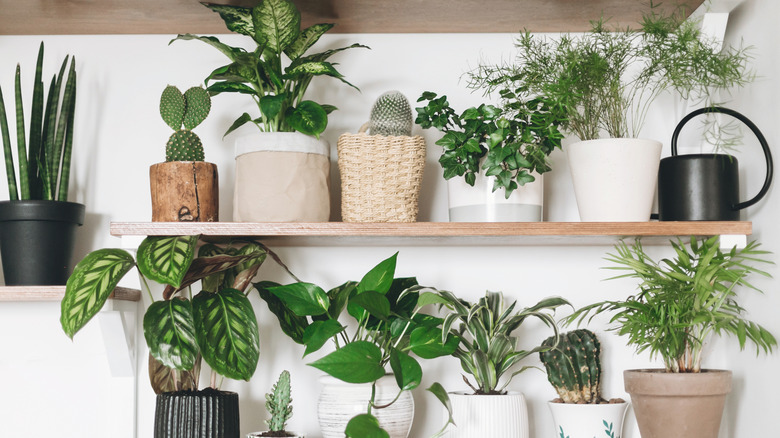
Although they have different soil requirements, it doesn't mean that they cannot still be styled together; instead of being roommates, let them be friendly neighbors on a shelf. They'll be happier that way, and you can give them different water quantities without worrying that either is getting too much or too little.